European Union foreign ministers have agreed to revive a nearly 20-year-old cooperation deal
with Syria, as the 27-nation bloc presses to strengthen diplomatic and economic ties with the war-scarred country following the collapse of the Bashar al-Assad government in December 2024. The decision marks a major step forward in Brussels’ strategy to re-engage with Damascus and support the nation’s ongoing political and economic transition.
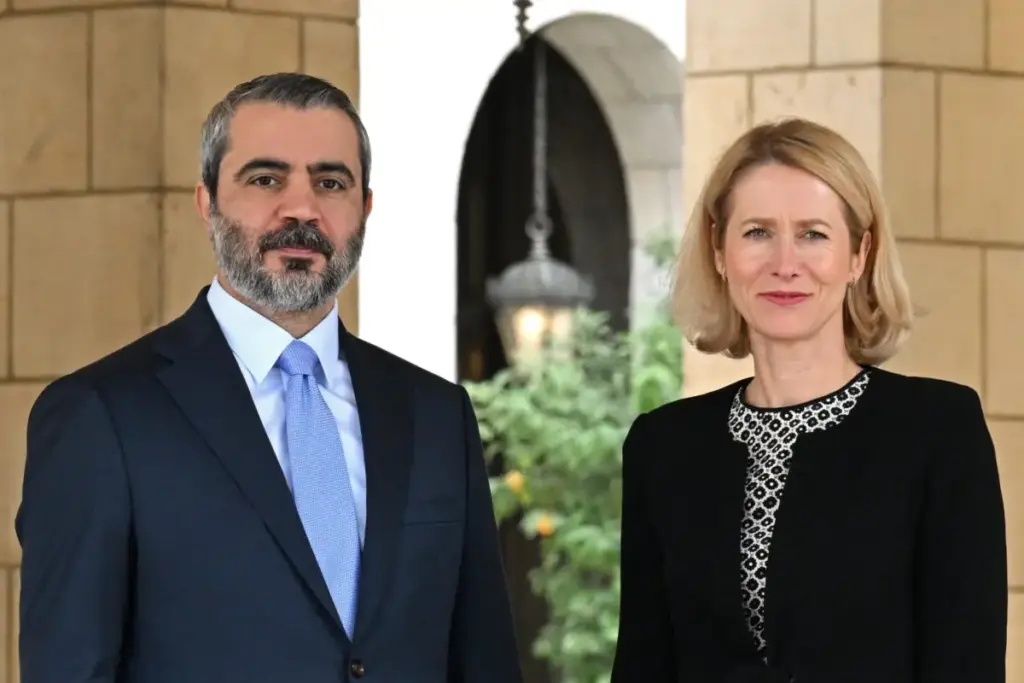
"Syria needs investment and a successful transition," EU foreign policy chief Kaja Kallas said on Monday following high-level discussions in Brussels. "The aim is to give Europe and Syria a framework for trade, political dialogue and closer cooperation as soon as possible."
The EU-Syria association agreement was originally formulated in 2008 under then-President Bashar al-Assad, but it was ultimately never fully signed or implemented by either side. The diplomatic initiative stalled indefinitely due to mounting international concerns over the Assad government’s severe human rights record and its violent suppression of political dissent.
Kallas noted that EU foreign ministers meeting in the Belgian capital had "supported moving ahead" with that historical accord while simultaneously launching formal talks for an updated framework. A comprehensive discussion paper prepared by the bloc’s diplomatic service ahead of the meeting outlined what is widely considered one of Brussels’ most ambitious efforts yet to normalise relations with Syria, coming less than two years after the dramatic and sudden fall of the Assad regime.
Kallas explained that diplomatic teams and legal experts would now begin working through the intricate technical and legal details required to finalise the agreement. Once completed, the pact would establish a formalized framework covering free trade, institutional political dialogue, and broader bilateral cooperation between Brussels and Damascus.

Behind the push for renewed engagement is a strategic concern over geopolitical vacuums in the Middle East. "Everybody said that we need to engage with Syria because if we don’t engage, then this vacuum will be filled by other players," Kallas emphasized to reporters.
At the same time, the EU intends to maintain strict benchmarks for the new administration in Damascus. Kallas confirmed that the bloc would set out clear new conditions for Syria to secure the updated deal and fully reap the benefits of normalized relations.
"We should have clear conditionality regarding human rights," she stated. Furthermore, Kallas noted that the EU expects explicit policy reversals on certain international stances adopted by the previous administration. "We should have also the nonrecognition of occupied Ukrainian, Georgian territories that they have recognised under Assad’s regime."
This diplomatic milestone is the latest in a series of calculated moves by the European Union to bolster ties with Damascus and its new leader, President Ahmed al-Sharaa. The relationship between Europe and Syria has undergone a profound transformation since the end of the Assad family’s 53-year rule, which came to an abrupt halt on December 8, 2024, following an 11-day military offensive that took Syria and the international community by surprise.
That sudden collapse effectively halted a devastating 14-year civil war that left lasting structural and psychological scars across the country. The conflict had displaced millions, forcing some 6.8 million Syrians—roughly one-third of the nation’s pre-war population—to flee abroad and seek refuge in neighboring countries and across Europe.
In the wake of the regime’s fall, the EU took decisive action to support economic rehabilitation. In 2025, the bloc removed its crushing economic sanctions on Syria, a move designed to stimulate commercial activity and assist the country’s fragile recovery. Building on that momentum, Brussels announced a substantial two-year funding package worth 620 million euros ($680m) at the start of 2026 to address critical humanitarian and infrastructural needs.
The changing conditions on the ground have already inspired significant demographic shifts. More than one million Syrian refugees have voluntarily returned home since the fall of Assad, eager to contribute to the rebuilding process. Meanwhile, millions more members of the global Syrian diaspora continue to weigh the complex decision to return and rebuild their lives in their homeland as stability slowly returns under President al-Sharaa’s administration.