A newly released Pentagon inspector general report has laid bare the extensive material, infrastructural, and operational toll inflicted on the United States military during the ongoing conflict with Iran. Covering the period from February 28 to June 30, the official Department of Defense assessment provides the first comprehensive accounting of the losses Washington has incurred since the outbreak of hostilities. According to the findings, the US has lost dozens of aircraft—including at least 30 advanced MQ-9 Reaper drones—while hundreds of buildings and structures utilized by American forces across the Gulf region have been heavily damaged or completely destroyed by Iranian strikes.
The report also contradicts repeated assurances from the White House regarding military readiness, explicitly acknowledging that the United States is currently running low on its munition stockpiles and grappling with persistent supply chain bottlenecks. Just recently, President Donald Trump pushed back against similar media reports, asserting that the country is producing "more Exquisite and Elite Weapons than at any time in our History" and maintaining "virtually unlimited" ammunition reserves. However, the internal watchdog document paints a significantly more constrained operational picture.
Throughout the war—which began following coordinated US and Israeli military actions against Iran in late February—Tehran has routinely targeted US bases and regional assets using ballistic missiles, rockets, and explosive drones. While regional governments and Washington officials maintained for months that the vast majority of incoming fire was successfully intercepted and neutralized by air defense systems, the Pentagon report reveals a different reality. It details significant multi-million-dollar damage to personnel, forces, and military installations throughout the Middle East, far exceeding what was previously acknowledged to the public.
How many US personnel were killed?

The human toll of the conflict remains a central focus of the Department of Defense assessment. The report notes that the military recorded at least 11 US service members killed in action, alongside seven additional fatalities categorized as "non-hostile events" over the course of the war.
Specific combat-related casualties documented in the report include at least six personnel killed at Kuwait’s Port Shuaiba on March 1, and one service member killed in Saudi Arabia on the same day. Later in the campaign, three personnel lost their lives during an Iranian attack on Jordan’s Muwaffaq al-Salti airbase—also referred to as the Al Azraq base—on July 17. Another service member was killed at the Erbil airbase in Iraq during an Iranian strike on July 19.
Additionally, the report details operational fatalities that had previously been made public by the military, including six personnel who died when a premier jet-powered aerial refueling tanker, the KC-135, crashed in Iraq on March 12. Another service member was killed when an MH-60S helicopter went down in the Arabian Sea on July 1. Beyond the fatalities, the watchdog confirmed that at least 417 US military personnel sustained wounds as a direct result of Iranian attacks during the evaluated window ending June 30.
How many aircraft did the US lose?
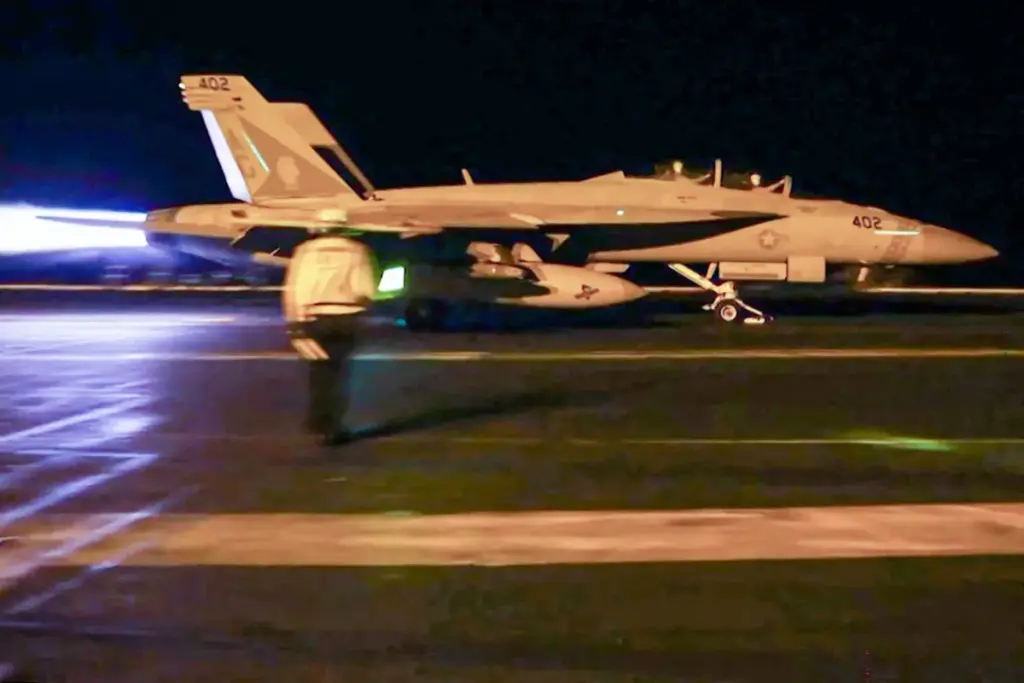
The catalog of equipment losses sustained by the American military spans a wide variety of high-value assets. The watchdog report indicates that the destruction was not limited to unmanned systems, touching nearly every tier of the aviation fleet. The losses encompassed front-line fighters, tactical attack aircraft, critical aerial-refuelling tankers, airborne command-and-control platforms, search-and-rescue helicopters, and unmanned surveillance vehicles.

Among the confirmed losses, at least 30 MQ-9 Reaper unmanned aerial vehicles stand out as a major capability hit for intelligence, surveillance, and reconnaissance missions in the theater. The Iranian military has frequently claimed responsibility for inflicting substantial damage on American aviation assets, boasting of successful intercepts and shoot-downs involving surveillance and attack drones operating near the contested Strait of Hormuz. In addition to aerial losses, Tehran also captured an unmanned US submersible, the Dive-LD, earlier this month, underscoring the broad operational vulnerabilities exposed during the maritime and air campaigns.
What losses did US military bases suffer in the region?
The scope of infrastructure destruction outlined in the inspector general report reinforces earlier assessments by US Central Command (CENTCOM). Iranian attacks successfully penetrated or impacted installations across a wide geographic footprint, damaging and destroying hundreds of individual buildings and structures at military sites located in Kuwait, Bahrain, Qatar, the United Arab Emirates, Saudi Arabia, Iraq, Oman, and Jordan. While the report did not provide exhaustive itemized data on every impacted facility, earlier reporting indicated that several key US installations were forced to temporarily suspend operations or relocate personnel to safer sectors.
Beyond direct strike damage, the logistics of sustaining the regional campaign proved exceptionally difficult. The report highlighted that the establishment of adequate naval bases and support ports posed major operational hurdles both before and during the military offensive. These challenges stemmed from regional complexities and ongoing uncertainties regarding host nation permissions required for fleet resupply operations.
Furthermore, shifting logistical support networks to the remote island of Diego Garcia presented severe distance-related obstacles, requiring extended sea transit times that stretched logistics cycles to between 14 and 18 days.

How Iranian attacks damaged US diplomatic facilities in the Gulf
Diplomatic infrastructure shared the brunt of the regional escalation alongside military outposts. The watchdog report revealed that official US diplomatic properties across four countries—Iraq, Kuwait, Saudi Arabia, and the United Arab Emirates—suffered substantial material damage from Iranian attacks, with repair and reconstruction costs estimated at approximately $184 million.
In addition to direct physical damage, Washington incurred ongoing financial impacts estimated at $24.5 million per month. These monthly losses were driven by construction project delays resulting from mandatory ordered departures and travel restrictions affecting personnel in major regional missions, including Baghdad, Jerusalem, Tel Aviv, Cairo, Amman, Kuwait City, and Muscat.
In Iraq, the State Department reported that the diplomatic mission faced more than 600 separate attacks through the end of June, with total damages approaching $157 million. Multiple buildings within the new compound of the US Consulate General in Erbil sustained structural damage. The main US Embassy in Baghdad was also impacted, though the report noted the damage was to a lesser extent. Meanwhile, the Baghdad Diplomatic Support Center, situated near the international airport, suffered extensive destruction.
In Kuwait, escalating regional threats prompted the US Embassy in Kuwait City to suspend normal diplomatic operations on March 5 following security incidents and facility damage, racking up nearly $14.75 million in costs. In Saudi Arabia, two Iranian drones struck the US Embassy in Riyadh on March 3, triggering material damage valued at approximately $11.5 million. Finally, in the United Arab Emirates, the US Consulate General in Dubai sustained targeted damage to a utility building, resulting in nearly $120,000 in repair expenses as diplomatic missions across the region continued to fortify their postures against ongoing aerial threats.