November 17, 2026
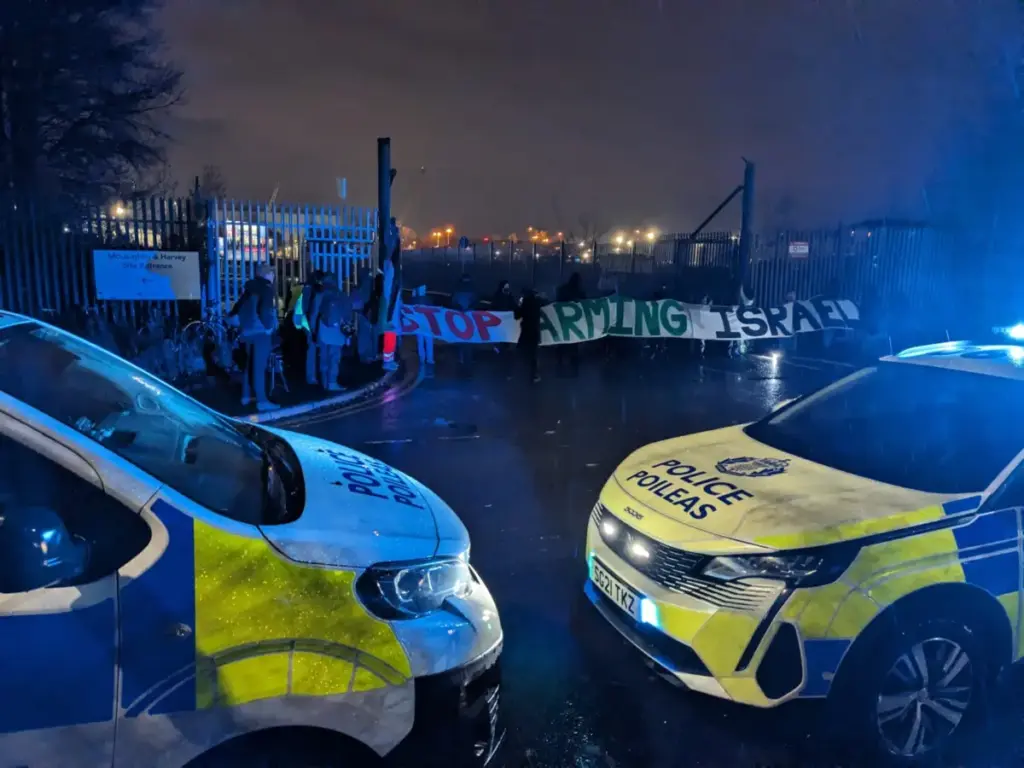
Activists and trade unionists staged coordinated blockades at major defense and manufacturing facilities across the United Kingdom this morning, targeting prominent arms manufacturers in a coordinated effort to halt military exports to Israel. Demonstrators gathered outside key industrial sites, locking down entrances and disrupting normal commercial operations to voice their fierce opposition to the ongoing violence and to demand an immediate government embargo on arms sales.

Footage circulating from the demonstrations captured the tense and determined atmosphere on the ground, showcasing protesters carrying banners, chanting slogans, and physically blocking access roads. Among the primary targets of the morning mobilizations was BAE Systems, one of the world’s largest defense contractors, with notable disruptions reported outside facilities in locations such as Glasgow. The demonstrations brought production lines and logistical transport to a temporary standstill as workers and delivery vehicles found themselves blocked by rows of determined protesters.
"The objective today is to stop business as usual and hit BAE’s profits and break the chain of killing," organizers and participating activists declared as the blockades took hold early in the morning hours.
The nationwide protests represent a continuation of a sustained grassroots campaign spearheaded by advocacy groups, human rights defenders, and concerned trade union members who argue that British-made military equipment, components, and weapons systems are being utilized in ongoing military campaigns in the Middle East. For months, critics of the government’s trade policy have argued that the continued issuance of export licenses for military hardware makes domestic defense firms complicit in violations of international humanitarian law. By targeting the physical infrastructure of these corporations, the demonstrators sought to draw direct attention to the corporate beneficiaries of military supply chains and to pressure policymakers into enacting a comprehensive ban on arms exports.

The coordinated actions reflect a growing alignment between civil rights activists and labor organizations inside the United Kingdom. Trade unionists participating in the blockade emphasized that workers within the manufacturing and engineering sectors have a moral obligation to question what their labor produces, arguing that economic output should be redirected away from warfare and toward peaceful, sustainable industries. Throughout the morning, speeches delivered via megaphones echoed off the industrial parks and corporate offices, calling on fellow workers to refuse cooperation with supply chains linked to conflict zones.
Police forces and local law enforcement agencies responded to the various protest sites across the country, managing traffic diversions and monitoring the demonstrations. While minor scuffles and tense standoffs were reported as security personnel attempted to clear access points for incoming staff, the protests remained largely focused on symbolic disruption and civil disobedience. Authorities maintained a visible presence at the targeted facilities to prevent property damage and ensure public safety, though the blockades succeeded in significantly delaying the morning shift changes and routine corporate operations.
The demonstrations have reignited national debate regarding the oversight of the UK defense sector and the transparency of government export licensing committees. Critics of current defense policies argue that existing regulatory frameworks fail to adequately assess the end-use of exported military technology, allowing weapons and components to be deployed in conflict zones despite widespread public outcry and legal challenges from human rights organizations.

As the morning protests concluded and participants dispersed from the immediate gates of the manufacturing plants, organizers vowed to continue their mobilization efforts. They indicated that further actions, workplace campaigns, and public demonstrations are being planned to keep pressure on both corporate leadership and government officials until a definitive halt to arms sales is enacted. The disruptions served as a stark reminder of the deep divisions surrounding British foreign policy and the growing resolve of domestic activist networks determined to impact the business operations of the nation’s defense industry.