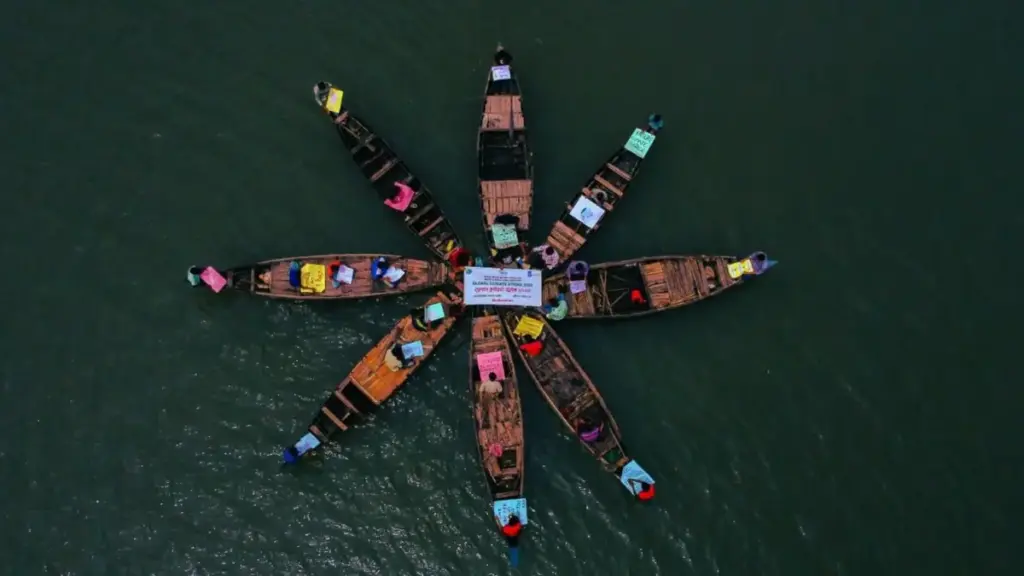
As world leaders and international delegates gather in Türkiye for the annual COP31 climate summit, humanitarian agencies are sounding the alarm over a compounding global emergency. Millions of people supported by Islamic Relief across the globe are already being pushed deeper into chronic hunger and extreme poverty, driven by the intensifying impacts of the El Niño climate phenomenon.
Current scientific data indicates that this year’s El Niño event is already the strongest observed in four decades, with several leading studies projecting it to potentially become the worst in a thousand years. The El Niño phenomenon is a naturally occurring yet increasingly volatile climate cycle that happens every few years when a vast stretch of the Pacific Ocean warms significantly more than usual. This oceanic heating drastically disrupts established weather patterns worldwide, triggering severe and prolonged droughts in some regions while unleashing catastrophic floods in others.
According to United Nations estimates, as many as 50 million people globally could be plunged into acute hunger over the next six to nine months alone. This looming catastrophe is driven by widespread crop destruction, depleted agricultural yields, and surging food prices. However, on-the-ground reports from Islamic Relief teams indicate that vulnerable populations are already bearing the brunt of these climatic shocks. These devastating impacts are projected to escalate dramatically over the coming months as the full force of El Niño matures, directly affecting dozens of countries across multiple continents.
Against the backdrop of the COP31 climate conference, Islamic Relief is issuing an urgent appeal for immediate, coordinated action to safeguard human lives and protect fragile livelihoods. Empirical research consistently demonstrates that taking timely action to help communities prepare for and mitigate impending weather shocks not only saves lives but is significantly more cost-effective than attempting to deliver emergency aid after a disaster has already peaked.
Jamie Williams, Senior Policy Advisor at Islamic Relief Worldwide, emphasized the critical need to bridge the gap between political rhetoric and tangible intervention.
"COP climate summits have always been full of talk, but action is needed more urgently than ever. The last decade has been the hottest on record," Williams said. "As extreme weather increases as a result, livelihoods and food security become more threatened for people already challenged by poverty, conflict, and displacement."
Williams highlighted the unprecedented scale of the current weather cycle and its disproportionate toll on the world’s most vulnerable regions.
"The El Niño event we are currently witnessing is building up to be the largest in at least 1,000 years. For people in Asia and Africa, El Niño will bring either too little rain or too much rain. This can lead to droughts, floods, crop losses, water shortages, disease outbreaks, and rising food prices," Williams explained. "El Niño also brings increased heat, affecting agriculture and outside livelihoods, and people’s health, especially in cities. And it is the poorest people who are the most vulnerable."
Furthermore, Williams noted that this phenomenon does not occur in a vacuum, but rather compounds existing systemic crises.
"The El Niño comes on top of the climate crisis. This is caused by pollution from fossil fuels which must be phased out as previous COPs have agreed, and rapidly. At the same time, promised funding from the rich countries must reach the most vulnerable and marginalised people so they can adapt to this new world," he added.
To confront this growing threat, Islamic Relief is calling on governments and international financial institutions to substantially increase funding dedicated to helping communities adapt to accelerating climate change. Developing nations require an estimated $310 billion to $365 billion a year for climate adaptation by 2035. Yet, international public adaptation finance has actually declined in recent years, currently accounting for less than 10% of the total resources required.
Compounding the problem, the majority of existing climate financing is currently disbursed in the form of loans rather than grants. This practice traps countries that are already suffering the worst impacts of the climate crisis in cycles of long-term national debt. In response, Islamic Relief is strongly advocating for all new climate funding to be provided strictly as grants and non-debt-generating financing.
The organization also stresses that this finance must reach grassroots communities directly, with its utilization determined by local populations. Climate adaptation measures are proven to be most effective when they are locally led, because the individuals directly experiencing the impacts understand their local environment and immediate needs better than external actors. Historically marginalized groups—including women, youth, people with disabilities, and displaced populations—are frequently sidelined in international policy discussions, but Islamic Relief insists they must be placed at the very heart of decision-making processes regarding climate adaptation.
Additionally, climate finance allocation mechanisms must become significantly more equitable, as the populations facing the highest risks currently receive the least amount of support. In recent years, fragile states most vulnerable to climate emergencies received the equivalent of just $2 to $10 per person from major international climate funds, compared to an average of $162 per person allocated to more politically and economically stable countries.
While the repercussions of El Niño are expected to be felt across every continent, the poorest communities situated within parts of Africa and Asia will suffer the most catastrophic consequences. Across East Africa, Islamic Relief projects that alternating cycles of severe drought and sudden flooding will systematically destroy harvests and traditional livelihoods, driving a severe risk of increased acute malnutrition throughout the region. Countries such as Ethiopia, Somalia, and South Sudan are anticipated to be hit the hardest.
The African Development Bank has estimated that the El Niño phenomenon could cost African nations between $10 billion and $20 billion in direct economic damage. Simultaneously, prolonged drought and extreme heat are already disrupting South East Asia, leading to widespread agricultural failures and severe air pollution generated by massive regional wildfires. These compounding shocks are unfolding at a time when traditional social safety nets protecting vulnerable populations worldwide have already been weakened by recent international funding cuts.
Despite these immense challenges, Islamic Relief is actively supporting affected populations around the world to prepare for impending weather shocks and build long-term resilience. In Somalia, the organization is collaborating closely with local farmers to enhance their resistance to climate breakdown by improving agricultural infrastructure, establishing better greenhouses, optimizing irrigation systems, and facilitating community knowledge-sharing initiatives to boost crop yields. These efforts also extend to supporting internally displaced people who have been forced to abandon their native lands due to environmental degradation.
In Ethiopia, Islamic Relief is actively delivering critical water services to improve local nutrition levels, while in Indonesia, the organization is providing vulnerable families with targeted cash grants designed to protect household food security amidst rising market prices.
Islamic Relief Worldwide, registered charity number 328158, continues its operations globally to protect lives and advocate for systemic environmental justice as the international community navigates the challenges of COP31.