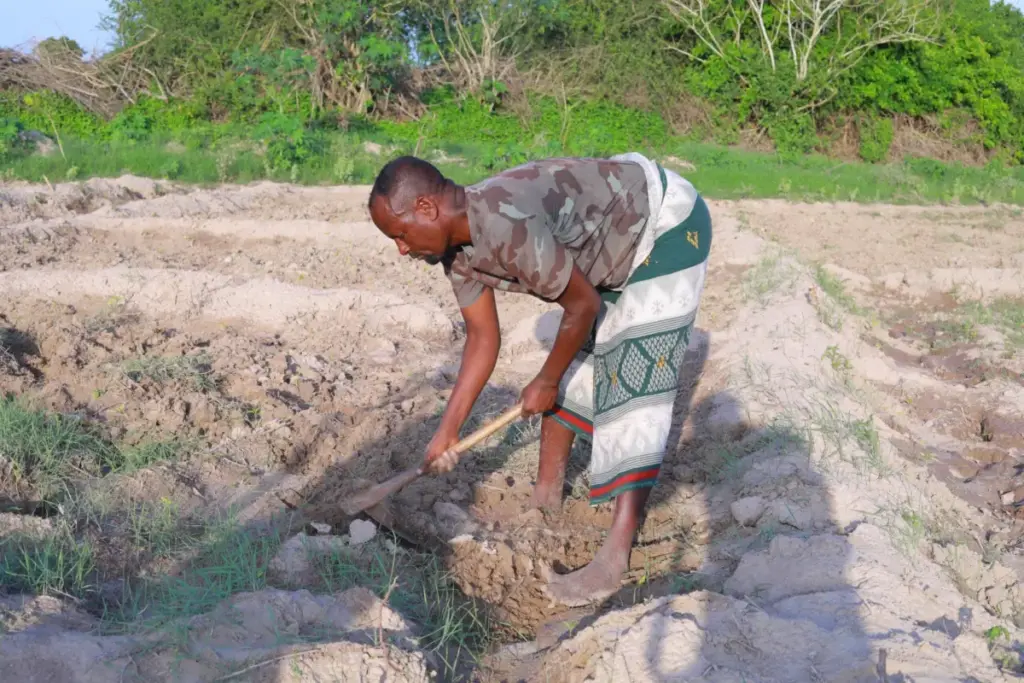
MOGADISHU, Somalia — Climate change is aggressively dismantling traditional livelihoods across Somalia, driving thousands of smallholder farmers off their ancestral land and plunging them into deep poverty, relentless hunger, and overcrowded urban displacement camps. The compounding crises of cyclical weather extremes have rendered farming an increasingly untenable way of life for rural communities who have contributed the least to global carbon emissions yet bear the brunt of ecological devastation.
Against the backdrop of the annual global climate summit, COP31, humanitarian agency Islamic Relief has issued an urgent plea to world leaders. With the El Niño climate phenomenon forecast to unleash severe, widespread flooding across the Horn of Africa in the coming months, the organization is demanding immediate international investment in local agricultural protection. Advocates stress that without robust intervention to safeguard farming infrastructure, rural families will continue to lose their footing on the land, accelerating an already profound humanitarian emergency.
Islamic Relief recently concluded a series of comprehensive interviews with farmers and displaced families across multiple regions of Somalia. Their testimonies reveal a stark reality: increasingly volatile and extreme weather patterns are permanently altering the socioeconomic fabric of the countryside, making it virtually impossible for generational farmers to maintain consistent food production or economic stability.
The impending El Niño system is projected to be one of the most severe weather events of its kind in decades. Meteorological models indicate that the phenomenon will directly affect up to 3.4 million people in Somalia alone. Heavy, unseasonal rainfall and subsequent severe floods threaten to devastate arable land and wipe out crucial crops in a nation where a quarter of the population is already grappling with crisis levels of food insecurity. Without decisive preventative action, nearly two million children in Somalia are expected to suffer from acute malnutrition by June 2027.
The human cost of these escalating climate shocks is vividly articulated by farmers living on the frontlines. Liiban Ali Mohamed, a lifelong farmer residing in Balcad, described to Islamic Relief how the looming threat of El Niño could serve as the final tipping point after years of cumulative environmental disasters that have left his family’s future dangerously precarious.
"Over the past decade and a half, I have watched climate shocks accelerate, with destructive flood years closely followed by severe drought years," Mr. Mohamed explained. "We have experienced years when we waited for rain that never came, and other years when so much water rushed down the river that our farms were completely submerged."
For smallholder farmers, the economic math of climate volatility is unforgiving. "When you lose a harvest, you cannot easily recover what you spent," Mr. Mohamed continued. "You have to start again from zero, even when you have no money left. Now, as we hear the news about potential El Niño flooding, I am deeply concerned. You prepare your land, invest your savings into seeds, and work hard every single day, only to lose everything to a sudden drought or a sudden flood."
The psychological toll runs parallel to the economic devastation. As a parent, Mr. Mohamed shares the universal anxiety of providing for his household under conditions of profound uncertainty. "We need rain for our crops to grow, but we live in fear of having too much water at once," he said. "An El Niño flood doesn’t just wash away crops; it washes away our hard work and our family’s food security in a matter of hours."
Similar anxieties echo along the banks of the Shabelle River, one of Somalia’s principal water systems, where Islamic Relief spoke with agricultural workers whose livelihoods depend directly on the waterway. Driven by intensified rainfall upstream in Ethiopia, the Shabelle River currently sits at an alarmingly high risk of bursting its banks, threatening nearly half an million people with sudden displacement.
Abdikadir Hassan Omar, a local farmer, emphasized the cascading dangers associated with riverine flooding. "When floods strike, the damage ripple effect hits hard," Mr. Omar noted. "Families lose their primary food source, local markets face crop shortages, and income needed for medical care and school fees disappears."
For Muse Bufow, who has dedicated the past twelve years of his life to farming to support his children, the aspiration is remarkably straightforward. "When the harvest is good, I sell the extra crops to pay for school fees and medicine. But when the season fails, my whole family suffers," Mr. Bufow said. "My goal is simple: I want to keep farming, feed my seven children, and earn an honest living without living in fear of the next flood. We do not want to rely on aid; we want to work our land. With good irrigation, early flood warnings, and reliable seeds, we can protect our crops and secure a safer future for our children."
Despite such resilience, successive years of unprecedented extreme weather have stripped many households of their assets, killing livestock and rotting crops before they can be brought to market. Divested of their means of survival, thousands of rural families have abandoned their homes, seeking refuge in densely populated urban camps where their independence is replaced by a reliance on humanitarian assistance.
Among those forced from their land is Muna Mohamed Abdikadir, a 28-year-old mother of four. She fled her home village in 2024 after consecutive failed harvests and the death of the family’s livestock bankrupted them entirely. Today, she and her family reside in an informal camp for internally displaced persons situated on the outskirts of Baidoa. Her youngest child, an eight-month-old infant, is currently suffering from acute malnutrition.
"The hardest part of being a mother is watching your children go hungry when you have nothing left to give them," Mrs. Abdikadir shared. "We left our home hoping for a better life, but here, even finding one meal a day is a struggle."
Nafisa Abdirashiid Moalin undertook a similar journey to Baidoa following the death of her husband. Her 27-month-old son recently endured a grueling three-week hospital stay battling persistent illness and severe malnutrition, and he still exhibits visible swelling in his face and legs. Once supported entirely by her family’s agricultural income, Mrs. Moalin now scrapes together a living day-to-day by washing clothes for neighbors in exchange for meager wages.
"When my youngest son became sick, I was frightened because he is still very small. Seeing him admitted to hospital was painful," Mrs. Moalin said. "When I find clothes to wash, I can try to feed my children twice a day. When there is no work, we have to manage with just one meal."
The institutional perspective underscores the profound injustice embedded in the current crisis. Aliow Mohamed, Islamic Relief’s country director in Somalia, highlighted the direct correlation between global emissions patterns and local suffering.
"Our interviews with farmers in Somalia show how climate change is making it harder than ever for them to produce food and stay on their land," Mr. Mohamed stated. "A single harvest determines whether a father can feed his children or pay for medical care, and when extreme weather wipes out a harvest, the loss is felt by everyone. Too many families have been forced off their land and into camps where they rely on humanitarian aid to survive."
Emphasizing the geopolitical disparity at the heart of the crisis, Mr. Mohamed added, "Somalia is one of the lowest carbon emitters in the world, but its people are suffering some of the worst impacts of climate change. World leaders must protect their livelihoods and help them stay on their land."
In response to the escalating threats, Islamic Relief is actively engaged on the ground, supporting Somali farmers through targeted developmental projects. These initiatives include the rehabilitation of vital irrigation systems, the strengthening of community-based flood early warning systems, the distribution of drought-resistant seeds, and training programs focused on climate-resilient agricultural techniques. Concurrently, the organization continues to deliver emergency aid to displaced families sheltering in camps surrounding Baidoa and Mogadishu as the country braces for the full impact of the anticipated El Niño season.