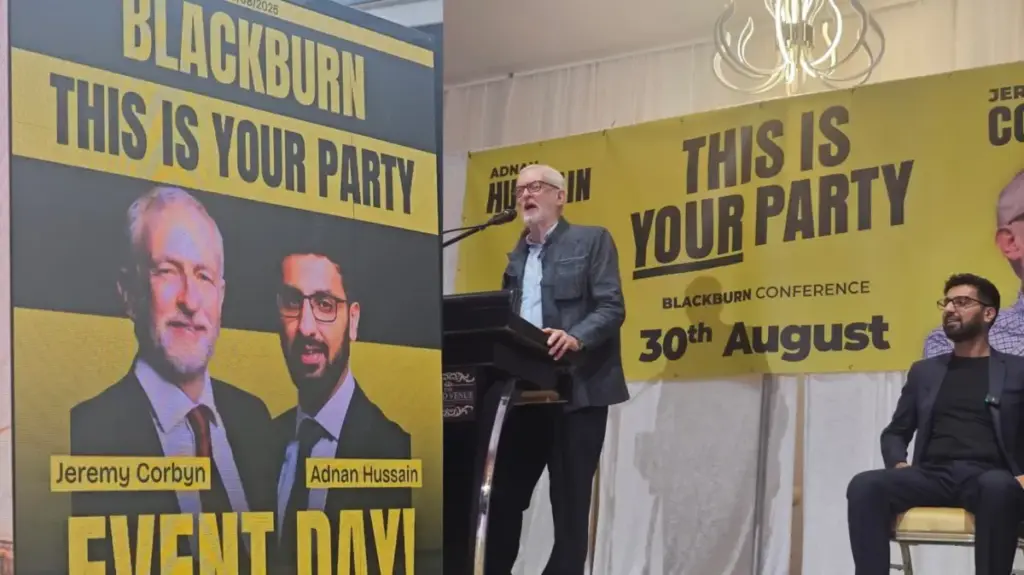
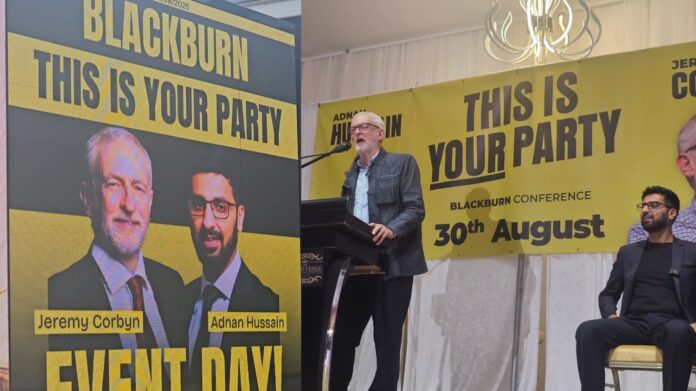
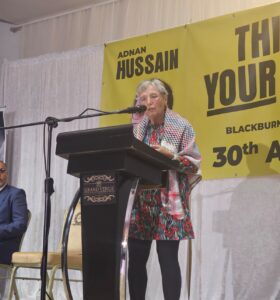
Over a thousand people packed into a venue in Blackburn yesterday for the first official public meeting of Your Party, a new political movement spearheaded by independent MP Zarah Sultana and former Labour leader Jeremy Corbyn. The debut event in the North West of England featured a strong focus on domestic economic struggles and Palestinian solidarity, drawing a diverse crowd while also bringing to the surface lingering political tensions regarding leadership, Zionism, and the movement’s stance on foreign policy.
Chaired by Blackburn MP Adnan Hussain, the event marked a significant milestone for the emerging grassroots initiative as it attempts to forge a working-class coalition designed to challenge the established political parties. The evening opened with personal reflections from Hussain, who spoke about his parents’ migration to Britain and the socioeconomic challenges that ultimately shaped his own political worldview.
Framing the movement as a vital alternative for communities abandoned by the political mainstream, Hussain addressed the packed audience in Lancashire. "Today, as I’ve said, I’m proud to join my colleagues in introducing Blackburn, Lancashire, the North West, to a new political movement," Hussain told the crowd. "It stands, as I’ve already said, not for the elite, not for the wealthy, but for you, the working class."
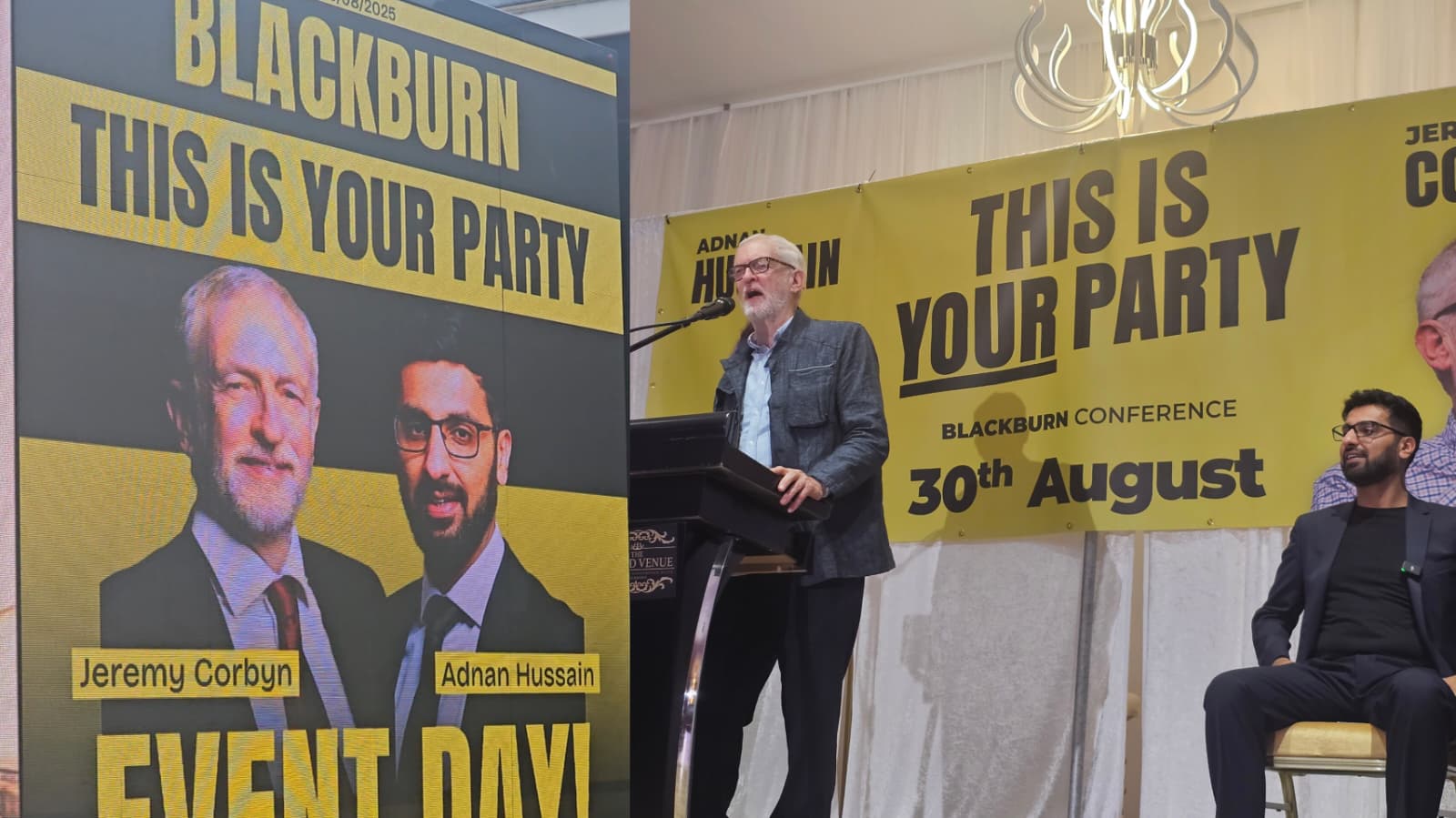
Hussain emphasized that the party was built upon core principles rather than a fixation on individual personalities. However, he elicited loud applause and enthusiastic cheers from the audience when he asked them to imagine a United Kingdom with Jeremy Corbyn serving as Prime Minister. He quickly clarified the sentiment, adding, "It’s not about the individual. It’s about his vision. It’s about what he stands for. It’s about what he is bringing to the table."
A Diverse Coalition and Grassroots Energy
Birmingham MP Ayoub Khan, who has also aligned himself with Your Party, took to the stage to praise the substantial turnout and the remarkable demographic diversity of the room. "Nothing frightens politicians more than seeing a movement that is as large and as diverse as this one, Your Party," Khan told attendees.
Organisers repeatedly highlighted the composition of the audience as one of the movement’s core strengths, noting that the majority of attendees were non-Muslim, spanning a wide range of ages, genders, and religious backgrounds. Emphasizing the inclusive branding of the event, speakers told the crowd to look around the room and recognize that "this is the UK."
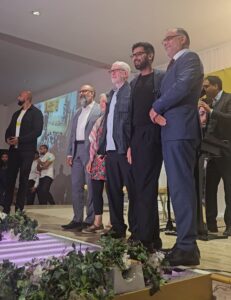
The conference also featured contributions from other key political figures and activists, including Iqbal Mohamed, Marion Robert, and Jeremy Corbyn himself. Professor Marion Roberts, speaking on behalf of Jewish Voice for Labour (JVL), addressed complex issues surrounding antisemitism and Zionism, a topic that has followed Corbyn closely since his tumultuous tenure leading the Labour Party.
Roberts explained to the audience that members of the broader political bloc come from varied electoral and political backgrounds. "The group I belong to, JVL, was set up to support Jeremy once he became leader and to counter the false accusations of antisemitism which were intended to protect Israel from criticism," she stated, directly confronting past controversies.
Palestine Solidarity and Centrality of Foreign Policy
As Jeremy Corbyn finally stepped up to the podium, the atmosphere intensified. Chants of "Free Palestine" rang out across the hall from sections of the audience. As the speeches continued, some slogans escalated further, with portions of the crowd chanting "Death to the IDF," underscoring how deeply emotional and central the ongoing conflict in the Middle East remains to the movement’s base.

In his address, Corbyn pivoted between domestic grievances—such as escalating housing crises, entrenched poverty, homelessness, and crippling tuition fees—and Britain’s involvement in foreign wars and global inequality, arguing that these issues are fundamentally interconnected.
Turning his focus explicitly to the Middle East, Corbyn declared: "We are always coming up against the Israeli expansionism led by the Zionist ideology, that they have a right to occupy Gaza and the West Bank." He reiterated that the ambition for Your Party is to cultivate an open, inclusive, and democratic political vehicle rooted deeply in community and grassroots organizing.
Scrutiny Over Anti-Zionism and Leadership Stances
The Blackburn launch took place against a backdrop of intensifying national scrutiny regarding Corbyn’s precise stance on Zionism. Just days prior to the event, video footage circulated showing Corbyn repeatedly refusing to answer direct questions regarding whether he identifies as anti-Zionist. This public hesitation contrasts sharply with fellow co-founder Zarah Sultana, who has openly and explicitly declared herself to be anti-Zionist.
Despite the heavy political themes and controversial subjects discussed during the conference, organisers did not allocate time for public questions from the floor. This decision drew swift disappointment from critics and observers, who noted that avoiding a question-and-answer session bypassed necessary, pressing debates on complex policy matters.
At the conclusion of the event, 5Pillars approached Adnan Hussain to ask whether prospective members of the party would face internal scrutiny or vetting regarding their personal positions on Zionism and the Israeli-Palestinian conflict.
Hussain responded by emphasizing the humanitarian imperative of the movement’s foreign policy stance: "Nobody should be penalised against a genocide, the killing of innocent children. They must be protected and anyone who is opposed to that must never be penalised."
While the Blackburn conference successfully showcased significant enthusiasm, organisational energy, and grassroots mobilization in the North West, it also laid bare the lingering tensions over ideological definitions, leadership messaging, and the broader question of whether Your Party can successfully carve out a distinct and sustainable identity separate from the legacy of the Labour Party.