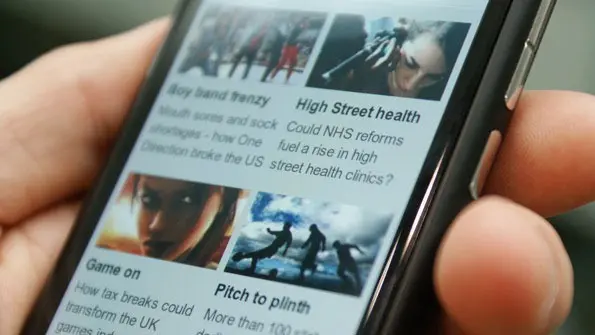
The BBC has announced a major shift in how its digital journalism reaches audiences on the go, beginning the process of automatically directing all mobile visitors to its dedicated mobile-optimized website. The change, detailed by BBC News website editor Steve Herrmann, marks a significant milestone in the organization’s ongoing digital evolution, ensuring that users browsing news on smartphones are immediately greeted with a layout tailored specifically to smaller screens rather than the traditional desktop format.
Up until now, individuals seeking out BBC News on their mobile phones frequently found themselves landing on the standard desktop version of the site. Designed primarily for desktop personal computers, Macs, and laptops featuring expansive widescreen monitors, the desktop layout has historically required mobile readers to constantly pinch, zoom, and awkwardly scan across dense blocks of text and multiple columns. While a dedicated mobile version of the site was launched earlier this year to make reading quicker and easier, visitors were not always routed there by default.
With this week’s rollout, that friction is being eliminated. Anyone visiting BBC News on a mobile device will now be automatically taken to the version of the site best suited to the specific type of phone they are carrying. The initiative is the culmination of six months of intensive development and refinement by the BBC News product team, who have spent the better part of the year incorporating user feedback to enhance the mobile reading experience.
Over the past several months, the broadcaster has introduced a series of crucial updates to the mobile platform. Among the most notable additions is the integration of video clips for iPhone and Android users, significantly enriching the multimedia storytelling capability on handheld devices. Alongside expanded video support, the team has streamlined site navigation to make browsing faster and more intuitive, while also introducing direct pathways to localized news and weather services—features that were heavily requested by users in earlier feedback rounds.
Despite these sweeping changes, the BBC is maintaining user flexibility for those who prefer the traditional layout. Readers who genuinely favor the desktop experience on their mobile devices can easily revert by scrolling to the bottom of any mobile page and tapping a dedicated link for the desktop site. The system will remember this preference for subsequent visits, ensuring that personal reading habits are respected. Conversely, mobile visitors who find themselves on the legacy desktop view due to browser quirks can similarly scroll to the foot of the page and manually select the mobile layout option.
The transition to automatic mobile redirection is the latest chapter in the BBC News product team’s broader commitment to responsive design. This modern web development philosophy focuses on dynamically detecting the user’s hardware and instantly presenting content in the format best adapted for that specific device. Parallel efforts are currently underway to optimize the digital news portfolio for tablet users as well, ensuring a seamless experience across the entire spectrum of modern internet-connected hardware.

The urgency behind these platform enhancements is underscored by shifting audience habits. Mobile traffic to the BBC News ecosystem has experienced continuous, remarkable growth. In an average week, approximately 13.3 million users worldwide access the BBC News site and its associated applications using a mobile phone or a tablet. This staggering figure accounts for roughly one-third of the total audience visiting BBC News Online, illustrating just how vital handheld devices have become to the daily consumption of global journalism.
By ensuring that the full depth and range of BBC News content is accessible without sacrificing readability or forcing users to constantly zoom and pan, the organization hopes to solidify its digital footprint in an increasingly mobile-first media landscape.
Following the announcement, editors and product leads addressed various user inquiries regarding device compatibility and navigation nuances. Responding to reader questions concerning Kindle devices, the BBC clarified that because Kindles function as tablets—albeit with screens smaller than some competing models—they currently default to the desktop site. However, Kindle users remain entirely free to manually switch to the mobile version by selecting the link at the bottom of the screen, with the engineering team continuing to refine experiences for progressively larger screen sizes over time.
Addressing concerns raised by users of specific smartphone brands, such as HTC devices, the BBC acknowledged that certain handsets can occasionally be misclassified by automated routing systems due to varying device identifiers tied to individual mobile networks. Technical teams are actively working to correct these classification errors to ensure smooth, reliable redirection. In instances where misclassification occurs, readers can simply utilize the "Mobile Site" link at the footer of the page, a preference that persists as long as browser cookies are not cleared.
For Windows Phone users, the network confirmed that the browser experience is fully operational, though video playback support remains unavailable on those specific platforms for the time being. Furthermore, the BBC emphasized its ongoing commitment to digital accessibility, noting that its mobile browser layouts and applications are rigorously engineered to integrate smoothly with assistive technologies like iOS Voiceover.
As the digital team continues to evaluate new technologies and expand content capabilities where technical constraints allow, the overarching goal remains clear: delivering comprehensive, high-quality journalism optimized for whatever screen a reader happens to hold in their hand. Readers have been encouraged to continue submitting feedback through comments or by utilizing the hashtags #bbcnews and #responsive on social media platforms.