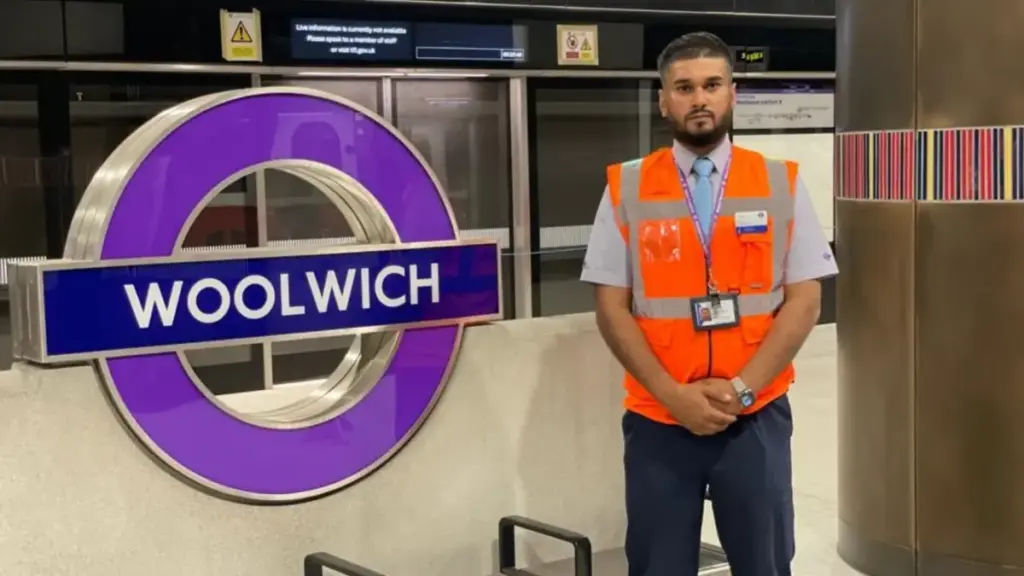
LONDON — In the bustling and often anonymous environment of a major metropolitan transit system, where thousands of commuters rush past one another every single day, it is easy for an individual in deep distress to go entirely unnoticed. Yet, for at least 34 people experiencing the darkest moments of their lives, quiet vigilance and genuine human empathy have made the difference between tragedy and survival.
Rizwan Javed, a dedicated worker for Transport for London (TfL) operating across the rail network, has quietly emerged as an extraordinary source of hope. Through a combination of professional training, acute situational awareness, and a profound sense of personal compassion, Javed has successfully intervened to prevent at least 34 individuals from taking their own lives on the transport network.

Rather than walking past distressed commuters or assuming someone else will offer assistance, Javed has repeatedly chosen to step in. By engaging individuals in crisis with calm conversations and deep respect, he has helped guide them away from danger and toward safety, offering a lifeline when they felt they had nowhere else to turn.
The foundation for this life-saving work was laid when Javed completed formal suicide prevention training provided by the renowned mental health charity Samaritans. Through the program, he acquired the critical skills needed to recognise the subtle behavioural signs that indicate someone may be struggling with overwhelming emotional pain or suicidal ideation. Transport networks worldwide often serve as focal points for such crises, making front-line staff like Javed uniquely positioned to act as vital safety nets within the community.
According to Javed, many of his successful interventions have begun with something deceptively simple, yet remarkably profound. Faced with someone standing in a moment of acute vulnerability, Javed approaches and asks a single, powerful question: “Are you okay?”

In a society where individuals in distress often feel invisible or isolated, that brief inquiry serves as an immediate bridge. It signals to the person that someone sees them, that someone cares, and that they do not have to carry their burdens entirely alone. According to Javed, that initial opening has frequently been enough to break through the overwhelming isolation of a crisis, sparking a conversation that ultimately pulls someone back from the edge.
Beyond his direct, day-to-day interventions on the platforms and rail networks of London, Javed has increasingly taken on a broader role as an advocate for mental health awareness. Recognizing the deep-seated stigma that continues to surround mental illness, he has consistently encouraged people to speak openly about their emotional struggles, seek help when needed, and check in on the people around them. His efforts highlight a growing recognition that mental health support must extend beyond clinical settings and into the fabric of everyday public life.
Javed’s journey offers a powerful testament to the idea that extraordinary impacts do not always require grand gestures. Instead, they can stem from ordinary acts of human decency—a few moments of undivided attention, a willingness to listen without judgment, and the courage to approach someone who appears to be hurting. In an increasingly fast-paced world, his actions demonstrate the life-altering power of empathy.

The significance of such compassion has long resonated deeply within spiritual and ethical traditions. In Islamic teachings, community care and the relief of human suffering hold a central place. The Prophet Muhammad taught that the most beloved people to the Creator are those who bring the greatest benefit to others. Javed’s daily work reflects this timeless principle, translating faith and moral duty into practical, life-saving action on the ground.
As stories of his interventions continue to inspire communities across the United Kingdom, observers and colleagues alike have expressed profound appreciation for his dedication. Many hope that Rizwan Javed’s remarkable commitment will inspire a wider cultural shift, encouraging more individuals to look out for one another, foster open conversations about mental health, and remember the life-saving potential of simply asking if someone is okay.