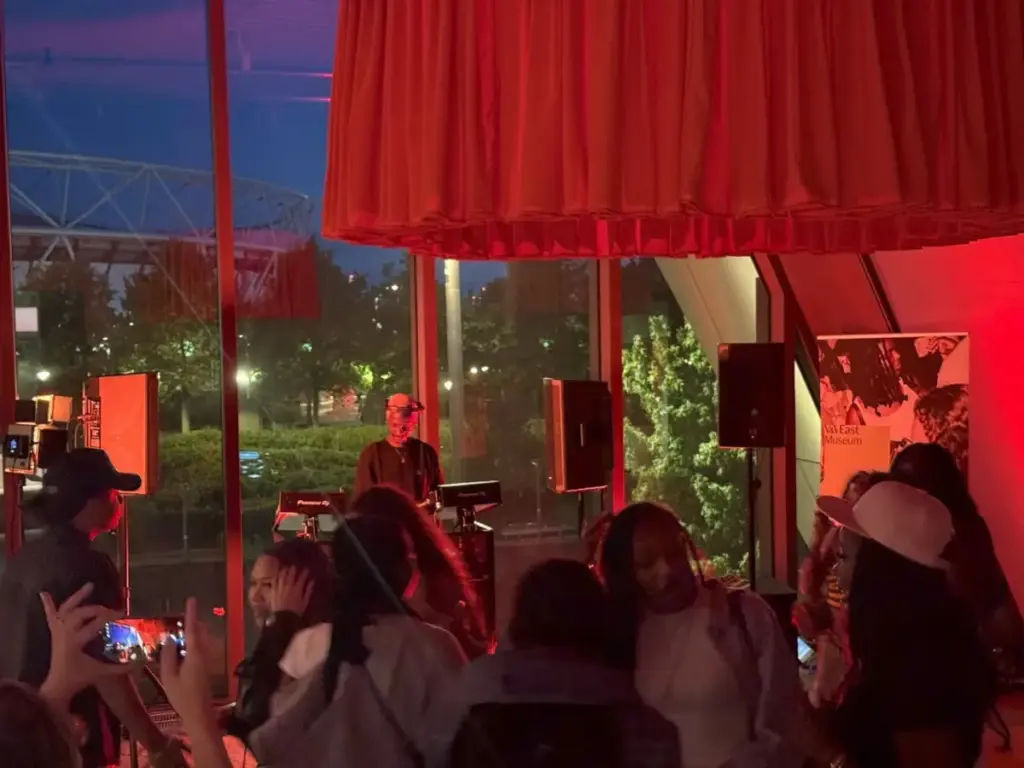
One afternoon while setting up for the V&A East Museum’s new DJ residency, upperground, an unexpected encounter perfectly encapsulated the spirit of the initiative. Entering the "Why We Make Galleries" space, the organizer ran into a university friend who had come to visit the museum and see the exhibition. Though she had not originally planned on staying, a quick conversation convinced her to return for that week’s upperground set in the evening. The serendipitous meeting allowed the two friends to catch up while discovering experimental new music together, illustrating how young people from across the city are already eager to engage with V&A East. Evenings like this have proven capable of pulling visitors into an exciting, less formal relationship with the museum, extending far beyond the traditional framework of static exhibitions.
Launched this August in direct dialogue with the major exhibition The Music is Black: A British Story, the upperground series has introduced a dynamic new rhythm to the institution. Each Thursday, a different DJ, selector, or music practitioner is invited to activate the museum’s upper ground space, building a bespoke set that reflects their own unique musical language. The residency serves as a bold experiment, testing what happens when a museum invites club culture and live performance into normally quiet gallery spaces, and examining what becomes possible—or complicated—once those two distinct cultural functions collide.

The architecture of the venue itself contributes significantly to the ease of this union. Illuminated by expansive floor-to-ceiling windows overlooking the Queen Elizabeth Olympic Park, the upper ground floor feels entirely distinct from a traditional, austere gallery space, especially once it is filled with music and dancing crowds. By inviting the public into this vibrant environment, attendees are encouraged to connect not only with the music as powerful representations of Black diasporic creative production, but also with one another.
Under the terms of the residency, each participating artist is given creative control over how they activate the space. This autonomy extends to lighting, staging, and even smaller, companion activations that artists wish to build around their primary set. A striking example of this occurred when the Black, queer DJ collective Polyjammeorus took over the space on the 13th of August. Alongside a diverse, high-energy set that seamlessly moved through Afro tech, dancehall, amapiano, garage, house, and other foundational genres, the collective organized a zine-making workshop. This interactive session sparked discussions on what Black British music meant to the public, demonstrating how upperground artists actively promote the creative expression of attendees alongside intellectual engagement with Black music traditions.
Opening night on August 6th set a high standard for the series, featuring acclaimed artist Josh Caffé launching the residency and establishing the tone for the weeks to follow. Subsequent weeks brought in other prominent cultural figures, such as Zakia Sewell on September 10th, ensuring a continuous rotation of distinct perspectives and sonic explorations.

At its core, upperground prompts a vital question regarding how contemporary museums can become more open and inviting to young people, with a specific focus on welcoming the Black, queer youth of the surrounding area. By showcasing prominent Black talent from around the London music scene and offering free, non-ticketed admission to see them perform, the series has successfully brought together an array of diverse demographics. These audiences have been unified under a shared love for dynamic music, dancing, and meaningful engagement with like-minded peers.
For those behind the scenes, such as summer interns helping coordinate the project, the residency has offered profound insights into what representation in a museum actually looks like in practice. It has highlighted methods for championing untold and underacknowledged stories in a way that remains both compelling and applicable across generations. As a young Black woman rooted in the local area, being a part of this coordination emphasized the fundamental importance of artistic representation and the fulfillment found in facilitating that representation for others. Experiences of this nature naturally spark broader curiosity regarding what the local cultural landscape could look like if more cultural institutions embraced similar operational models.
Operating as a pilot series, upperground features artists who traverse a diverse array of musical histories, diasporas, and scenes. In doing so, the program tests the extent to which the public is genuinely open to engaging with museums in unconventional ways, and whether a single museum space can hold such a vast range of expression while maintaining the individuality of each unique sound and artist. Ultimately, this raises questions about what a museum can decode about itself and its core audience when outsiders are welcomed in to lead public programs.

Running parallel to The Music is Black exhibition—which chronicles the multitudes of Black contributions to the global music scene—upperground establishes a living stage for the continuation of those many different stories into their own futures.