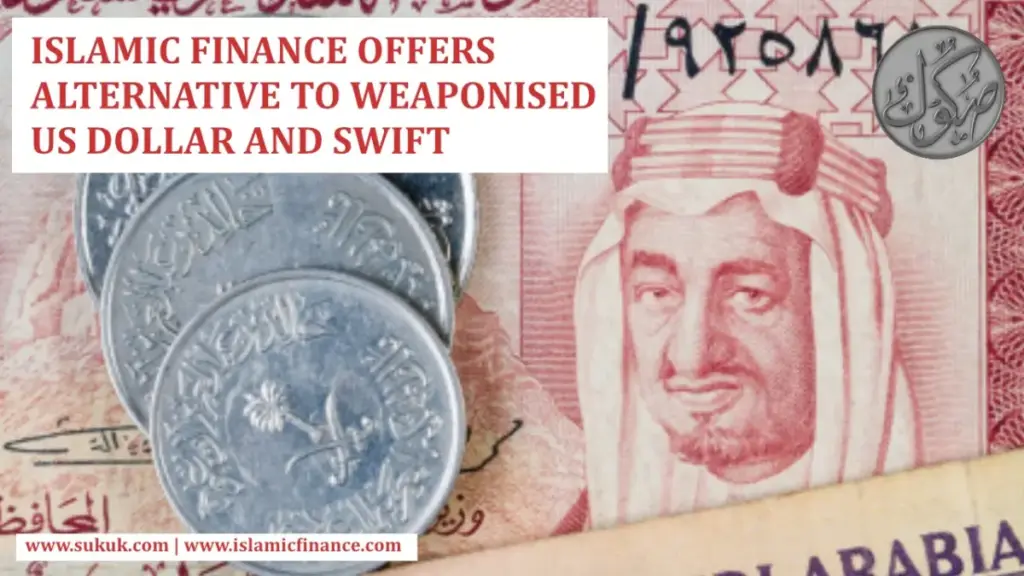
The growing weaponization of the United States dollar and the global financial messaging network SWIFT has triggered a profound shift in international commerce. As trust steadily erodes in the greenback and the Western-dominated payment systems that support it, a diverse coalition of nations, emerging economies, and financial institutions is accelerating efforts to find viable alternatives. Central to this global reassessment is the potential expansion of Islamic finance instruments, local currency trading settlements, and commodity-backed financial architectures designed to bypass traditional Western financial chokepoints.
The push to diversify away from the dollar has gained considerable political momentum. Turkish President Recep Tayyip Erdogan has emerged as a leading voice calling for fundamental changes to the international monetary architecture. Emphasizing the pressing nature of the current economic environment, President Erdogan noted that trade in national currencies has gained urgency, asserting that nations should immediately place the issue of Islamic finance firmly on the international agenda.
President Erdogan’s remarks echo previous warnings he has issued to the global community, urging countries to dismantle the absolute monopoly that the US dollar currently holds over international trade, energy pricing, and cross-border investment. These systemic concerns are not confined to emerging economies alone. Highlighting the vulnerability of the US currency’s dominant status, US Treasury Secretary Steve Mnuchin publicly acknowledged the growing risks during financial policy discussions, conceding that if policymakers are not careful, international markets will actively look at using other currencies and alternative financial rails.
Iranian Banks Removed from SWIFT
The catalyst for many of these urgent efforts to circumvent Western financial infrastructure lies in the direct application of economic sanctions. The sweeping use of United States sanctions has resulted in the systematic removal of Iranian banks from the Society for Worldwide Interbank Financial Telecommunication, commonly known as SWIFT. This exclusion has severely crippled Iran’s ability to conduct routine foreign trade, access international capital markets, and settle payments for vital imports and exports.
The ramifications of these unilateral financial measures extend far beyond the Middle East, straining diplomatic and economic relations between the United States and its traditional European allies. Similar extraterritorial sanctions have directly impacted European enterprises, notably disrupting German firms working on the joint Russian-German energy pipeline project. These aggressive enforcement actions have underscored the inherent risks for any nation or corporation transacting in dollars or utilizing SWIFT, as political disputes can instantly sever access to the global liquidity network.
In direct response to these vulnerabilities, major global powers have begun constructing parallel financial architectures. Russia and China, both frequent targets of Western economic pressure, have established their own independent payment and messaging systems. By doing so, they have enabled bilateral trade to proceed directly between their respective economies, effectively insulating their commercial transactions from the oversight, interference, and jurisdiction of the United States dollar and its associated clearing mechanisms.
Increased Use of Gold and Local Currencies
The strategic pivot away from the dollar is expanding rapidly through multilateral organizations. The Shanghai Cooperation Organization (SCO), an influential eight-nation security and economic bloc that includes major global players such as China, Pakistan, and Russia, now accounts for nearly a quarter of the entire global gross domestic product. Member states within the SCO have systematically increased their collective holdings of gold and foreign exchange reserves, which have grown to nearly four trillion US dollars.
This accumulation of hard assets and alternative reserves has laid the groundwork for profound institutional shifts in regional commerce. During a high-level finance ministers meeting held in Moscow, member states of the Shanghai Cooperation Organization reached a formal decision to conduct bilateral trade and investment utilizing local currencies rather than routing transactions through the US dollar. This collective policy shift significantly reduces transaction costs, minimizes exposure to foreign exchange volatility driven by US monetary policy, and creates a functional template for other regional blocs seeking financial sovereignty.
Use of Gold in Islamic Cultures
Beyond fiat local currencies, tangible assets such as gold have long served as an attractive asset class and an enduring store of wealth, traditionally passed down through generations across various Asian cultures. Capitalizing on this cultural familiarity and trust, countries such as Turkey and Malaysia have placed themselves at the forefront of Islamic financial gold banking and the development of gold-backed currency systems.
Practical implementations of these concepts have already moved beyond theoretical discussions into regional economies. In Malaysia, the state governments of Kelantan and Perak took innovative steps by introducing modern gold dinar and silver dirham coins intended as a means of payment and a medium for everyday trade. These initiatives demonstrate a localized desire to anchor transactions in stable, intrinsic value rather than paper currency subject to external political pressures.
A similar transformation has taken place within the Turkish banking sector. Kuveyt Türk, a prominent Turkish Islamic bank operating under participation banking principles, initiated gold banking operations in 2007. Over the subsequent decade, the institution successfully collected over twenty-six tons of physical gold, valued at approximately 1.2 billion US dollars as of July 2019. By integrating these substantial bullion reserves directly into the broader Turkish economy, the bank created a robust framework for mobilizing dormant wealth. Current ongoing initiatives within this sector now explore the integration of Islamic finance principles with gold-backed cryptocurrencies, aiming to modernize the storage and transfer of bullion to better facilitate seamless cross-border trade.
Islamic Finance Gold Standard
The broader integration of physical precious metals into modern Islamic finance received a major institutional endorsement in 2016. In a landmark development, the World Gold Council and the Accounting and Auditing Organisation for Islamic Financial Institutions jointly approved a comprehensive Sharia standard for gold-based products.
The primary objective of this standardized regulatory framework was to safely increase the utilization of physical bullion within Islamic finance and to encourage the creation of innovative financial instruments compliant with religious jurisprudence. The approved standard meticulously addressed complex operational parameters, including the proper use of gold as collateral and the exact mechanisms required for the exchange of gold in both immediate spot transactions and deferred contracts. By establishing clear, internationally recognized guidelines, the standard has provided the legal and structural certainty necessary for Islamic financial institutions to expand their gold-related product offerings and integrate them into the evolving landscape of global trade.