Indonesia stands as a towering presence in the rapidly expanding global Islamic economy, securing the fourth global ranking in the State of the Global Islamic Economy Report for 2025/26. The country commands global leadership in modest fashion while maintaining powerful, prominent positions across halal food, media and recreation, pharmaceuticals, and cosmetics. Domestically, the momentum is equally robust, with the national halal value chain surging by 5.5% year-on-year in the second quarter of 2026, easily outpacing the broader national economic growth rate.
Yet, these impressive figures establish scale rather than true socioeconomic impact.
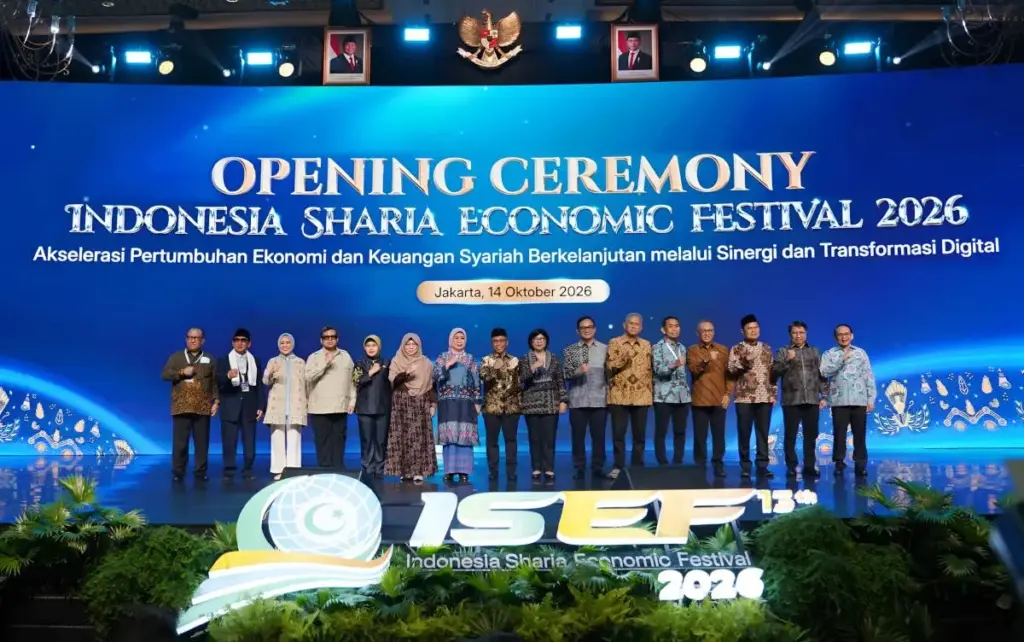
The far more challenging question facing policymakers, economists, and industry leaders is whether this phenomenal growth in halal consumption, formal certification, and Islamic finance is actually translating into tangible improvements in productivity, higher incomes, and better livelihoods for the enterprises, everyday workers, and local communities underpinning the entire sector. This pressing question served as the defining ethos of the 13th Indonesia Sharia Economic Festival (ISEF) 2026, hosted in Jakarta from October 14 to 18 under a guiding principle that is both elegantly simple and profoundly demanding: "Good for All."
Initiated back in 2014 by Bank Indonesia, ISEF has matured into a premier annual platform designed to bridge the gaps between Indonesia’s burgeoning halal industries, formal Islamic financial institutions, social-finance organizations, government ministries, commercial enterprises, academic institutions, and international partners. Far exceeding the traditional boundaries of a standard trade exhibition, the festival uniquely combines high-level policy dialogues, targeted business matching sessions, capacity-building workshops, and public education initiatives to fortify the nation’s entire Islamic economic ecosystem. Consequently, ISEF functions as much more than an annual gathering; it offers Indonesia a vital laboratory to test whether the core values of Islamic economics can be systematically translated into measurable, lasting economic and social outcomes for its citizens.
Growth Does Not Tell the Whole Story
Indonesia’s expansive Islamic economy spans a diverse range of sectors, including agriculture, halal food, modest fashion, pharmaceuticals, cosmetics, tourism, conventional financial services, and Islamic social finance. Its deep foundations rest upon millions of small and medium-sized enterprises, traditional Islamic boarding schools, and specialized institutions dedicated to managing religious philanthropic funds such as zakat and waqf.
Yet, the sheer size of an economic ecosystem does not automatically reveal how widely or equitably its benefits are distributed among the populace.
Take halal certification as a prime example. Official certification protects consumers, reinforces market trust, and opens doors to new commercial opportunities. However, once a small enterprise receives its certificate, it frequently continues to struggle with fundamental operational hurdles: purchasing modern machinery, maintaining consistent product quality, securing reliable supplies of raw materials, fulfilling larger commercial orders, or successfully entering formal retail distribution networks.
Official certification fundamentally changes the legal and formal status of a product, but it does not automatically alter the precarious economic position of the producer behind it.
The exact same distinction applies directly to the realm of Islamic finance. While rapid asset growth is certainly important, the true developmental test for the sector is whether financing actively reaches productive enterprises that remain chronically underserved—particularly small businesses that lack traditional collateral, formal accounting records, or the sophisticated capacity to navigate complex administrative application procedures.
As a result, Indonesia must look far beyond mere sectoral expansion. The country needs to rigorously measure economic access and business progression.
True economic access becomes visible when small enterprises successfully obtain working capital financing, professional mentoring, and direct market connections. Meanwhile, genuine business progression occurs when these enterprises steadily increase their revenues, invest in updated equipment, recruit additional local workers, secure repeat commercial contracts, and break into formal retail or international export markets.
From Festival Connections to Business Outcomes
With participation from more than 1,000 halal-industry stakeholders and the execution of over 100 distinct activities, ISEF 2026 possessed the immense scale required to directly connect small enterprises with financial institutions, prospective buyers, government agencies, and international partners. The comprehensive program featured intensive business matching sessions, sprawling exhibitions, specialized pesantren (Islamic boarding school) business forums, and high-level domestic and international panel discussions. Bringing these disparate actors into a single, cohesive ecosystem is an absolute necessity, given that small enterprises rarely manage to scale up their operations entirely on their own.
However, the most meaningful and enduring results of ISEF will only emerge long after the exhibition halls have closed their doors and the crowds have dispersed.
Key questions remain for the post-festival landscape: How much of the pledged financing will eventually be disbursed to businesses in need? How many preliminary business meetings will successfully generate realized and repeat commercial orders? Exactly how many participating enterprises will sustainably increase their production capacity, recruit new workers, or break into formal retail and export markets?
While transaction commitments remain useful indicators, they measure hopeful intentions rather than hard outcomes. ISEF could effectively bridge this ongoing measurement gap by establishing a dedicated impact dashboard designed to monitor participating enterprises six and twelve months after the festival concludes. Utilizing short, anonymized surveys, such a dashboard could meticulously track whether approved financing was actually disbursed, whether business networking meetings converted into binding contracts, and whether participating enterprises succeeded in increasing their revenues, production volumes, and employment numbers. Furthermore, it could officially record successful entries into formal retail or export markets while evaluating whether these businesses remain operational a full year later.
Values Must Become Governance
ISEF 2026 also served as the launchpad for three significant institutional initiatives aimed at strengthening the fundamental governance foundations of the national Islamic economy.
The first initiative is the newly established Islamic Financial Market Code of Conduct, developed collaboratively by market associations alongside Bank Indonesia and the Financial Services Authority. This code is explicitly designed to reinforce integrity, transparency, and operational efficiency across all Islamic financial-market transactions.
The second initiative is the updated Zakat Core Principles Implementation Index 2.0, formulated jointly by BAZNAS and Bank Indonesia. This modernized index significantly strengthens the risk-management dimension utilized in assessing the overall governance and accountability of zakat institutions.
The third initiative is a comprehensive international scholarship program financed directly through pooled Islamic social funds. This program is structured to develop critical human capital while simultaneously encouraging the productive, long-term utilization of zakat, infaq, sadaqah, and waqf.
These regulatory and institutional initiatives are vital because Islamic economics is fundamentally an economy built upon trust. Formal legal compliance alone can never sustainably maintain that trust. An authentic Islamic financial market must visibly demonstrate uncompromised integrity in everyday transactions. Similarly, zakat distribution should be assessed not merely by the sheer volume of funds collected and disbursed, but by whether the recipients genuinely achieve enhanced economic resilience. In parallel, productive waqf assets must be rigorously evaluated through the lasting public services, income streams, and economic opportunities they generate for communities over time.
A Global Measurement Challenge
Indonesia’s ongoing experience offers a broader, highly relevant lesson for the international Islamic economy as a whole. Countries worldwide that are actively developing their own domestic halal industries frequently measure progress primarily through headline figures such as consumer spending, the number of certified products, total financial assets, and aggregate investment commitments. While these indicators certainly reveal scale, they can never serve as a valid substitute for concrete evidence of actual productivity, sustained income growth, and genuine social mobility.
Other prominent Islamic-economy markets face this exact same foundational challenge: effectively connecting halal certification with actual production capacity, linking Islamic finance directly to the real economy, binding social finance to lasting economic mobility, and ensuring that digital access translates into true financial and economic inclusion.
While modern digital platforms can successfully connect remote producers with distant buyers and expand overall access to financial tools, maintaining an online presence does not magically solve underlying problems such as inadequate production capacity, weak financial record-keeping, or limited business management skills.
Technology merely expands the doorway. Access to proper financing, professional mentoring, financial literacy, robust consumer protection, and institutional trust are what ultimately determine whether businesses and communities can successfully move through that doorway to prosperity.
Making “Good for All” Measurable
Indonesia has already convincingly demonstrated that its domestic Islamic economy is capable of remarkable growth. Its formidable global ranking, massive domestic consumer market, and rapidly expanding halal value chain provide ample, undeniable evidence of this momentum.
Yet, the next developmental test is far more demanding.
Halal certification must successfully connect with accessible financing and viable markets. Islamic finance must connect meaningfully with real, productive economic activity. Zakat and waqf must connect directly with measurable social progress. Technological innovation must actively remove the actual, physical barriers that hinder broad economic participation.
Although the framework of Islamic economics is firmly rooted in specific religious principles, the ultimate outcomes—fair financing, safe products, responsible market conduct, and productive social funds—represent universal public goods. The benefits derived from them need not, and should not, be strictly confined by religious identity.
Consequently, "Good for All" should transcend being merely the catchy theme of ISEF 2026. It must evolve into the permanent standard against which all related programs, institutions, and financial transactions are rigorously evaluated. The final measure of success is not simply how large the Islamic economy eventually becomes, but precisely how many people can honestly say that they grew and prospered right along with it.