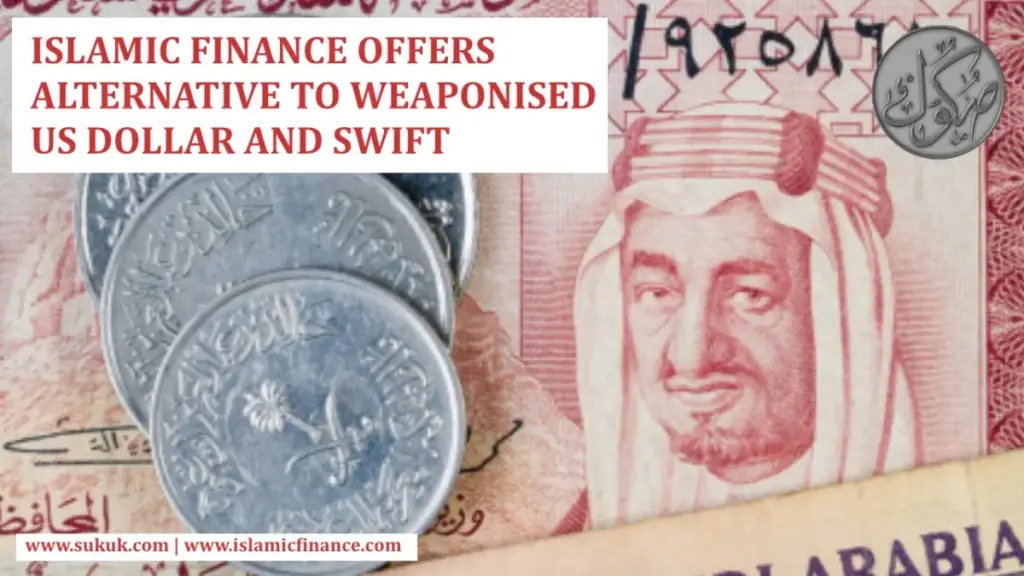
The aggressive weaponization of the US dollar and the Society for Worldwide Interbank Financial Telecommunication (SWIFT) international payment system has triggered a profound shift in global commerce. As trust steadily wanes in the greenback and the Western-dominated financial architecture that supports it, nations around the world are increasingly looking for viable alternatives to secure their economic sovereignty and maintain international trade flows.
The consequences of using economic leverage as a foreign policy tool have become impossible to ignore. In response to these mounting pressures, Turkish President Recep Tayyip Erdogan has strongly advocated for the broader adoption of Islamic finance mechanisms and trade conducted in national currencies. Highlighting the urgency of the matter during international forums, President Erdogan stated that trade in national currencies has gained absolute urgency, urging the international community to place the issue of Islamic finance firmly on the global economic agenda.
This push is not entirely unprecedented. The Turkish leader has repeatedly called on other nations to dismantle the de facto monopoly of the US dollar in global commodities and bilateral trade. Even Washington has taken notice of the shifting sentiment. Former US Treasury Secretary Steve Mnuchin publicly acknowledged the risks associated with these policies, warning that if the United States is not careful, international actors will actively look for ways to utilize alternative currencies to bypass the American financial system.
Iranian Banks Removed from SWIFT
The tipping point for many emerging economies has been the aggressive enforcement of unilateral US sanctions, which have effectively locked targeted nations out of core international financial networks. Most notably, US sanctions have resulted in the systematic removal of Iranian banks from the SWIFT payment system. This sweeping exclusion has severely crippled Iran’s ability to conduct normal foreign trade, settle international accounts, and receive payments for crucial exports like oil and gas.
The impact of these financial exclusion measures has extended far beyond the Middle East, occasionally catching traditional Western allies in the crossfire. Similar secondary sanctions and regulatory threats have severely impacted European, particularly German, firms and energy companies working on vital cross-border infrastructure projects, such as the Russian-German energy pipeline. These disruptions have highlighted the vulnerability of commercial entities operating under a financial system heavily influenced by Washington’s foreign policy objectives.
Faced with the constant threat of exclusion and asset freezes, major economic powers have begun taking proactive steps to insulate their economies. Russia and China, both frequent targets of Western economic pressure, have established their own independent financial messaging and payment systems. These alternative mechanisms allow Moscow and Beijing to trade directly with each other in local currencies, successfully bypassing the US dollar and removing the vulnerability of relying on Western-controlled financial nodes.
Increased Use of Gold and Local Currencies
The movement away from the greenback is increasingly being organized through multilateral institutions that represent a massive share of the global economy. The Shanghai Cooperation Organization (SCO), an influential eight-nation security and economic bloc that includes major global players such as China, Pakistan, and Russia, currently accounts for nearly a quarter of global Gross Domestic Product.
Recognizing their combined economic weight, SCO member states have systematically increased their holdings of physical gold and foreign exchange reserves, which now amount to a staggering total of nearly four trillion US dollars. This massive accumulation of non-dollar assets provides these nations with a robust buffer against external financial shocks.
The momentum within the bloc reached a concrete milestone during a high-level finance ministers meeting held in Moscow. During the gathering, SCO member states officially agreed to transition away from the US dollar by conducting bilateral trade and cross-border investment entirely in their local currencies. This decision represents a major structural shift in how regional trade is settled, reducing transaction costs and insulating participating economies from fluctuations and policy decisions originating in Washington.
Use of Gold in Islamic Cultures
Beyond national currencies, tangible assets such as gold have re-emerged as foundational elements in international trade discussions, particularly within Asian and Islamic cultures where bullion has historically served as a trusted store of wealth passed down through generations. Turkey and Malaysia have positioned themselves at the forefront of this movement, pioneering innovative approaches to Islamic financial gold banking and the development of gold-backed currency systems.
In Malaysia, regional initiatives have demonstrated the practical viability of precious metals in everyday commerce. The Malaysian states of Kelantan and Perak introduced traditional gold dinar and silver dirham coins as a complementary means of payment and local trade, offering citizens an alternative to fiat currency.
Simultaneously, the Turkish banking sector has integrated gold directly into the modern financial system. Kuveyt Türk, a prominent Turkish Islamic bank, launched pioneering gold banking services in the late 2000s. Through these innovative retail and institutional accounts, the bank successfully collected over 26 tons of gold—valued at approximately 1.2 billion US dollars as of July 2019—and integrated those physical reserves smoothly into the broader Turkish economy. Building on this success, current financial initiatives are exploring the creation of Islamic finance, gold-based cryptocurrencies designed to streamline and better facilitate secure cross-border trade without relying on Western correspondent banking networks.
Islamic Finance Gold Standard
The integration of precious metals into modern Islamic finance received a significant institutional boost when the World Gold Council, in collaboration with the Accounting and Auditing Organisation for Islamic Financial Institutions (AAOIFI), officially approved a comprehensive Sharia standard for gold-based products.
The primary objective of this landmark standard was to dramatically increase the utilization of physical bullion within the Islamic finance sector and pave the way for the creation of sophisticated new financial instruments compliant with religious law. The regulatory framework carefully addressed complex financial mechanisms, including the proper use of gold as collateral and the strict guidelines governing the exchange of gold in both spot and deferred transactions. By establishing clear, universally recognized guidelines, the standard has provided the necessary legal and religious foundation for institutions to develop innovative gold-backed products that can support modern trade and investment on a global scale.