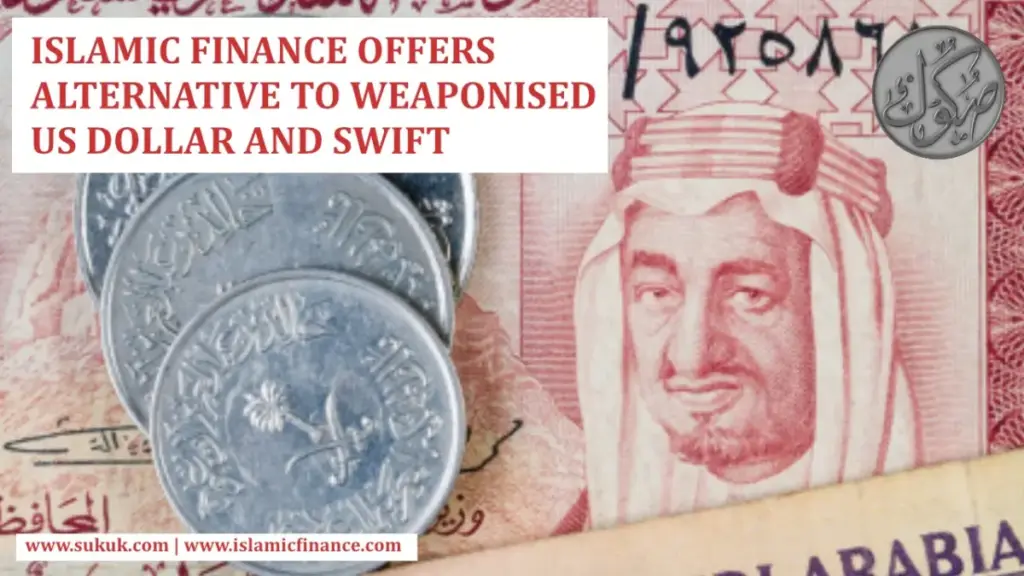
The growing trend of utilizing the United States dollar and the SWIFT international payment system as geopolitical leverage has accelerated a global search for alternative financial architectures. As trust in the greenback and traditional Western-dominated financial infrastructure wanes, nations burdened by economic restrictions and political pressures are increasingly exploring innovative mechanisms to safeguard their economies and maintain international commerce.
This shifting sentiment has prompted high-level political discussions regarding the reduction of reliance on a single dominant currency. In response to these pressures, Turkish President Recep Tayyip Erdogan has strongly advocated for the broader adoption of Islamic finance principles and the expansion of trade settled in national currencies. Emphasizing the urgency of the matter during international forums, President Erdogan noted that trade in national currencies has become an essential priority, urging the global community to place Islamic finance firmly on the economic agenda.
The Turkish leader has previously criticized what he characterizes as a global monopoly held by the dollar in international trade, arguing that such heavy concentration exposes emerging and developing economies to external shocks and political decisions originating outside their borders. Concerns over the over-reliance on the US financial system are not confined solely to critics of Washington’s foreign policy. Even within the United States, senior officials have recognized the potential long-term risks associated with aggressive financial sanctions. Former US Treasury Secretary Steve Mnuchin previously acknowledged the delicate balance of maintaining the dollar’s preeminence, warning that if policymakers are not careful, international actors will increasingly explore the utilization of alternative currencies and payment systems to insulate their trade relationships.
Iranian Banks Removed from SWIFT
The catalyst for many of these alternative financial arrangements stems directly from the intensification of economic sanctions. The application of sweeping US restrictions has effectively removed major Iranian banks from the Society for Worldwide Interbank Financial Telecommunication (SWIFT) network. This unprecedented exclusion has severely crippled Iran’s capacity to conduct standard foreign trade, severely restricting its access to international markets and foreign exchange reserves.
Similar extraterritorial economic measures have created friction among traditional allies as well. European nations have felt the impact of American restrictions, which have notably affected European and German firms engaged in cross-border energy infrastructure projects, such as the construction of the Russian-German natural gas pipeline. These disruptions have highlighted the vulnerability of commercial enterprises to unilateral financial sanctions, illustrating that even major industrialized economies can find their normal business operations disrupted by political disputes involving payment infrastructure.
To mitigate these vulnerabilities, major economic powers have begun constructing parallel financial channels. Most notably, Russia and China have established their own bilateral payment systems designed to facilitate direct trade between their respective enterprises. By bypassing traditional Western-dominated networks entirely, Moscow and Beijing have demonstrated that alternative clearing mechanisms are not only feasible but can be operationalized to protect strategic trade partnerships from external interference.
Increased Use of Gold and Local Currencies
The momentum away from the US dollar is also visibly gaining traction within multilateral institutions that encompass a significant share of global economic output. The Shanghai Cooperation Organization (SCO), an eight-nation regional bloc that includes major economies such as China, Pakistan, and Russia, currently represents nearly a quarter of the global Gross Domestic Product.
Recognizing their combined economic weight, member states of the SCO have systematically increased their collective holdings of gold and foreign exchange reserves, which have grown to nearly four trillion US dollars. This robust financial backing has provided member nations with the confidence to alter their trading practices. At a high-profile finance ministers meeting held in Moscow, the SCO formally decided to systematically conduct bilateral trade and investment utilizing local currencies rather than routing transactions through intermediary Western currencies. This coordinated pivot aims to reduce transaction costs, shield regional economies from foreign exchange volatility, and diminish the overall dominance of the dollar within the Eurasian landmass.
Use of Gold in Islamic Cultures
Parallel to the de-dollarization efforts led by state actors and regional blocs, traditional assets such as gold have re-emerged as attractive instruments for wealth preservation and trade settlement. Gold holds deep historical and cultural significance as a reliable store of wealth, particularly within Asian and Islamic cultures where it has been passed down through generations as a trusted medium of value.
Recognizing this cultural affinity, countries such as Turkey and Malaysia have placed themselves at the forefront of Islamic financial gold banking and the development of gold-backed currency systems. In Malaysia, local state governments have taken tangible steps to reintroduce traditional coinage into modern circulation. Specifically, the Malaysian states of Kelantan and Perak introduced the gold dinar and silver dirham coins as complementary means of payment and medium for trade, offering citizens and merchants an alternative to fiat currency.
Simultaneously, the private banking sector in Turkey has innovated to integrate physical precious metals back into the formal financial architecture. Kuveyt Türk, an Islamic bank operating in Turkey, pioneered institutional gold banking initiatives beginning in 2007. Through specialized gold accounts and collection mechanisms, the bank successfully gathered over twenty-six tons of physical gold from the public—valued at approximately 1.2 billion US dollars by July 2019—and seamlessly integrated those assets into the broader Turkish economy. Building upon these successful physical banking models, current financial initiatives are exploring the integration of Islamic finance principles with modern technology, including the development of gold-backed cryptocurrencies designed to facilitate fast, secure, and transparent cross-border trade without relying on traditional Western correspondent banking networks.
Islamic Finance Gold Standard
The expansion of gold-based instruments within Islamic finance received a significant institutional endorsement that bridged traditional jurisprudence with modern international market practices. In 2016, the World Gold Council, in collaboration with the Accounting and Auditing Organisation for Islamic Financial Institutions (AAOIFI), formally approved a comprehensive sharia standard for gold-based financial products.
The primary objective of this landmark standard was to dramatically increase the utilization of physical bullion within Islamic finance and to establish a regulatory and religious framework for the creation of new financial instruments. By establishing clear rules concerning the ownership, custody, and trading of precious metals, the standard addressed complex financial questions regarding the use of gold as collateral, as well as the execution of gold exchanges in both spot and deferred transactions. This regulatory clarity has provided Islamic financial institutions with the legal certainty required to develop sophisticated gold-linked products, paving the way for broader adoption of bullion-based trade solutions as the international community continues to diversify away from traditional dollar-centric payment systems.