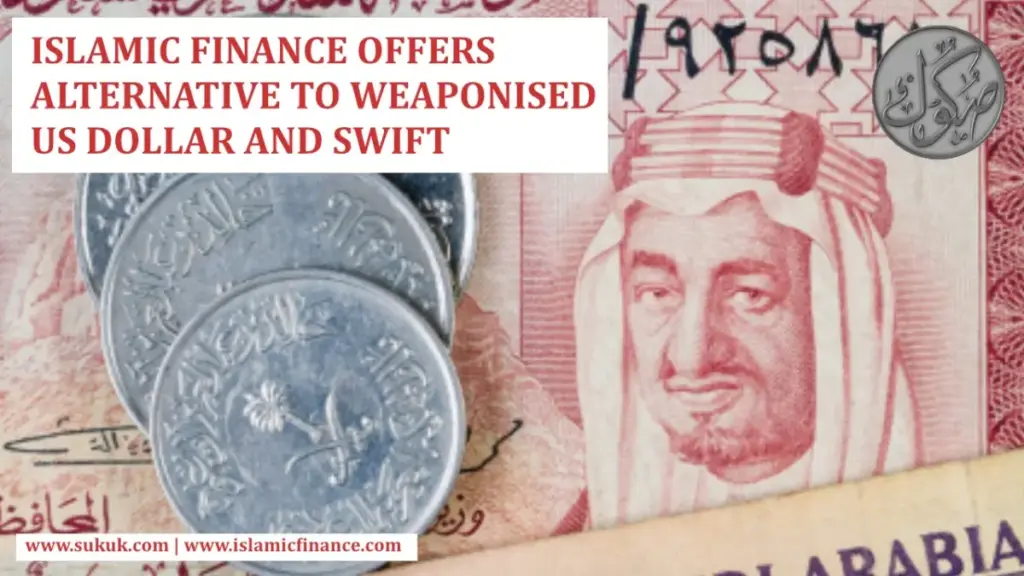
The weaponization of the United States dollar and the international payment architecture centered around the Society for Worldwide Interbank Financial Telecommunication (SWIFT) has triggered a profound shift in global commerce. As trust in the greenback and traditional Western-dominated payment systems steadily erodes, international leaders, emerging economies, and financial institutions are actively seeking viable alternatives to insulate their sovereign economies from external pressure and unilateral sanctions.
This growing disillusionment has brought alternative financial frameworks to the forefront of geopolitical discussions. In response to these systemic vulnerabilities, Turkish President Recep Tayyip Erdogan has strongly advocated for the broader adoption of Islamic finance principles. Emphasizing the pressing nature of the situation, President Erdogan noted that trade conducted in national currencies has gained unprecedented urgency, suggesting that the international community must place Islamic finance instruments high on the global economic agenda.
The Turkish leader has previously urged international partners to dismantle what he characterizes as the absolute monopoly of the dollar in global trade transactions. This sentiment of caution is not entirely confined to critics of Western financial dominance. Even within the United States establishment, acknowledgments of the risks associated with over-relying on economic coercion have surfaced. Former US Treasury Secretary Steve Mnuchin previously acknowledged the inherent dangers of these policies, warning that if policymakers are not careful, international actors will increasingly look toward alternative currencies and payment networks to conduct their cross-border business.
Iranian Banks Removed from SWIFT
The catalyst for much of this urgent search for alternatives lies in the aggressive application of economic sanctions. The use of US-led sanctions regimes has resulted in the exclusion of Iranian banks from the SWIFT international payment system. This decisive action has severely crippled Iran’s ability to conduct routine foreign trade, cutting the nation off from conventional banking lifelines and compelling its policymakers to explore decentralized and alternative clearing mechanisms.
The reach of these secondary sanctions has extended far beyond the Middle East, creating friction among traditional Western allies as well. Similar punitive measures have directly impacted European enterprises, notably affecting German firms that were actively working on the construction of the major Russian-German energy pipeline. These disruptions have demonstrated to international capitals that reliance on a single, politically influenced financial infrastructure poses a structural risk to national sovereignty and commercial execution.
In an effort to bypass these vulnerabilities, major economic powers have begun establishing parallel systems. Russia and China have taken concrete steps by setting up their own independent bilateral payment systems. These mechanisms allow both nations to trade directly with one another, completely avoiding the use of the US dollar and shielding their commercial exchanges from external oversight or interruption.
Increased Use of Gold and Local Currencies
The movement away from the dollar is gaining institutional backing across major multilateral organizations. The Shanghai Cooperation Organization (SCO), an eight-nation regional bloc that includes economic heavyweights such as China, Pakistan, and Russia, currently represents nearly a quarter of global gross domestic product. Recognizing the fragility of the existing monetary order, member states of the SCO have systematically increased their collective gold and foreign exchange reserves, which now stand at an impressive nearly four trillion US dollars.
This strategic accumulation of reserves culminated in a significant policy decision during a finance ministers meeting held in Moscow. The SCO formally agreed to transition their bilateral trade and investment activities away from Western currencies and conduct them primarily in local currencies. By utilizing domestic legal tenders for mutual trade, these nations aim to reduce transaction costs, enhance regional economic integration, and insulate their markets from exchange rate volatility driven by US monetary policy decisions.
Use of Gold in Islamic Cultures
Parallel to the shift toward national currencies, precious metals are reclaiming a central role in commercial transactions, particularly within Asian and Islamic cultures where gold has historically served as an attractive asset class and an enduring store of wealth passed down through generations. Turkey and Malaysia have positioned themselves at the forefront of this movement, pioneering Islamic financial gold banking and the development of gold-backed currency systems.
In Malaysia, state governments have taken tangible steps to operationalize these concepts. The Malaysian states of Kelantan and Perak introduced the gold dinar and silver dirham coins as alternative means of payment and mediums for trade, reviving historical monetary traditions to foster local economic resilience.
Meanwhile, commercial financial institutions in Turkey have integrated precious metals into modern banking infrastructure. The Turkish Islamic bank Kuveyt Türk, known in English as Kuwait Turkish Bank, initiated a pioneering gold banking program in 2007. By July 2019, the institution had successfully collected over 26 tons of physical gold, valued at approximately 1.2 billion US dollars. This substantial reserve was successfully integrated into the broader Turkish economy, transforming idle household savings into productive financial capital. Current financial technology initiatives are building upon this foundation by exploring Islamic finance gold-based cryptocurrencies designed to facilitate seamless and secure cross-border trade without relying on traditional Western correspondent banking networks.
Islamic Finance Gold Standard
The institutional credibility of gold-based financial instruments received a major boost with the establishment of formalized regulatory standards. In 2016, the World Gold Council, in collaboration with the Accounting and Auditing Organisation for Islamic Financial Institutions (AAOIFI), officially approved a comprehensive sharia standard for gold-based products.
The primary objective of this regulatory framework was to encourage the expanded use of physical bullion within Islamic finance and to clear the path for the creation of innovative financial instruments compliant with Islamic law. The newly established standard provided clear guidelines addressing complex financial mechanics, including the precise use of collateral as well as the rules governing the exchange of gold in both immediate spot transactions and deferred payment arrangements. By establishing clear, universally recognized guidelines, the standard has provided the necessary legal and religious certainty for financial institutions to introduce gold-backed products into the mainstream global economy.