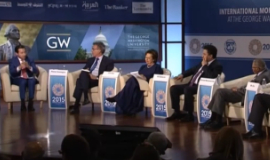
Former Turkish Deputy Prime Minister Ali Babacan highlighted the universal appeal and applicability of Islamic finance during a high-profile panel discussion hosted by the International Monetary Fund (IMF) in May 2015. Speaking to an international audience of financial leaders, economists, and policymakers, Babacan emphasized that the foundational principles of Islamic finance extend far beyond religious boundaries, offering robust economic instruments, ethical investment frameworks, and sustainable wealth-growth opportunities for all of humankind, regardless of whether the customer is Muslim or not.
The remarks, delivered during a critical period of global economic introspection, shed light on the growing mainstream recognition of Sharia-compliant financial systems. Islamic finance, traditionally rooted in the Middle East and parts of Asia, has increasingly captured the attention of global markets seeking alternatives to conventional interest-based models. By prohibiting the charging and paying of interest—known as Riba—along with speculation and investments in sectors deemed harmful to society, such as gambling, alcohol, and weapons, the sector naturally aligns with modern concepts of ethical investing, socially responsible investing, and sustainable development.
Babacan’s observations at the IMF event underscored a shift in how financial authorities view Islamic banking and investment vehicles. Rather than being perceived as a niche market designed exclusively for adherents of Islam, the system is increasingly evaluated on its economic merits, stability, and risk-sharing characteristics. In conventional finance, risk is often shifted entirely onto the borrower through fixed interest rates, whereas Islamic finance promotes a partnership model where risk and reward are shared between the financial institution and the client. This intrinsic philosophy encourages prudence, transparency, and a closer link between financial transactions and the real economy.

The discussion in May 2015 also coincided with a broader global dialogue regarding financial inclusion, systemic resilience, and the prevention of excessive leverage—factors that contributed heavily to the 2008 global financial crisis. Economists and international organizations like the IMF have frequently examined how Islamic finance principles might contribute to greater global financial stability. Because Islamic financial instruments must be backed by tangible assets and prohibit excessive uncertainty or ambiguity in contracts, they tend to shield investors from some of the speculative bubbles that plague conventional markets.
As individuals and institutional investors alike look toward long-term wealth accumulation strategies, the concept of slow and steady growth through halal ethical investments has gained traction. The philosophy encourages disciplined saving, asset-backed investments, and patience, echoing the sentiment of building wealth responsibly over time rather than chasing quick, high-risk returns. This approach resonates strongly with a growing demographic of consumers who prioritize environmental, social, and governance factors in their financial decisions.
Babacan’s emphasis on the universality of these financial principles serves as a reminder that the core tenets of Islamic finance—fairness, transparency, risk-sharing, and ethical responsibility—address universal human values. By removing exploitative practices and fostering a direct connection between financial capital and productive economic activity, Islamic finance continues to position itself as a viable, inclusive, and enduring alternative within the global financial architecture.