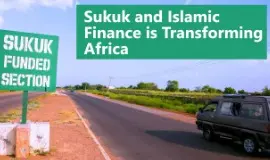
Sukuk, the Sharia-compliant alternative to conventional bonds, are increasingly financing vital infrastructure projects across Africa while simultaneously contributing to socially useful ventures throughout the continent. As African governments and financial institutions search for reliable, transparent, and sustainable capital to bridge persistent infrastructure gaps, these asset-backed financial instruments have emerged as a powerful engine for economic growth and tangible public development.
Issued predominantly in local currencies, sukuk are actively being deployed to construct and rehabilitate critical public assets, shielding economies from foreign exchange volatility while directly mobilizing domestic savings. The appeal and effectiveness of this financing model were powerfully demonstrated during a landmark 2017 issuance. A local-currency sukuk offering valued at N100 billion was heavily oversubscribed by eager investors, signaling immense market confidence and a deep appetite for financial instruments tied to real, productive economic activity.
Building on this momentum, the Federal Government of Nigeria has repeatedly turned to the sukuk market, issuing a series of sovereign offerings. The proceeds raised from these specialized issuances have been systematically channeled into national development, successfully funding 28 major road projects across Nigeria. These initiatives have significantly improved connectivity, reduced transit times, and facilitated regional trade, offering a clear blueprint for how alternative finance can directly address infrastructural deficits.
The growing preference for sukuk over traditional debt instruments is rooted in fundamental structural differences that offer superior compliance and safeguard public funds. Financial experts, including industry leader Hassan Usman, have outlined why sukuk provide greater regulatory and ethical compliance, leaving remarkably little room for corruption, inefficiency, and the loss or misallocation of funds compared to traditional bonds.
The inherent mechanics of a sukuk require that the underlying project must be strictly executed as planned, with funds tied directly to the creation of a tangible public benefit, such as the establishment of a modern road network or a well-equipped school. Once constructed, this physical asset is leased out in a manner that generates predictable revenues—such as road tolls—which are subsequently collected and returned to the investors as financial returns.
This asset-backed structure contrasts sharply with the mechanics of a conventional government bond. In the case of a traditional bond, the capital raised is treated as general sovereign debt. Even if the borrowed funds are mismanaged, wasted, or lost to corruption, the government remains legally obligated to repay the full principal and interest to bondholders, often leaving the public treasury burdened by debt while no physical infrastructure asset has been developed.
With a sukuk, however, the financial structure makes it virtually impossible to divert the capital raised for any purpose other than the specific, pre-approved project for which the funds were authorized. Because the investment is inextricably linked to a real, identifiable economic asset, accountability is built directly into the financial architecture. This high degree of transparency and accountability continues to position sukuk as a transformative financial instrument for Africa, ensuring that public investments translate directly into enduring physical infrastructure and sustainable social progress.