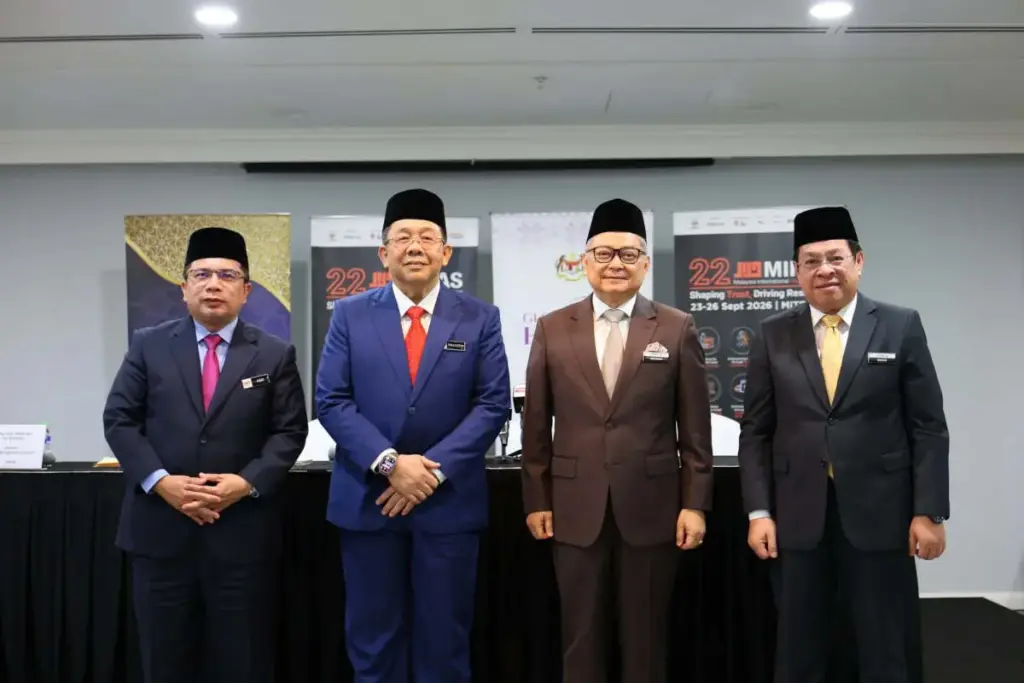
KUALA LUMPUR, Sept. 26, 2026 — In a strategic move to transform its globally recognized halal certification system into a powerful instrument of international commerce, Malaysia is taking steps to position its governance and standards expertise directly alongside the global markets it aims to conquer.
The initiative materialized with the formal signing of a Letter of Intent between the Malaysia External Trade Development Corporation (MATRADE) and the Department of Islamic Development Malaysia, widely known as JAKIM. Under this new agreement, the two major government entities will establish the Halal Development Officer Programme as a cornerstone of the newly introduced Malaysia Halal Global Nexus (MHGN).
Unveiled during the Global Halal Summit 2026 in Kuala Lumpur, the initiative is engineered to seamlessly connect Malaysia’s rigorous halal governance and certification infrastructure with its extensive overseas trade-promotion network. Moving forward, MATRADE trade officers stationed across the globe will be equipped to provide on-the-ground guidance regarding Malaysia’s sophisticated halal ecosystem. The broader strategic objectives of this synergy include strengthening the international recognition of Malaysian halal certification, easing regulatory frictions, and aggressively promoting high-value halal exports.
At its core, the significance of the agreement is less about inventing a novel halal initiative and more about harmonizing two critical pillars of Malaysia’s economic machinery. Historically, government responsibilities have been compartmentalized: JAKIM has maintained sole authority over halal governance, religious compliance, and standard-setting, while MATRADE has operated as the primary export-promotion agency tasked with helping local enterprises penetrate foreign markets.
The introduction of the Malaysia Halal Global Nexus successfully brings these complementary functions together under a unified framework. This integration is explicitly designed to expand international market share, fortify cross-border industry networks, and build unwavering global confidence in the absolute integrity of Malaysia’s halal system.
For Malaysian exporters venturing into foreign territories, the bridging of these two domains can be profoundly consequential.
In modern international trade, a halal certificate functions as far more than a simple label affixed to a consumer package. For any enterprise attempting to cross international borders, complex questions surrounding local standards, foreign certification bodies, mutual recognition frameworks, and regulatory compliance often dictate whether a product is readily accepted by foreign buyers and strict government regulators. Malaysia has spent decades proactively building international trust in its certification ecosystem through structured frameworks—including the formal recognition of foreign halal certification bodies across different geographic regions, as noted by Religious Affairs Minister Senator Dr. Zulkifli Hasan.
The newly minted Halal Development Officer Programme is designed to project this deep institutional knowledge far beyond Malaysia’s physical borders.
By deputizing trade officials with specialized halal training, the government is placing trade professionals directly in the path of the practical hurdles faced by companies seeking international expansion. These officials will be equipped to explain how Malaysia’s comprehensive halal system operates, what its gold-standard certification genuinely represents, and how foreign buyers can seamlessly connect with certified Malaysian halal products and services.
This coordinated arrangement forms a vital part of Kuala Lumpur’s broader ambition to treat halal verification not merely as a domestic religious or administrative process, but as an indispensable component of the nation’s international trade infrastructure.
The government formally introduced the MHGN framework at the Global Halal Summit with the explicitly stated aim of expanding international market access, strengthening collaborative networks among industry players, and increasing global trust. The initiative proudly carries the guiding tagline, “Connecting the Global Halal Ecosystem.”
The timing of this rollout underscores the escalating economic importance that Malaysia attaches to the halal sector. MATRADE has established an ambitious sales target of RM5 billion for the Malaysia International Halal Showcase (MIHAS) 2026, revising its goals upward from an initial RM5.5 billion target following an overwhelming surge of interest from international buyers and investors. The agency reported receiving more than 500 formal applications from international buyers and overseas importers for this year’s event, comfortably surpassing its original target of 300 participating buyers.
Now celebrating its 22nd edition, MIHAS has progressively evolved from a traditional trade exhibition into a sophisticated, high-stakes international trade platform. This year’s flagship event brings together dynamic exporters and international buyers spanning 14 distinct halal-related clusters. Simultaneously, MATRADE has significantly expanded its business-matching capabilities and digital tools, ensuring that exhibition participation successfully translates into tangible, long-term commercial contracts.
This distinction is vital because Malaysia’s primary contemporary challenge is no longer merely demonstrating that it possesses a mature, time-tested halal certification system. Rather, the challenge lies in ensuring that the immense credibility attached to that system directly converts into frictionless market access and sustained commercial success abroad.
This is precisely where the collaborative arrangement between MATRADE and JAKIM proves transformative.
While JAKIM provides the irreplaceable foundation of certification integrity and religious governance, MATRADE brings a sprawling, active overseas trade network. The Halal Development Officer programme acts as a vital conduit, giving the latter agency direct access to the former’s expertise, thereby establishing an efficient channel through which Malaysian halal standards can be articulated, defended, and championed in foreign markets.
The federal government has repeatedly tied the expansion of the halal sector to ambitious national export milestones. Earlier this year, MATRADE announced that Malaysia is aggressively targeting RM80 billion in total halal exports by the year 2030, while simultaneously striving to elevate the sector’s overall contribution to the national economy through continuous innovation and supply-chain resilience.
Achieving this towering target, however, will unquestionably depend on much more than regulatory certification alone.
Malaysian companies must continue to compete fiercely on fundamentals such as pricing, product quality, continuous product development, supply-chain reliability, and localized market intelligence. Nevertheless, official certification frequently acts as the definitive gatekeeper, determining whether a commercial product successfully clears the strict entry requirements of a given market. International recognition of home-grown standards can dramatically reduce the bureaucratic and regulatory barriers that routinely frustrate exporters operating across diverse legal and cultural environments.
For Malaysia, the strategic question is rapidly evolving: whether the hard-earned credibility developed through decades of rigorous domestic certification can be successfully converted into a lasting competitive advantage for Malaysian enterprises overseas.
The introduction of the Halal Development Officer Programme represents a concerted effort to make that connection much more direct and actionable.
Rather than treating halal certification and export promotion as isolated government functions operating in separate silos, Malaysia is deliberately housing them within a unified international framework. Ultimately, the long-term success of this integrated approach will be judged not by the ceremonial signing of the Letter of Intent, but by whether it empowers Malaysian companies to secure wider international recognition, reach entirely new buyers, and turn their trusted halal credentials into durable, long-term export growth.
For a nation that has dedicated decades to building a world-class reputation anchored in rigorous halal standards, this next evolutionary phase is increasingly defined by what happens far beyond the certificate itself—and how effectively that foundational trust travels alongside Malaysian goods and services into the wider global marketplace.