LONDON — The National Art Library is home to a vast and cherished collection of beautifully bound books, but its holdings extend far beyond finished volumes to encompass the very instruments used to craft them. Over the past few months, archival staff have been hard at work cataloguing these historic binding tools, ensuring they are fully discoverable online and accessible for study in the library’s reading rooms. Every single tool in this unique collection was designed for gold tooling—a meticulous bookbinding technique that involves heating the metal face of a specialized tool and using gold leaf to press intricate patterns onto fine leather.

The newly catalogued collection comprises 171 individual binding tools, which primarily belonged to three notable figures of the craft: Sarah Prideaux, Charles Ricketts, and Sybil Pye. While the physical tools themselves are striking works of metalcraft, the binders who wielded them are equally fascinating subjects of study. Archival staff have expressed a particular affinity for the lives and works of pioneering women binders, with Sarah Prideaux standing out as an exceptionally influential figure among them. The library preserves 35 tools that originally belonged to Prideaux, all of which were signed and personally donated by her to the National Art Library between 1911 and 1917.

Born in London in 1853, Sarah Prideaux was initially educated at home before attending Newnham College, Cambridge, for just over a year in 1877. Her time at university was cut short when her father lost his sight, prompting her to return home to assist the family. During this period, she cultivated a diverse range of intellectual and creative pursuits, most notably teaching and bookbinding. She worked as an English teacher until 1888, at which point she made the pivotal decision to transition into a professional career as a bookbinder.

Early critical reception of her work was not universally flattering. A review of her initial bindings published in The British Bookmaker in 1891 offered a harsh assessment, describing them as “quaint but not pretty” with a “design unconventional, binding poor.” By modern standards, such a critique sounds remarkably severe, especially when applied to an artisan’s early experimental attempts. More importantly, these initial reviews proved to be entirely unrepresentative of the exquisite, highly sophisticated work she would go on to produce as her career matured.

Prideaux possessed a brilliant and inquisitive mind, ultimately acquiring a deeper technical knowledge of bookbinding than many of her contemporaries because she had nurtured a passionate interest in the subject long before pursuing it commercially. Her expertise extended seamlessly into the realm of printing, allowing her to exercise meticulous judgment when selecting the texts she chose to bind. She insisted on sourcing exclusively the finest quality leathers and the most luxurious marbled endpapers to complement her artistic visions.

During the height of her career, Prideaux employed an expert finisher—a French craftsman named Lucien Broca—who collaborated with her from the mid-1890s until 1900. Notably, she did not publicly credit his labor on the bindings, a practice that likely stemmed from her conviction that the finished pieces remained entirely her own artistic creations, having been rigorously designed and produced to her exacting specifications. This approach was by no means anomalous; it aligned closely with the prevailing attitudes of most prominent bookbinders of the era, who routinely employed skilled craftsmen and women to help execute their intricate designs.
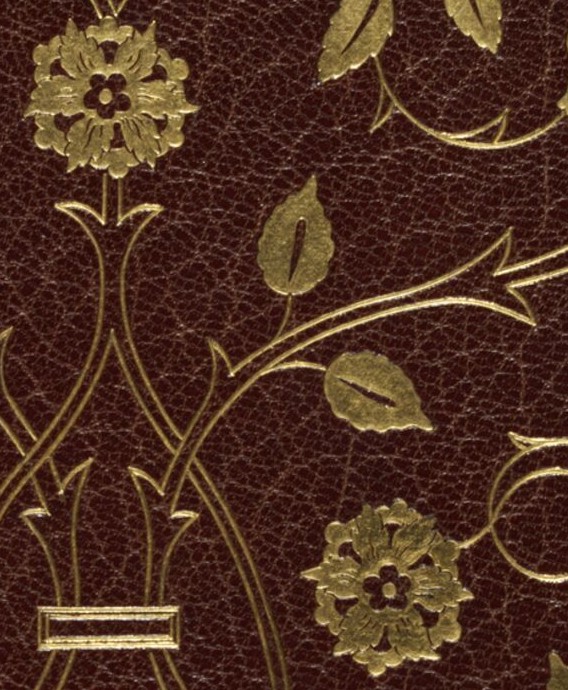
In the late 1800s, Prideaux designed a distinctive group of large tools inspired by the geometric and floral patterns found on Turkish and Syrian tiles housed within the collections of the Victoria and Albert Museum. These bespoke tools were deployed on a select few of her finest bindings, including a copy of The Rubaiyat of Omar Khayyam, published in 1901 by the Vale Press. The binding itself is proudly signed and dated 1902 on the inside cover, and it was generously donated by Prideaux herself in April 1911. For the library staff cataloguing the collection, one of the most rewarding aspects of the project has been witnessing these metal tools come to life by examining them alongside the actual bindings preserved in the National Art Library, observing precisely how the impressions translate when successfully tooled onto supple leather.

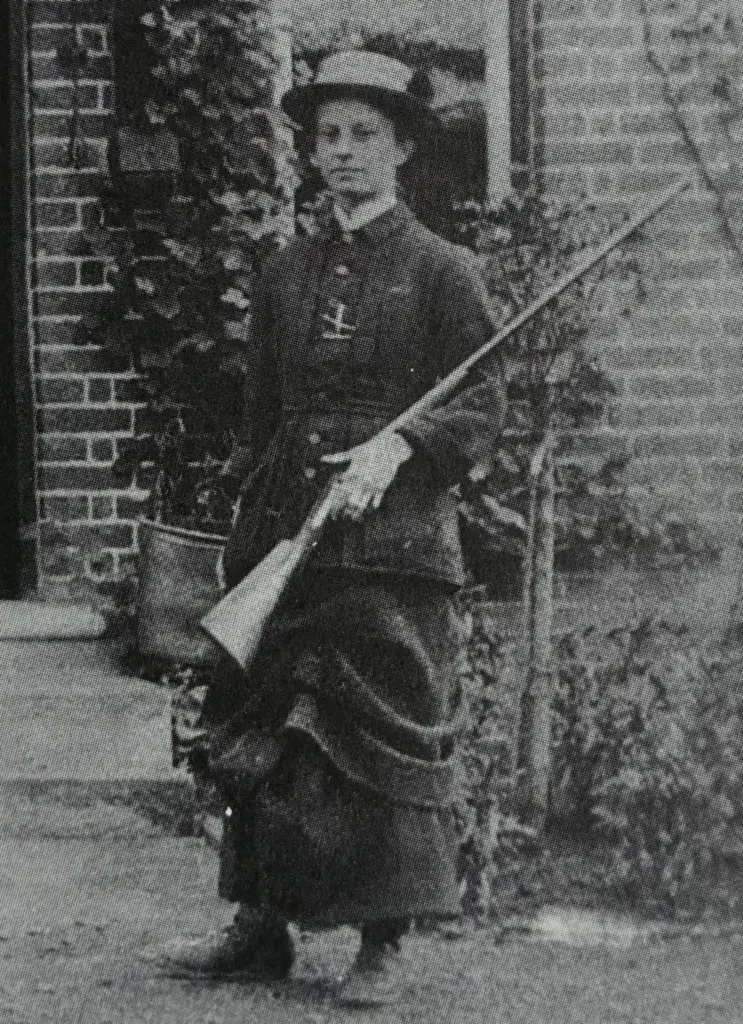
Prideaux’s legacy is defined as much by her formidable personality and pioneering spirit as by her artistic output. She proudly considered herself to be the first woman to forge a professional career in bookbinding and to actively teach the discipline. Achieving significant professional success as a woman in the 19th century was exceptionally rare, yet Prideaux fundamentally rejected the notion that certain activities and practices should remain the exclusive preserve of men. Her adventurous lifestyle reflected this philosophy; she actively participated in demanding sports such as hockey, tennis, sailing, riding, and shooting. She also undertook grueling, long-distance cycling excursions across Europe, and took up skiing and bobsleighing well into her middle age. Later in life, she famously remarked that her only major regret was never having learned how to fly an airplane.

By the conclusion of her distinguished career, Sarah Prideaux had designed and produced well over 300 unique book bindings. Her enduring influence on the craft continues to inspire library professionals and historians alike, not only through the breathtaking aesthetic quality of her preserved bindings, but through her remarkable ambition, uncompromising standards, and steadfast sense of self.