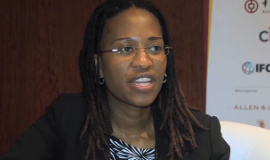
August 7, 2020 — Bringing a sovereign financial instrument to market is rarely a straightforward endeavor, but launching an entirely new asset class within a conventional financial framework introduces a distinct set of operational and regulatory challenges. For South Africa, the journey toward issuing its inaugural sovereign Islamic bond, or sukuk, proved to be a formidable undertaking. According to insights shared by Tshepiso Moahloli during an interview with Global Financial Conferences, the nation’s debut entry into the Islamic debt capital markets was undeniably "very tough."
The statement sheds light on the complex mechanics required to align sovereign borrowing requirements with Sharia principles, offering a rare look behind the scenes of sovereign debt management in emerging markets. While the issuance ultimately marked a milestone for the country’s financial diversification, the process underscored the intricate hurdles faced by non-Muslim-majority nations seeking to tap into the rapidly expanding pool of Islamic liquidity.
Essential Reading: Understanding the Broader Islamic Finance Landscape
To fully grasp the challenges encountered during South Africa’s historic issuance, it is essential to examine the foundational pillars, structural complexities, and global growth trajectories that define the modern Islamic finance industry. As institutional investors and sovereign issuers increasingly look toward ethical wealth growth and alternative funding mechanisms, understanding core Sharia principles has shifted from a niche academic pursuit to essential reading for global financial professionals.
Industry Principles and the Ethos of Halal Investment
At the core of Islamic finance is a system rooted in ethical investment, asset-backed financing, and risk-sharing. Unlike conventional finance, which heavily relies on interest-based lending (riba), Islamic financial instruments are governed by strict ethical guidelines derived from Sharia law. These principles prohibit investments in sectors considered harmful to society, such as gambling, alcohol, conventional financial institutions dealing in interest, and tobacco. Furthermore, excessive uncertainty (gharar) and speculation (maysir) are strictly forbidden.

Instead, wealth growth in Islamic finance is tied to tangible economic activity. Every financial transaction must be backed by a real underlying asset, ensuring a direct link between the financial sector and the real economy. This intrinsic alignment with ethical and socially responsible investing has drawn parallels to modern Environmental, Social, and Governance (ESG) investing, making Islamic finance increasingly attractive to mainstream investors seeking stable, values-driven returns.
How to Build the Global Islamic Financial Centre
As the demand for Sharia-compliant financial products continues to expand across Africa, the Middle East, Asia, and Western financial hubs, building robust global financial centers has become a strategic priority for emerging markets. Establishing such a center requires more than just regulatory frameworks; it demands deep market liquidity, specialized legal expertise, tax neutrality, and institutional readiness.
Financial capitals around the world have increasingly competed to position themselves as gateways for Islamic capital. Developing these ecosystems involves cultivating talent versed in both civil or common law and Islamic jurisprudence, creating specialized dispute-resolution mechanisms, and integrating Islamic banking windows within established commercial banks. For countries like South Africa, bridging the gap between conventional treasury management and specialized Islamic financial infrastructure remains a continuous learning curve, influencing how future sovereign issuances are structured and executed.
Sharia Finance Contract Structures
One of the primary complexities that makes a debut sovereign sukuk issuance so challenging lies in the selection and execution of Sharia-compliant contract structures. Unlike conventional bonds, which are essentially debt obligations promising the repayment of principal plus interest, sukuk represent undivided proportionate ownership in tangible assets, usufructs, or services.
The industry relies on a variety of classical contract structures, each with its own legal and operational nuances. Common structures include Murabaha (cost-plus financing), Ijara (leasing), Musharakah (partnership), Mudarabah (trust financing), and Wakala (agency). Designing a sovereign sukuk requires structuring these contracts in a way that complies simultaneously with domestic statutory laws, international capital market standards, and the stringent rulings of Sharia advisory boards. For South African debt managers navigating these frameworks for the first time, reconciling these multifaceted legal requirements contributed significantly to the rigorous nature of the process.
The Issuance of Sukuk: Main Steps in the Lifespan
The issuance lifecycle of a sovereign sukuk involves a meticulous sequence of operational, legal, and financial milestones. Unlike a standard benchmark bond issuance, which can leverage well-established, standardized documentation, a sukuk requires a bespoke approach, particularly for a country entering the market for the first time.

The process typically begins with asset identification, where the sovereign must earmark qualifying, unencumbered state-owned assets or revenue-generating projects that can legally serve as the underlying basis for the trust certificates. This is followed by the establishment of a Special Purpose Vehicle (SPV) to issue the securities on behalf of the sovereign. Legal counsel, Sharia scholars, and financial arrangers must then draft comprehensive transaction documents, including master trust deeds, purchase undertakings, and service agency agreements.
Once the structural framework is established, issuers conduct extensive roadshows to educate a diverse investor base—ranging from dedicated Islamic funds in the Gulf Cooperation Council (GCC) and Southeast Asia to global institutional asset managers—regarding the unique risk-reward profile of the instrument. Pricing, underwriting, and final settlement complete the lifecycle, each phase demanding meticulous coordination between government treasuries, legal teams, and regulatory bodies.

The Size and Evolution of the Global Market
The motivation behind navigating these arduous issuance processes lies in the immense size and dynamic growth of the global Islamic finance industry. Spanning banking, capital markets, funds, and insurance (takaful), the market commands trillions of dollars in assets globally.
Driven by strong demographic trends, growing domestic savings in Muslim-majority nations, and increasing recognition of its resilience during global financial downturns, Islamic finance has transitioned from a regional alternative to a significant component of the international financial architecture. Sovereign issuers view the sukuk market not merely as a diversification tool, but as a strategic avenue to tap into distinct liquidity pools that prioritize asset-backed, ethical investments.

Misconceptions of Sharia Law in Finance
Despite its rapid expansion, the Islamic finance sector frequently encounters misconceptions regarding the application of Sharia law in modern financial markets. A common misunderstanding is that Islamic finance operates entirely outside of global regulatory norms or that it is exclusively reserved for Muslim investors. In reality, Islamic financial institutions are subject to the same rigorous prudential regulations—such as Basel III standards—as their conventional counterparts, often supplemented by specialized oversight from bodies like the Accounting and Auditing Organization for Islamic Financial Institutions (AAOIFI) and the Islamic Financial Services Board (IFSB).
Furthermore, sukuk and other Islamic financial products are open to investors of all backgrounds, provided the underlying transactions adhere to ethical guidelines. By demystifying these concepts, financial authorities and market participants continue to foster greater accessibility and integration between Islamic and conventional financial systems.
As insights from financial leaders like Tshepiso Moahloli highlight, the path to establishing a sovereign presence in this sector requires overcoming significant structural and operational barriers. Yet, the enduring appeal of asset-backed, ethical investments ensures that the lessons learned from pioneering issuances will continue to shape the evolution of sovereign debt management for years to come.