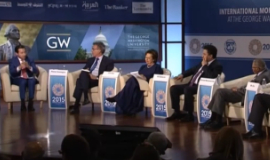
The remarks, delivered during a high-profile panel at the International Monetary Fund meetings, highlighted a growing paradigm shift in how alternative economic models are perceived on the global financial stage. Rather than viewing Islamic finance as a niche market restricted by religious boundaries, Babacan positioned the system as an inclusive financial framework capable of serving diverse populations worldwide, offering stability, ethical guardrails, and sustainable wealth growth for anyone seeking responsible investment opportunities.
Islamic finance, rooted in principles derived from Islamic law or Sharia, has historically been associated primarily with Muslim-majority nations and observant investors seeking halal avenues to manage their money. However, in recent years, the sector has increasingly attracted attention from international institutions, non-Muslim investors, and mainstream financial centers looking for alternative mechanisms to mitigate risk and foster long-term economic stability. The fundamental tenets of Islamic finance prohibit usury, or the charging of interest, which many proponents argue shields participants from the speculative excesses and debt-driven crises that have periodically plagued conventional banking systems. Furthermore, the system strictly forbids investment in industries deemed harmful to society or the environment, such as gambling, alcohol, conventional weaponry, and speculative financial derivatives, aligning closely with contemporary global movements toward ethical investing, socially responsible investing, and environmental, social, and governance criteria.
During his address at the IMF gathering, Babacan drew attention to these very attributes, stressing that the ethical foundations and risk-sharing characteristics of Islamic finance make it a universally appealing proposition. By tying financial transactions directly to tangible economic activity and real assets, the system fosters a closer connection between finance and the real economy. This approach ensures that risk and reward are shared equitably between financial institutions and their clients, creating a more resilient financial architecture that can benefit individuals, corporations, and governments globally, regardless of their cultural or religious background.

The timing of Babacan’s observations in May 2015 coincided with a period of intense global reflection on financial regulation and reform following the lingering effects of the 2008 global financial crisis. Policymakers and international economists were actively searching for alternative paradigms that could promote financial inclusion, enhance market stability, and restore public trust in banking institutions. In this context, the principles underpinning Islamic finance—transparency, asset-backing, prohibition of excessive uncertainty, and moral responsibility—offered a compelling alternative model that resonated beyond traditional regional boundaries.
As international financial hubs in London, Luxembourg, and other major Western cities began issuing sovereign sukuk—Islamic bonds—and establishing specialized Islamic banking windows, the accessibility of these products expanded significantly. Investors seeking steady wealth growth through halal and ethical channels found themselves with a growing array of options, ranging from compliant mutual funds to venture capital and private equity structures that adhered to ethical guidelines. This diversification of the market helped demystify Islamic finance, transforming it from a localized banking practice into a globally recognized asset class.
Babacan’s intervention at the IMF served to reinforce this broader international dialogue, underlining that financial ethics and economic inclusivity are universal values. By emphasizing that the system is open to all of humankind, the former Turkish deputy prime minister articulated a vision of global finance where ethical considerations are not secondary to profitability, but rather integral to achieving sustainable, long-term economic prosperity for societies at large.