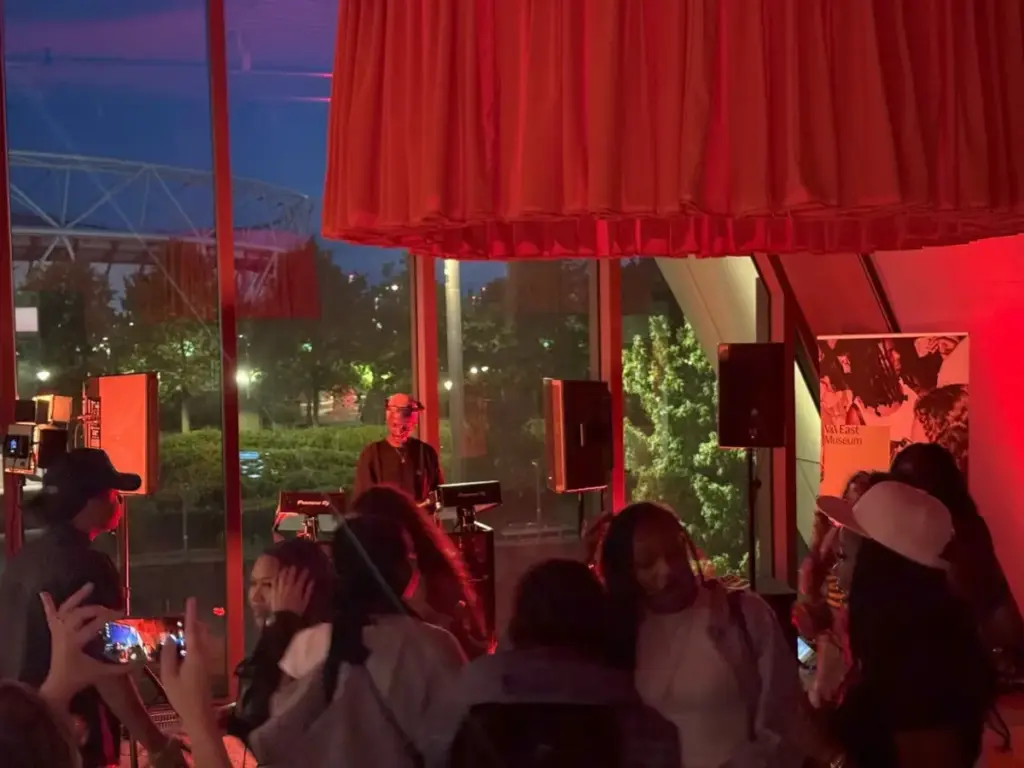
As the afternoon sun streamed through the expansive floor-to-ceiling windows of the V&A East Museum overlooking the Queen Elizabeth Olympic Park, preparations were underway for one of the institution’s most innovative public offerings to date. Amid the bustle of setting up for the weekly upperground DJ residency, a chance encounter unfolded in the "Why We Make Galleries" space. A university friend, visiting the museum on a whim with no intention of a prolonged stay, was quickly persuaded to return later that evening for the music series. That serendipitous meeting encapsulated the core mission of the initiative: demonstrating that young people from across London are eager to engage with the cultural landmark when given spaces that feel vibrant, accessible, and refreshingly informal.

Launched this August, the upperground series was conceived in direct dialogue with the landmark exhibition The Music is Black: A British Story. Every Thursday, the museum opens its upper ground floor to a rotating lineup of DJs, selectors, and live music practitioners. Each artist is invited to activate the space, curating a custom musical language that speaks to their unique artistic background. The residency serves as a bold experiment, testing what happens when traditional, static gallery spaces collide with the dynamic energy of club culture and live performance, exploring both the possibilities and the inevitable complexities that arise when two contrasting institutional functions meet.
The physical architecture of the venue plays a crucial role in facilitating this fusion. Bathed in natural light and offering sweeping views of the Olympic Park, the upper ground floor quickly sheds its traditional museum ambiance once filled with high-energy sound systems and dancing crowds. Rather than viewing exhibits in hushed silence, visitors are encouraged to connect—not only with the music as a profound representation of Black diasporic creative production, but also with one another.

A defining characteristic of the residency is the high degree of creative autonomy granted to participating artists. Performers are given the freedom to shape the environment entirely, dictating lighting, staging, and supplementary interactive activations that complement their sets. A prime example of this immersive approach occurred on August 13th, when the Black, queer DJ collective Polyjammeorus took over the museum spaces. Alongside a diverse, genre-spanning set that seamlessly transitioned through Afro tech, dancehall, amapiano, garage, and house, the collective organized a zine-making workshop. This interactive session invited attendees to openly discuss what Black British music means to the public, blending physical movement with critical intellectual engagement. By pairing dynamic performances with participatory workshops, upperground successfully champions the creative expression of its attendees alongside that of the professional headliners.
At its heart, the series addresses a fundamental question facing modern cultural institutions: how can museums become more open, welcoming spaces for young people, with a specific focus on marginalized communities such as Black, queer youth living in the surrounding London boroughs? By platforming exceptional Black musical talent from across the capital through a free, non-ticketed public program, the museum has successfully convened a diverse demographic. Attendees are unified not by institutional formality, but by a shared appreciation for music, movement, and community building among like-minded peers.

For those behind the scenes, such as the young interns helping to coordinate the rollout, the initiative offers profound lessons in institutional representation. Working on upperground provides a firsthand look at what cultural representation looks like in practice, proving that untold and underacknowledged stories can be championed in ways that resonate across generations. For young Black creatives from the local area who serve as facilitators of these programs, artistic representation is not merely an abstract concept, but a vital bridge connecting communities to civic spaces. This grassroots involvement raises compelling questions about the future of the local cultural landscape if more public institutions chose to adopt similar collaborative, community-led frameworks.
As a pilot program, the diverse array of musical histories, diasporas, and contemporary scenes represented in the upperground series serves as an ongoing test. Organizers are observing how openly the public engages with the museum in this non-traditional format, and whether a single cultural space can hold such a vast range of sound while preserving the distinct individuality of each artist. Ultimately, the residency prompts a deeper institutional introspection, revealing what a museum can learn about its own identity and its true audience when outsiders are invited to take the lead in shaping public programming. Running alongside The Music is Black exhibition—which chronicles the multitudes of Black contributions to the global music scene—upperground provides a living stage where those storied histories can continue to evolve into their own vibrant futures.