There is something about making and enacting a life decision as colossal as rerooting—a choice deeply rooted in reckoning with the past and projecting into the future—that catapults an individual acutely into the present. For those with young families or demanding, fast-paced lives, the present is often a strange and alien domain. Accustomed to the constant grind of daily existence and the relentless planning of one life event after another, many find the present to be an arid and hostile territory, a space entirely foreign to those constantly chasing tomorrow.
The present is a sensory plain. Much like a predatory animal navigating its territory, a person’s senses in such a moment become languidly heightened, making them acutely aware of the minutiae of their surroundings in a way that escapes those preoccupied with meeting work deadlines or preparing evening meals. Suddenly, the small, echoing drips of a leaking tap become sharply audible, and a discerning crack in the wall emerges into view. The present offers pause in a deeply discomforting way because the stakes are unnervingly high. It forces individuals to confront thoughts and feelings typically tucked away, left to be unpacked at a later date within the nebulous terrain of the future. It provides an opportunity to reflect upon and gauge the here and now, serving as a barometer for a planned future while acknowledging that the current moment will inevitably pass into the oblivion of yesterday, demonstrating the fleeting nature of temporary human existence. This state stands in direct antithesis to the way time is conventionally inhabited—the illusory construct that people invest in yet remain perennially remote and absent from.
Being entirely cognizant of this position in the gap between the past and the future—this fleeting, blink-and-you-miss-it step on the treadmill of the "now"—grants a strange spatial awareness. While daily life often obscures the structures that constitute individual identity, such as schools, offices, and neighborhoods, dislodging oneself from them creates a necessary kind of dwarfing. Understanding oneself as a disposable component within the grander narrative of time and history can be unsettling. So much human identity is invested in feeling part of a greater network, so much so that being completely detached forces a stark realization of personal scale. People tend to cling resolutely to the concepts that grant them a desired self-image, acting like stubborn barnacles floating blissfully into a planned future trajectory, tethered to a three-dimensional nexus of time and space near familiar high streets and secondary schools—the very constellations of familiarity that shape identity.
Geography as a Key Determiner of Identity
Geography remains one of the primary determiners in how human beings identify and situate themselves in the world. By nature, human societies are tribal, tethering themselves crudely to the material ground they inhabit. This behavior highlights the futility of material existence and underscores how arbitrary and superficial national or cultural branding can be. People routinely identify with or against the flags they sit under, the postcodes they reside in, and the sports teams they feel closest to. This tribalism manifests in various forms, from the fragile and exclusionary rhetoric of aggressive nationalism to the melodic nostalgia of folk cultures centered on earth and soil. It sears a loyalty that can be simultaneously belligerent and ugly, or deep and beautiful, yet ultimately senseless. It feeds into grand narratives that individuals possessively cling to, feeling intrinsically coded by them and bereft without them.
The concept of "home" perfectly captures the wonder of language, functioning simultaneously as a universal and highly specific term. Despite its unassuming, monosyllabic structure, it carries the colossal responsibility of tethering individuals completely to a single concept and space. It is worn and familiar, much like the places shaped by human existence.
For British Muslims watching the devastating realities of children being killed on an hourly basis—tragedies tied directly to a shared identity—the assumptions once taken for granted can no longer hold. Axioms carried unthinkingly in back pockets have vanished overnight, leaving a cold, gaping space in their wake. These communities realize they no longer exist in the same world and can no longer afford self-delusion. British Muslims, in particular, have long understood that belonging, tribalism, and nationalism come with a distinct and telling sense of discomfort.
National rhetoric surrounding belonging frequently draws a hard line against Muslims, a reality reinforced by recent events. Social anxiety is constructed around Muslim identity at both micro and macro levels. Daily experiences on the street and relentless media headlines convey a persistent message: to belong is not to be Muslim, and to be Muslim is to not belong.
Witnessing the current state of public discourse and the public reaction to recent race riots offers a stark and renewed sense of perspective. Incidents such as hotels housing Muslims being targeted and exits blocked demonstrate that simply existing as a Muslim can carry severe hostility in the British Isles. Beyond street-level hostility, when the routine exercise of civic rights, such as casting a ballot, triggers panic and frenzy across the media industry, fundamental questions must be asked regarding the assumptions underpinning citizenship, legitimacy, and humanity. Evidently, a conspicuous, Muslim-shaped hole exists within these popular concepts.
The Changing Landscape of Muslim Migration and Discourse
Conversations surrounding Muslim migration have taken on a detached, sober tone. Many Muslims witness predictable social events with a weariness born from growing up within a hostile media climate. This rising animosity is transitioning from a mere footnote in contemporary Muslim discourse into a central factor in how British Muslims perceive themselves and their place on the earth. It fosters an acute understanding of what it means to be a traveler, reinforcing the absolute truth that life is transitory.
While everyday distractions often cloud this perspective, making the conscious decision to change one’s place and time on earth requires an anchoring effort that forces people to grapple with their current state. Recent events have acted as a catalyst for this sobering reflection. While social media platforms have increasingly featured financial influencers rhapsodising about moving to Muslim countries for material benefits, many Muslims are not simply chasing a capitalist dream. Furthermore, despite concerns regarding the cultural environment in the West, many relocations are driven by affirmative religious purposes rather than purely defensive reactions. What unites these varied motivations is the occasionally fragile foundation of belonging for Muslims in the UK—acknowledging the precarious nature of home without dismissing the validity of calling it such.
Much of Muslim cultural commentary has historically fixated on the shared sentiment of diaspora, the feeling of being "othered," and familiar narratives centered on cultural traditions. However, the current historical moment demands a departure from this superficial framing, inverting a story often characterized by passive consequence and cultural stagnation. The focus is shifting away from a nostalgic, contradictory proximity to a distant "motherland." Instead, attention is turning toward the geographies known most intimately—the streets of childhood, the sensory DNA of concrete pavements, and the visceral connection to neighborhoods where individuals are repeatedly told they do not truly belong. It involves recognizing the absence of a fully supportive national framework and understanding one’s position within a fractured spectrum of belonging.
Leaving a place that seemingly delegitimizes an individual’s existence—despite it being the only environment in which they have conceptualized themselves and formed their cultural identity—is a profound step. It requires a total divorce from a space, a specific moment in time, and a network of social and cultural connections. Facing this transition forces a humbling recognition of the spatial and temporal dimensions of existence, prompting individuals to question both the reassuring narratives that have defined them and the hostile stereotypes imposed upon them. Ultimately, leaving strips away long-held investments, revealing that much of what was once perceived as essential to belonging may not be as crucial as previously thought.
A New Chapter Beyond Familiar Borders
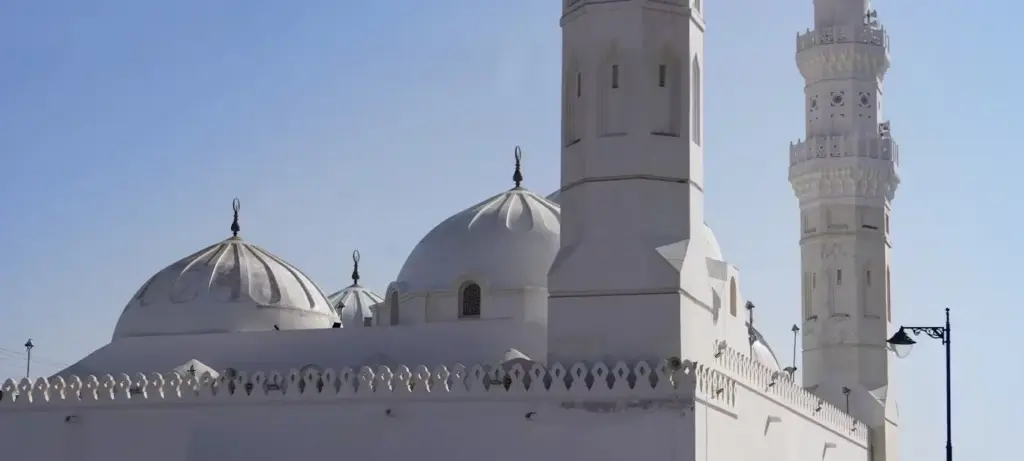
Experiencing the direct, albeit disorienting, otherness of moving to a Muslim-majority country—where one may not speak the language, understand local customs, or feel immediately rooted—echoes the experiences of millions navigating the fluidity of home. It forces a fundamental reconceptualization of selfhood and the mobilization of internal resources.
For many Muslims, leaving is not inherently a defiant or reactionary choice. Just as Islam is not defined by Western anxieties, Muslim existence remains whole and independent of external narratives. Leaving is often simply an endeavor to seek a better environment, despite the comfort of familiarity. The definition of a "better" life remains deeply personal, often driven by faith and evaluated within the context of individual intentions and circumstances.
While faith is frequently associated with the heart, the brain often mediates the practical relationship with beliefs, recognizing when a familiar environment is no longer conducive to spiritual well-being. For many, leaving a deeply loved city like London—the gray, everyday backdrop to every life experience, rite of passage, and personal relationship—is abjectly painful. Saying goodbye to a landscape embedded in muscle memory and historical consciousness is testing on a daily basis. Yet, it grants a new sense of geographic and historic context, enabling a more purposeful approach to life while navigating a new environment, in the hope of building a meaningful and intentional future.