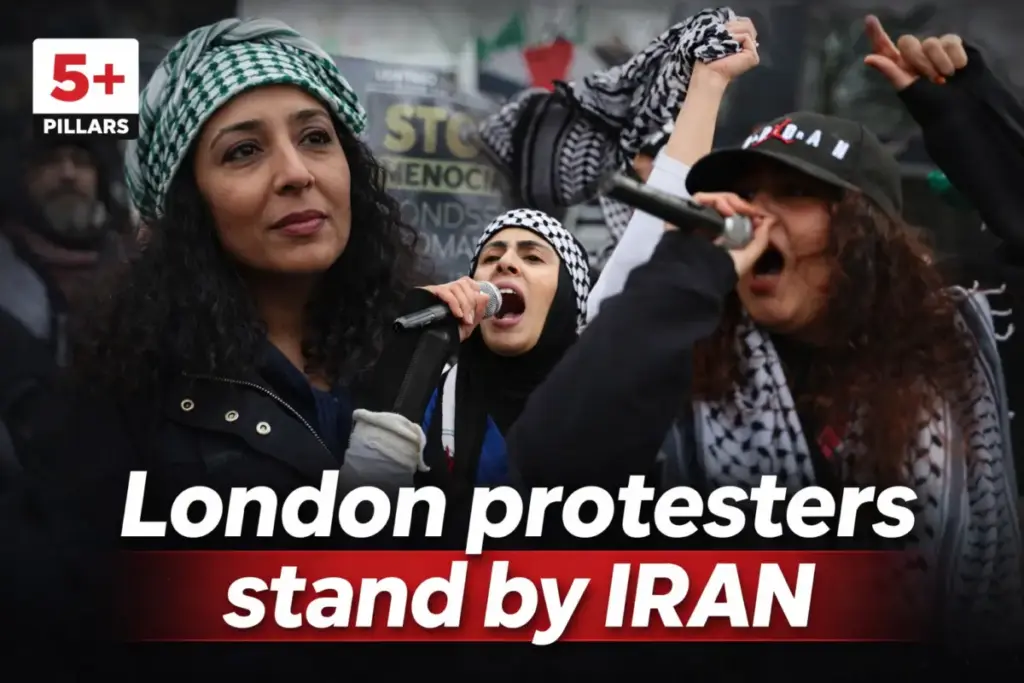
The atmosphere during the demonstration was charged with urgency as participants voiced deep anxiety over the trajectory of regional stability. Banners and placards carried by the crowd highlighted a wide array of grievances regarding Western foreign policy in the Middle East. Prominent slogans inscribed on the signs included demands to "stop Trump’s wars," a direct appeal directed at Prime Minister Keir Starmer to "stop arming Israel," calls to "end nuclear hypocrisy," and urgent pleas to "stop bombing Iran." Alongside these political statements, a sea of Iranian and Palestinian flags fluttered above the crowd, reflecting a broad solidarity movement linking various struggles against foreign intervention and military occupation in the region.

Speakers at the rally addressed the assembled masses, emphasizing that the prospect of a wider war involving Iran poses an existential threat not only to the immediate region but to global peace and security. Activists took direct aim at the policies of Western powers, arguing that decades of military interference, economic sanctions, and unconditional support for aggressive military campaigns have consistently plunged the Middle East into turmoil. The crowd responded with chants demanding diplomatic solutions rather than military escalation, expressing profound skepticism toward the justifications offered by Washington and Tel Aviv for their ongoing operations.
A central theme of the London demonstration was the specific role played by the United Kingdom on the international stage. Protesters directed a significant portion of their critique at the Labour government under Keir Starmer, urging Downing Street to break with traditional alignments that tie British foreign and military policy directly to the strategic objectives of the United States. Activists argued that by continuing to supply weapons and diplomatic cover for military actions in the region, the UK is directly complicit in the suffering inflicted upon civilian populations. The demand for absolute neutrality and a refusal to participate in any military ventures targeting Iran resonated deeply with the thousands of people who turned out for the march.

The mobilization in the British capital reflects a growing wave of international concern over the potential for the localized conflicts in the Middle East to spiral into a catastrophic regional war. As tensions between Iran and the US-Israeli alliance continue to reach critical thresholds, civil society groups and peace organizations across Europe have stepped up their calls for immediate de-escalation. Organizers of the London protest vowed to maintain pressure on government officials through continued public demonstrations, public forums, and grassroots campaigning, insisting that the British public does not support entanglement in foreign wars driven by geopolitical ambitions rather than the pursuit of peace.