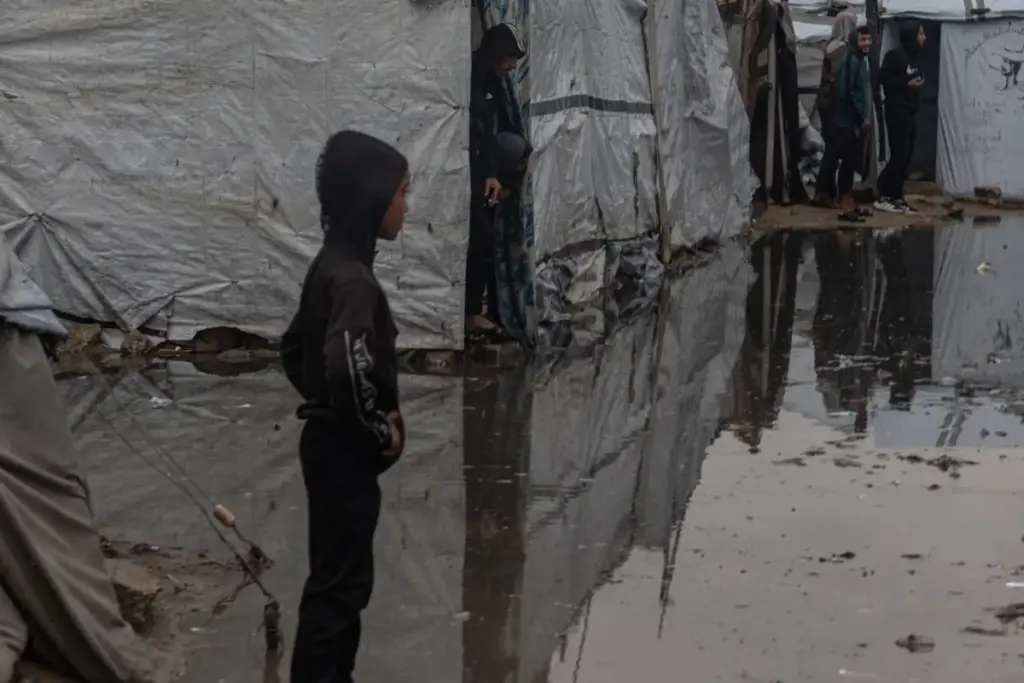
GAZA — Heavy winter storms sweeping across the region have brought a harsh new dimension of suffering to the Gaza Strip, where torrential weekend rains have flooded thousands of makeshift tents and compounded an already catastrophic humanitarian situation. While families across the enclave continue to grapple with ongoing military attacks, severe shortages of essential goods, and widespread destruction, the arrival of the rainy season has introduced freezing temperatures, deep mud, and the constant threat of collapsing shelters.
Aid workers on the ground warn that the weather has transformed an already dire existence into a bitter struggle for survival. Layla, an aid worker with Islamic Relief whose name has been changed to protect her safety, described the psychological and physical toll that the winter season is exacting on a population that has been relentlessly displaced and battered by months of conflict.
“With winter on the doorstep in Gaza, we should be happy. This is supposed to be a season of joy and comfort; the cosy weather that relieves a heavy heart,” Layla said, reflecting on the stark contrast between what winter signifies elsewhere and the grim reality facing residents today.
“Hearing water pattering on doors and windows, feeling the water drops on your face, going straight through your soul. Just saying it and thinking of it gives you a weird feeling of comfort. But here in Gaza, it is not like a normal winter season.”
For nearly two million displaced Palestinians, the sensory experience of rain—once associated with warmth, family gatherings, and domestic security—is now inextricably linked to panic and vulnerability. Floods, tears, sunken tents, and sudden displacement have stripped away the comfort of the season, replacing it with a pervasive fear. Families are left scrambling to figure out where to go, how to rescue whatever remnants of their past lives have managed to survive, and, above all, how to protect their children from the biting cold and rising waters. Even clothing has been soaked through, leaving residents shivering in temporary encampments with few dry alternatives.
“In the past, we enjoyed the rain, gathering with family and friends under a warm roof. Now, we can’t gather anymore. Everyone is just running to protect what they can, to try to save their shelter from flooding,” Layla explained. “Seeing the people in hard and miserable conditions makes our hearts ache as all of Gaza is drowning. We don’t deserve to live in a cold nightmare like this.”
The emotional weight of the seasonal shift extends deeply into the daily lives of those trying to endure the crisis. Layla recounted a routine errand from the previous day, when she stepped out into the rain to see a doctor. Armed with her smartphone, her initial impulse was to capture the familiar aesthetics of a winter day—the falling rain, the atmospheric grey skies. But as she looked around and witnessed the desperate struggles of her neighbors fighting to keep their tents and meager belongings from being entirely washed away, she abruptly lowered her phone. The instinct to document the weather gave way to an overwhelming sense of grief, a striking departure for someone who once found joy in capturing every single drop of rain falling from the sky.
While global audiences often absorb the crisis through news reports and social media imagery showcasing pulverized concrete, collapsed multistory buildings, and massive fields of rubble, those living through the reality experience the destruction on a deeply intimate level.
“For you, your heart might hurt from seeing on social media and news outlets the rubble and the destroyed houses collapsing,” Layla noted. “But for me, and for the other people who are living it here in Gaza, every stone that falls, every wall, every shelf, every raindrop destroys what is left in our souls. How could it not, when those shelves held our memories, our warmth, and the pieces of who we used to be? And this is not just one family’s pain; it is a massive humanitarian catastrophe unfolding in front of our eyes.”
Recent comprehensive assessments released by United Nations agencies underline the staggering scale of vulnerability across the enclave. Approximately 1.98 million people—amounting to roughly 94 percent of Gaza’s entire population—are currently classified as being in urgent need of shelter assistance. Among them, an estimated 950,000 displaced Palestinians are crammed into informal sites and temporary camps that face medium to high risks of severe flooding as winter weather intensifies.
The impact of the very first major rainstorm of the season was immediate and devastating. Local emergency reports confirmed that within just twenty-four hours of the downpour, around 70,000 worn-out, threadbare tents housing tens of thousands of displaced families were flooded. Simultaneously, dozens of cracked walls and weakened roofs in partially damaged structures collapsed over individuals and families attempting to find refuge beneath them, increasing the toll of injuries and leaving vulnerable populations exposed to the elements.
Behind each dry statistic lies a human story of families shivering in the mud, forced to watch helplessly as water washes away the final fragments of their dignity and safety. The relentless precipitation has done nothing to alleviate the collective trauma; instead, it has simply rendered the rubble heavier and the environmental conditions drastically colder.
Looking toward the horizon, residents no longer harbor wishes for a peaceful afternoon, a dry interior, or a warm cup of hot beverages by a clear windowpane. The aspirations of a population under siege have been reduced to bare essentials: hoping that the grey clouds will pass gently, that the saturated ground will eventually dry, and that the rain in Gaza might one day return to being a simple meteorological event rather than yet another life-threatening crisis to endure.
Despite the compounding dangers, logistical bottlenecks, and widespread destruction, humanitarian organizations continue their efforts to assist vulnerable populations. Staff members and local partners working with Islamic Relief inside Gaza are operating under exceptionally hazardous conditions. Crucially, these aid workers face the very same hardships as the communities they are striving to serve—they, too, have frequently been displaced from their homes, are mourning the loss of loved ones, and are struggling to secure adequate food for their own families.
Operating on a day-to-day basis, the team must constantly adapt its plans, logistics, and field activities in response to rapidly shifting security developments and the severe scarcity of goods available in local markets. Yet, despite these monumental obstacles, aid personnel have persistently found pathways to deliver vital relief items to those in desperate need.
Humanitarian agencies emphasize that public support remains an indispensable lifeline as the winter deepens. Donations directed toward emergency response initiatives continue to play a critical role in enabling organizations like Islamic Relief to sustain their lifesaving operations, support displaced families, and provide essential supplies to those weathering the crisis in the enclave.