In recent days, an unmistakable intensification of diplomatic contacts has brought the Russia-Ukraine war back to the forefront of international attention. Yet, beneath the flurry of high-level meetings, the foundational question remains stubbornly unresolved: just how far can diplomacy actually go in bridging an unbridgeable chasm? The conflict, which erupted in February 2022, has now endured longer than World War I, cementing its tragic legacy as one of the most physically and humanely destructive conflicts seen on the European continent since the end of World War II.
Following sensitive talks held in Abu Dhabi on Nov. 10-11, diplomatic communications between Washington, Moscow and Kyiv experienced a noticeable uptick, dragging the question of Europe’s potential role in future negotiations firmly back onto the international agenda. However, despite this sudden burst of diplomatic activity, the international community has yet to witness any substantial agreement concerning a general ceasefire or the thorny issue of territorial sovereignty. At this critical stage, bringing an end to the hostilities depends not merely on successfully gathering the warring parties around a shared negotiating table, but fundamentally on what those actors are ultimately prepared to compromise on.
From an analytical perspective, the primary stumbling block is that the key belligerents and stakeholders do not share a common understanding of what peace actually entails. Russia approaches the table with the clear intent of translating its hard-won military gains into permanent political results. Ukraine, conversely, enters negotiations fiercely determined to protect its sovereign integrity and guarantee its long-term national security. Meanwhile, the United States is primarily motivated by the desire to bring the costly war to a swift close through a formal agreement, while European powers are increasingly anxious not to be sidelined from decisions that directly and profoundly impact their regional security architecture.
This dynamic prompts a critical dilemma: if diplomacy continues at the negotiating table while active combat persists unabated on the battlefield, what does peace actually signify to each distinct side? True peace is not simply the temporary absence of fighting; it requires the establishment of a durable political and security order that all involved parties can genuinely accept and live within.
Demands vs. Realities
To understand the immense difficulty of reaching a settlement, it is first necessary to recognize that examining Russia’s demands strictly through the lens of the localized Donbas conflict is entirely misleading. Back in 2022, Moscow formally declared the annexation of four distinct Ukrainian regions: Donetsk, Luhansk, Zaporizhzhia and Kherson. It subsequently incorporated these Ukrainian territories directly into its own domestic constitutional framework. Consequently, Russia’s official position is no longer limited to retaining the specific territories its armed forces currently control on the ground.
Moscow also stakes an uncompromising political claim over vast areas within those four provinces that it has not yet fully captured or occupied. At present, Russian forces control almost the entirety of Luhansk and approximately 80% of Donetsk, but they fall well short of total control over Zaporizhzhia and Kherson. Despite this military reality on the ground, Moscow’s political demands stretch far beyond existing front lines. Russia insists that all four regions are now immutable parts of its national territory and demands the complete withdrawal of Ukrainian military forces from these areas as a baseline condition.
The Russian domestic constitutional framework is of paramount importance when attempting to decode this uncompromising posture. By embedding these annexations into its constitution, Moscow has effectively elevated the status of these regions, viewing them no longer merely as transactional military gains, but as an integral, non-negotiable component of the territorial integrity of the Russian Federation itself. Naturally, this domestic legal maneuvering holds zero legitimacy under international law, creating one of the most formidable obstacles to any ongoing diplomatic settlement. While Russia seeks desperately to preserve borders defined by its own internal legal parameters, Ukraine resolutely refuses to relinquish its internationally recognized sovereign rights.
Yet, the defining difference between these current negotiations and earlier, failed diplomatic attempts is that the discussion is no longer strictly confined to Ukraine’s territorial integrity or the immediate tactical conditions for a ceasefire. Russia has made it abundantly clear that it wants the war addressed as a core component of the future security architecture of Europe as a whole. In essence, Moscow views the war in Ukraine through a much wider lens: a historic security dispute between the Russian state and the collective West.
As part of this grand bargain, Russia vehemently opposes Ukraine’s future membership in NATO and completely rejects the presence of foreign Western troops or allied military facilities anywhere on Ukrainian territory. Furthermore, Moscow demands a fundamental rollback of NATO military deployment arrangements in Europe to the status quo of 1997—a strategic benchmark that is far from accidental.
On May 27, 1997, NATO and the Russian Federation signed the historic Founding Act, a foundational document that established the core principles governing their post-Cold War relationship. By invoking this historical pivot, Russia’s primary strategic objective is crystal clear: it seeks to elevate the Ukrainian question far beyond a localized territorial dispute between two neighboring states, transforming it into a sweeping geopolitical negotiation involving the United States, NATO and the capitals of Europe.
Race Against Time
For the administration of U.S. President Donald Trump, bringing a definitive end to the Russia-Ukraine war has transformed into a paramount foreign policy objective. Washington is eager to convert its aggressive mediation efforts into a tangible, historic diplomatic achievement. However, because the negotiations now encompass much more than a simple ceasefire—touching upon complex security guarantees, sweeping territorial arrangements and the future security posture of Europe—the stakes could not be higher. Following the results of the midterm elections and the ongoing, unresolved diplomatic confrontations with Iran, securing a breakthrough agreement between Russia and Ukraine would hand Washington a desperately needed foreign policy victory.
The political calendar is adding immense pressure to this endeavor. Following the midterm elections held on Nov. 3, Republicans lost their legislative majorities in both chambers of Congress. The newly elected Congress, controlled by the Democratic Party, is scheduled to officially take office on Jan. 3. This political shift could severely limit President Trump’s domestic room to maneuver, particularly concerning future military assistance packages, international sanctions regimes and critical budgetary decisions.
Consequently, the compressed timeframe leading up to Jan. 3 represents a vital, narrow diplomatic window for the White House. This urgency becomes even more pronounced when viewed alongside developments in the Middle East. Having fallen short of securing a lasting, comprehensive peace arrangement with Iran, the Trump administration has aggressively pivoted toward seeking a high-profile diplomatic success in Ukraine before the new Congress is sworn in. Trump’s renewed diplomatic push regarding Ukraine cannot be divorced from these domestic and international political pressures.
This artificial haste, however, introduces a deeply troubling fundamental question: is Washington genuinely pursuing a just and lasting peace, or is the sheer urgency to cut a deal creating disproportionate pressure for sweeping concessions, primarily at Ukraine’s expense? While the United States faces a rapidly narrowing political clock, Russia remains steadfast in maintaining its maximalist territorial and security demands. Meanwhile, Ukraine finds itself subjected to escalating pressure to contemplate painful territorial compromises without receiving any ironclad, credible guarantees regarding its long-term security.
Search for Security
For Kyiv, the overarching imperative is to protect its national sovereignty while securing credible, enforceable security guarantees from its international partners. The agreement in principle to orchestrate a large-scale prisoner exchange, hammered out during the recent diplomatic contacts in Abu Dhabi, marked an important and welcome humanitarian step forward. However, Western and Ukrainian officials alike warn that such incremental progress must not be confused with a comprehensive, durable peace agreement.
For Ukraine, the crisis is not simply about halting the immediate bloodshed. Kyiv seeks institutionalized security guarantees that would effectively deter and prevent another devastating Russian military intervention in the future. This underlying fear explains why sustained pursuit of NATO membership and robust European support remain absolute priorities for Ukrainian leadership. Nevertheless, recent reports from the diplomatic front suggest that behind-the-scenes pressure is increasingly pivoting toward forcing Ukraine to swallow bitter territorial concessions.
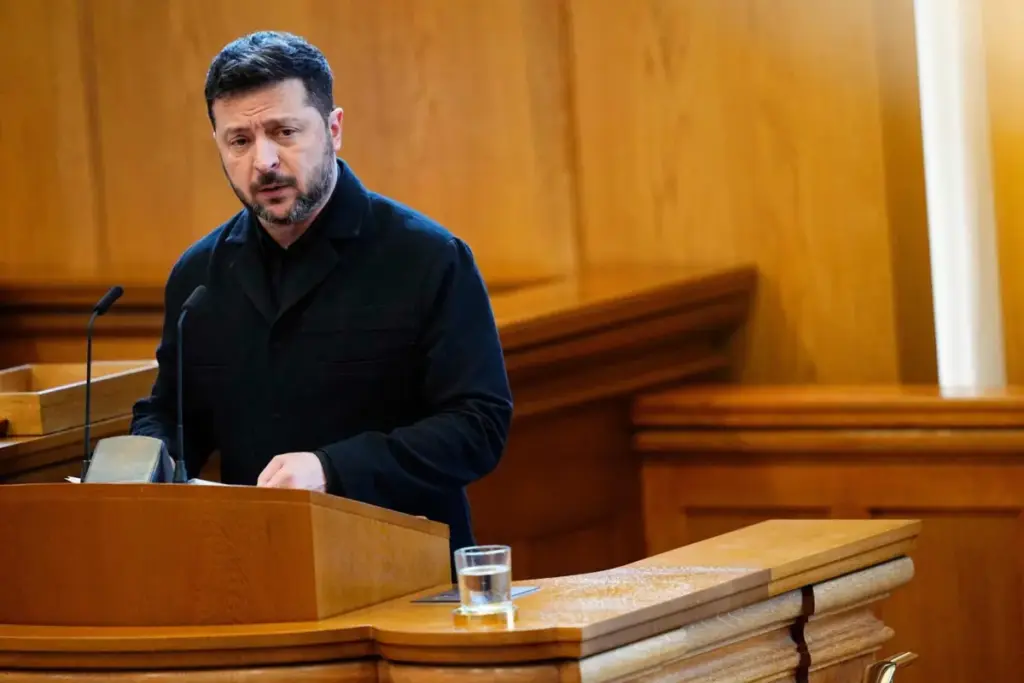
According to public statements made by Ukrainian President Volodymyr Zelenskyy on Nov. 14, American negotiators recently raised the explicit possibility of Ukraine withdrawing its military forces from the Donbas region in exchange for eventual NATO membership. While Washington has refrained from officially confirming this rumor as a formal diplomatic proposal, Kyiv has thus far refused to entertain such a sweeping concession.
This dynamic exposes a glaring contradiction at the heart of the current diplomatic push. The fundamental question puzzling international observers is why Ukraine is expected to make unilateral territorial sacrifices while Russia refuses to budge on its core territorial and security objectives. Furthermore, offering NATO membership as a security quid pro quo to Ukraine presents an inherent contradiction, given that Moscow has adamantly opposed this exact outcome since the very inception of the conflict. It remains entirely unclear how such an arrangement could realistically be implemented or enforced without Moscow’s reluctant acceptance.
Meanwhile, Europe’s strategic position is undergoing a profound and rapid transformation. The Trump administration’s persistent demands for higher European defense spending, ongoing debates over the reliability of Washington’s long-term security commitments, and the persistent, perceived military threat emanating from Russia have forced European capitals to seriously reconsider their own sovereign security responsibilities.
According to data from the GLOBSEC Trends 2026 survey, public support for the creation of a common European army has reached an impressive average of 71% across the 11 European Union countries surveyed. However, analysts note that this statistic primarily reflects a growing public desire to strengthen Europe’s independent defense industrial and military capabilities, rather than an explicit desire to engineer a complete, permanent break with the NATO alliance. Establishing a unified European military force is fundamentally distinct from developing a cohesive European defense pillar capable of acting more autonomously within the broader structure of NATO.
The formal declaration on European security adopted in Dublin on Nov. 12 carries considerable weight in this context. The document explicitly emphasized that crucial decisions regarding the future of Ukraine cannot and should not be made without the direct participation of Ukraine itself, just as decisions dictating the security of the European continent cannot be made without Europeans at the table. This assertive diplomatic stance demonstrates that Europe has no intention of being relegated to the role of a passive bystander tasked merely with implementing a regional security order dictated solely by Washington and Moscow.
When pieced together, the broader geopolitical puzzle reveals starkly competing visions. Russia is actively striving to reshape Europe’s entire security architecture by severely curtailing NATO’s military footprint, whereas Europe is moving in the opposite direction by desperately trying to bolster its own collective defense capabilities. Caught squarely in the middle of these colliding visions, Ukraine faces intense diplomatic arm-twisting to surrender sovereign territory. Having largely failed to secure a lasting diplomatic breakthrough with Iran, the Trump administration has firmly shifted its formidable attention toward mediating an end to the war between Russia and Ukraine.
Yet, millions of war-weary citizens across the region urgently require a just and enduring peace, not merely a fragile, frozen conflict repackaged as a diplomatic triumph. Against this tense and uncertain backdrop, all participating actors would do well to reflect on a singular, penetrating question: are current international efforts genuinely building toward a sustainable peace that addresses the deep-seated root causes of this devastating war, or are they simply placing a catastrophic conflict temporarily on hold?