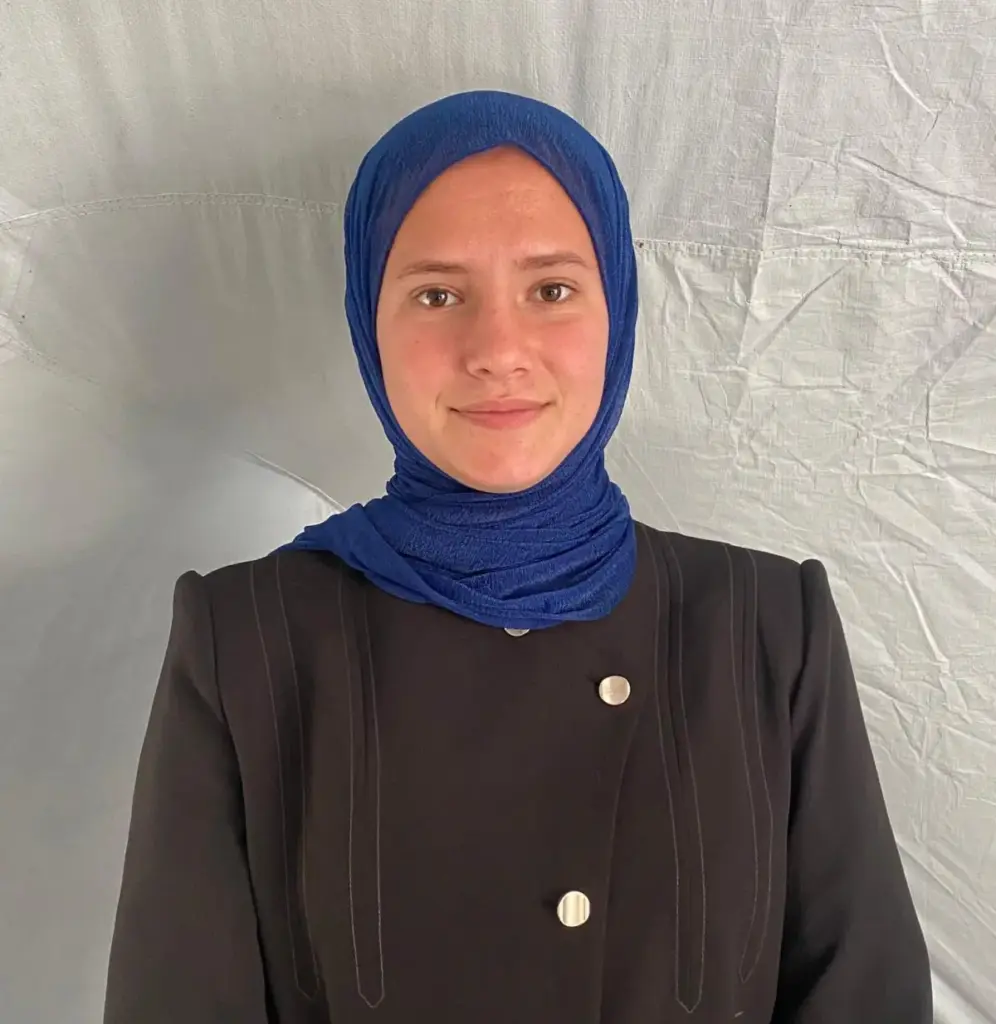
In the midst of profound displacement and the daily realities of an unfolding humanitarian crisis, 18-year-old Malak refuses to let go of her childhood dream. Today, she lives alongside her mother and her two brothers, Uday and Atef, inside a fragile tent in Gaza. Their lives have been upended, marked by uncertainty and immense hardship, yet Malak remains remarkably determined to continue her education and forge a path toward a safer, more stable future.
Before the crisis shattered their lives, Malak and her family lived in a permanent concrete house. That home is now gone, replaced by a worn and inadequate tent that offers little to no protection against the bitter cold of winter, the scorching heat of summer, or the heavy downpours of the rainy season. Despite losing the physical security of their home, Malak’s focus has barely wavered.
Displaying an exceptional level of academic dedication, she completed her high school education with an impressive score of 96%. With those high marks, she made the decisive choice to study medicine, taking a monumental step toward a career she has envisioned for years. However, translating that ambition into reality in a conflict zone is fraught with extraordinary obstacles.
The Staggering Challenges of Pursuing Education in Conflict
Continuing her medical studies under current conditions is an uphill battle. Many of the universities and educational facilities across Gaza have sustained severe structural damage or have been completely destroyed. With physical campuses largely incapacitated, a significant portion of learning has been forced online.
Yet, digital education requires infrastructure that is currently missing or severely compromised. Reliable internet access is exceedingly difficult to secure, and Malak urgently needs a laptop just to attend virtual lectures, connect with instructors, and complete her coursework. Beyond the digital divide, the financial barrier is equally daunting. University tuition fees represent a major challenge for the family, one that they simply cannot afford without external support.
Compounding these academic and financial hurdles, Malak is carrying a physical burden of her own. She is dealing with a serious injury after being shot, with the bullet still lodged inside her abdomen. She must regularly attend medical check-ups while she waits anxiously for complex surgery—a procedure that is presently unavailable to her due to the collapsing and overwhelmed healthcare system in Gaza.
Despite living with chronic pain and navigating the daily threats of the environment, Malak perseveres. She divides her time between her demanding medical studies and supporting her family at home. She assists her mother with vital everyday household tasks, including cooking, cleaning, and washing. Her mother works tirelessly in a small local bakery, but the meager wages she earns fall far short of covering the family’s basic survival needs.
The Urgent Need for Basic Relief and Medical Support
The family’s living conditions in the tent underscore the desperate humanitarian situation on the ground. They are in critical need of fundamental items to weather the harsh conditions, including a sturdier tent, waterproof coverings to keep the rain out, mattresses, blankets, cooking equipment, cooking gas, a water tank, adequate food supplies, and hygiene products, alongside a reliable source of light.
Malak herself requires basic personal provisions, including clothing and shoes, alongside the crucial financial assistance needed to clear her university fees and acquire a laptop to sustain her medical education.
Even in the face of these compounding crises—the destruction of their home, a serious physical injury, and the relentless daily struggle for survival—Malak’s resolve has not faltered. For her, pursuing a university education is about much more than simply earning a professional degree. She is driven by the profound hope that becoming a doctor will one day enable her to provide medical care and compassion to other people who have experienced the exact same pain and hardship she has lived through.
The Lifeline of the Orphan Sponsorship Programme
In these trying circumstances, Malak’s family relies on outside assistance to stay afloat, receiving vital support from Islamic Relief. This aid arrives at a critical juncture when soaring inflation, market shortages, and widespread displacement have made securing everyday necessities nearly impossible for vulnerable households.
Islamic Relief has maintained a presence supporting orphaned children in Gaza since 1999, operating a dedicated Orphan Sponsorship Programme. The initiative is designed to assist children who have tragically lost one or both parents, providing families with a regular monthly financial payment. This predictable support offers families the autonomy to allocate funds toward the needs they deem most urgent at any given moment, whether that includes purchasing food, securing healthcare, covering educational expenses, or managing other essential household costs.
Furthermore, Islamic Relief endeavors to include sponsored families in wider seasonal assistance programs whenever possible. This encompasses distributions during Ramadan and Qurbani, Eid gifts for the children, and specialized winter assistance designed to help families cope with dropping temperatures.
The scope of this programme has expanded significantly in response to the current crisis. Today, Islamic Relief is actively supporting nearly 25,200 orphaned children across Gaza. Despite this massive mobilization of resources, the scale of the need remains staggering, with over 5,100 additional orphaned children currently placed on a waiting list, hoping for the lifeline that sponsorship provides.
Organizations and advocates emphasize that with continued, sustained support, young people like Malak can overcome formidable barriers. They can keep learning, retain a sense of hope, and actively work toward building a secure, stable future for themselves and their communities.