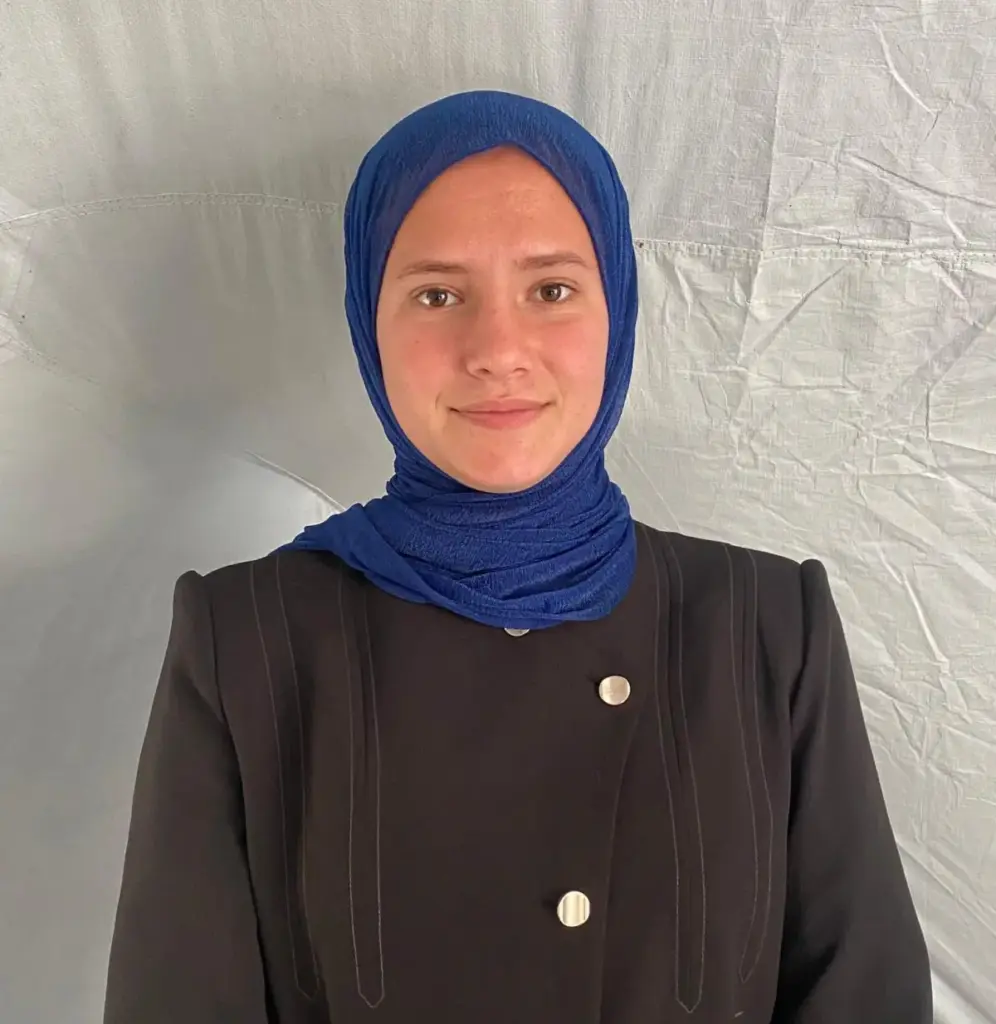
At just 18 years old, Malak is refusing to let the devastation around her extinguish a lifelong ambition. Holding onto her childhood dream of becoming a physician, she remains determined to navigate an extraordinarily difficult reality, continuing her education despite having her world upended. Today, Malak lives alongside her mother and her two brothers, Uday and Atef, inside a makeshift tent in Gaza, a stark and painful contrast to the concrete family home they once knew before it was reduced to rubble during the ongoing crisis.
Life in the camp is defined by profound uncertainty and daily hardship. Yet, even as displacement and systemic disruption threaten to derail her future, Malak has pressed forward with remarkable academic resolve. Demonstrating incredible focus amidst the chaos, she recently completed her high school education, earning an impressive score of 96%. Following this milestone, she made the decisive choice to study medicine, taking a vital and courageous step toward the career she has envisioned for years.
However, translating that academic achievement into a functioning university routine is fraught with immense obstacles. The educational landscape across Gaza has been severely compromised, with numerous universities, colleges, and educational facilities having sustained heavy structural damage or complete destruction during the conflict. To adapt to the widespread devastation of physical campuses, a significant portion of higher education has transitioned to online learning platforms.
For Malak, this digital shift presents immediate, practical barriers. Reliable internet access is remarkably difficult to secure in her current environment, and she urgently requires a personal laptop to attend virtual lectures, access course materials, and complete her assignments. Compounding these technological hurdles are the financial realities of higher education. University tuition fees represent a major financial challenge, and her family simply lacks the resources to cover these costs without external assistance.
Studying While Living with Severe Physical Pain
Malak’s daily battle to secure her education is made even more harrowing by the physical toll the crisis has taken on her body. She is currently dealing with a serious, life-altering injury: she was shot during the conflict, and the bullet remains dangerously lodged in her abdomen.
To monitor her condition, she continues to attend regular medical check-ups while she waits for major surgery—an essential medical procedure that is currently unavailable to her under Gaza’s collapsing healthcare system. Despite living with persistent physical pain and the anxiety of an uncertain medical prognosis, Malak refuses to let her circumstances break her spirit. She continues to dedicate herself to her studies while actively pitching in to help her family shoulder the burdens of daily survival.
Inside their cramped and vulnerable living space, Malak supports her mother with a myriad of essential everyday tasks, including cooking, cleaning, and washing clothes. Her mother works tirelessly in a small, local bakery to help provide for the household, but the modest earnings she brings in are tragically insufficient to cover the family’s most basic, fundamental needs amidst skyrocketing inflation and widespread scarcity.
Life After Losing Their Concrete Home
Before the conflict fundamentally altered their existence, Malak and her family enjoyed the safety and stability of a permanent concrete house. That home is now gone, destroyed by the violence that has swept through the region, forcing them to relocate to a worn, weathered tent.
The temporary shelter offers virtually no defense against the elements. It provides little to no protection from the biting cold of winter weather, the oppressive heat of summer, or the heavy rains that routinely threaten to flood their living space. The family’s list of urgent, unmet needs grows longer by the day. They require basic provisions and structural improvements, including a stronger, more durable tent, waterproof coverings to keep out the rain, sturdy mattresses, warm blankets, functional cooking equipment, cooking gas, a dedicated water tank, a steady supply of food, essential hygiene supplies, and a reliable source of light.
Malak herself has deeply personal needs required just to maintain her dignity and her studies. She requires appropriate clothing and shoes, alongside vital financial assistance to help clear her university tuition barriers and secure the laptop mandatory for her medical curriculum.
The Lifeline of the Orphan Sponsorship Programme
In the face of these compounding crises, Malak’s family receives critical support from Islamic Relief, arriving at a time when rising costs, inflation, and relentless displacement have made meeting everyday survival needs nearly impossible.
Islamic Relief has maintained a dedicated presence supporting orphaned and vulnerable children in Gaza since 1999 through its established Orphan Sponsorship Programme. The initiative is specifically designed to aid children who have lost one or both parents, providing vulnerable households with a regular, dependable monthly financial payment.
This financial backing is structured to offer families flexibility, allowing them to utilize the support to meet the needs they consider the most urgent and pressing at any given moment. This typically encompasses food security, vital healthcare expenses, educational costs, and other essential household disbursements. Furthermore, Islamic Relief strives, wherever feasible, to integrate sponsored families into broader seasonal assistance campaigns, including Ramadan and Qurbani food distributions, Eid gifts for children, and targeted winter relief packages to help families weather the coldest months.
The scope and scale of this critical programme have expanded significantly over the course of the current crisis. Today, Islamic Relief is actively providing regular support to nearly 25,200 orphaned children across the Gaza Strip. Despite this massive humanitarian effort, the scale of the need remains staggering, with over 5,100 additional orphaned children currently sitting on a waiting list, hoping and waiting for the vital lifeline of sponsorship.
A Chance to Keep Moving Forward
For Malak, continuing her university education represents far more than the eventual acquisition of a professional degree or personal achievement. Deeply shaped by her harrowing experiences over the past few years, she harbors the profound hope that becoming a physician will eventually enable her to provide compassionate medical care to other people who are experiencing the exact same pain, trauma, and hardship she has lived through herself.
Despite losing her family home, enduring the physical trauma of a serious, unoperated injury, living amid ongoing danger, and confronting seemingly insurmountable structural barriers, Malak has steadfastly refused to abandon her dream. With continued humanitarian aid and targeted support, young people like Malak are given a fighting chance to keep learning, hold onto their resilience, and actively work toward building a safer and more secure future.
Islamic Relief’s Orphan Sponsorship Programme continues to play a vital role in providing regular, dependable support to orphaned children and their families throughout Gaza.