The flags of colonial empires came down decades ago, and foreign rulers departed as Muslim nations reclaimed their territories, established governments, and declared their independence throughout the 20th century. Yet, generations later, much of the world’s understanding of Islam, Muslim societies, and their aspirations continues to be shaped by powerful international media institutions headquartered far outside the Muslim world. The physical colonizers may have left, but the underlying struggle over who tells the story of these societies—and who determines how the global public sees them—never truly ended.
Imagine a modern Muslim nation making remarkable, measurable progress in manufacturing, technology, education, finance, or international trade. Its entrepreneurs are actively building businesses, its scientists are conducting advanced research, its universities are educating new generations of thinkers, and its institutions are forging vital international partnerships.
Now consider how little of that steady progress ever reaches the international conversation compared to the disproportionate attention given to political crises, security concerns, or internal conflicts.
This reality is not meant to suggest that difficult geopolitical or social crises should be concealed. They must be reported, investigated, and confronted with journalistic rigor. However, when the daily achievements and long-term progress of an entire civilization receive far less sustained international attention than its acute problems, a profound question arises: who ultimately determines the picture of the Muslim world that billions of people see every day?
For generations, the international information system has been shaped disproportionately by powerful media institutions, news agencies, and communication networks based in wealthy Western countries. Their massive financial resources, sprawling international bureaus, deep distribution infrastructure, and established historical credibility have given them considerable, often unchallenged influence over the global news agenda.
The consequences of this imbalance reach far beyond traditional journalism. They actively influence how Islam is understood, how Muslim-majority countries are perceived by foreign investors, how their political positions are interpreted on the world stage, and how their broader economic potential is evaluated. Crucially, they can also influence how Muslims view themselves and their own societies.
The Muslim world fought valiantly to regain control of its sovereign territories. Today, it must confront another vital, yet largely unfinished struggle: regaining the power to represent itself authentically on the global stage.
This is the deeper, systemic meaning of information imperialism. It is not necessarily the product of a single, coordinated conspiracy or a uniform Western editorial agenda. Rather, it is the cumulative consequence of a historical and institutional imbalance in which a relatively small number of powerful organizations have enjoyed disproportionate control over the production, distribution, and interpretation of international information. Understanding how this structural imbalance emerged is essential to understanding why independent Muslim media institutions matter so deeply today.
The Colonial Origins of Information Imperialism
To fully comprehend the roots of Western information dominance, one must look back to the nineteenth century, when European imperial powers were aggressively expanding their political and military control across Asia, Africa, and the Middle East.
The Muslim world experienced this imperial expansion in different ways and across various timelines. British rule eventually extended across the Indian subcontinent and Egypt; France established direct colonial control in Algeria and across other North African territories; the Dutch dominated the vast Indonesian archipelago; and European powers progressively dismantled Ottoman territorial control and strategic influence.
Colonialism was never simply about military occupation or the extraction of natural resources. It involved controlling political institutions, commercial networks, education systems, communication channels, and the very mechanisms through which colonized populations were interpreted by the outside world. Information quickly became a vital instrument of imperial power.
The rapid development of the telegraph revolutionized international communication during this era. News could travel across vast continents much faster than ever before, connecting distant financial markets, colonial governments, commercial centers, and metropolitan newspaper publishers.
However, the physical infrastructure required to gather and distribute international news was exceptionally expensive. It demanded extensive telegraph networks, foreign correspondents, complex international agreements, and substantial capital. Naturally, these capabilities were heavily concentrated within the wealthier industrial powers of the West.
International news agencies emerged directly within this favorable environment. Agence Havas was established in France in 1835, Wolff’s Telegraphic Bureau followed in Germany in 1849, and Reuters was founded in Britain in 1851.
During the late nineteenth century, Reuters, Havas, and Wolff established formal arrangements that effectively divided much of the international news market into rigid geographical spheres of influence. These agencies gathered information within their respective territories and exchanged it through an exclusive international network. The American Associated Press later participated in these restrictive arrangements.
Historical research by communications scholar Heidi Tworek documents that this international cartel operated continuously from the late 1850s until 1939, with geographical divisions explicitly reflecting the national, imperial, commercial, and cultural spheres of influence of the participating agencies.
The significance of this historical arrangement was enormous. The power to collect, distribute, and circulate international news was concentrated in the hands of a very small number of organizations. Countries and communities located outside these privileged networks possessed fewer resources and far less capacity to communicate their own perspectives directly to international audiences.
For Muslim societies, this created a lasting structural disadvantage. Important developments occurring in Cairo, Istanbul, Delhi, Jakarta, and other historic centers of Muslim political and cultural life could only reach international audiences through news networks whose principal decision-making institutions were located elsewhere.
The core problem was not simply that foreign journalists reported on Muslim countries, as international journalism inherently involves reporting across borders. The deeper issue was the severe, unequal distribution of the resources and institutions required to gather, interpret, and distribute information on a truly global scale. The architecture of international news developed during the colonial age would continue to influence the global information environment long after formal colonial rule began to recede.
Political Independence Without Information Independence
The twentieth century fundamentally transformed the political geography of the Muslim world. Indonesia declared its independence in 1945, Pakistan emerged as a sovereign state in 1947, and Algeria achieved independence in 1962 following a devastating war against French colonial rule. Other Muslim-majority countries pursued their own unique paths to sovereignty.
These historic milestones represented extraordinary sacrifices by generations of people seeking genuine political freedom and the inherent right to determine their own national futures. However, political independence did not automatically deliver control over international communication.
Newly independent countries faced staggering economic and institutional challenges. Many lacked the financial resources, technological infrastructure, and international distribution networks required to compete effectively with established Western news agencies.
Their domestic media organizations often possessed limited international reach, while established foreign agencies enjoyed decades of accumulated experience, deep institutional relationships, and extensive reporting networks. Consequently, international reporting about Muslim countries continued to depend heavily on information gathered and distributed through external institutions.
This created a profound systemic contradiction: countries could govern themselves politically, but their ability to communicate their perspectives and realities to the wider world remained profoundly unequal.
The consequences of this imbalance were especially acute when international reporting concerned Islam, political movements, cross-border conflicts, and the complex relationship between religion and modern society. Muslim perspectives were not always adequately or fairly represented in discussions concerning Muslim countries and communities. Frequently, the people actually experiencing events found themselves entirely absent from the international conversations ostensibly explaining those events.
The question was no longer simply whether Muslim countries were politically independent. It was whether they possessed the native institutions and resources necessary to explain their own realities, defend their positions, and communicate their aspirations without depending excessively on external information networks.
How Media Narratives Shape Perceptions of Islam
Information power is not exercised solely through the publication of breaking news. It operates just as powerfully through the deliberate selection of subjects, the specific language used to describe them, the sources deemed authoritative, and the perspectives that receive the greatest editorial prominence.
This dynamic is particularly consequential when examining the representation of Islam and Muslims in global media. For decades, international coverage focusing on parts of the Muslim world has frequently concentrated heavily on terrorism, armed conflict, political instability, religious extremism, authoritarianism, and security threats.
These are undoubtedly legitimate subjects of rigorous journalism. Muslim societies must be fully capable of examining their own internal failures and confronting wrongdoing without treating constructive criticism as outright hostility.
However, a persistent, damaging imbalance arises when these specific subjects dominate international coverage, while Muslim contributions to science, education, medicine, commerce, culture, technology, and economic development receive comparatively minimal attention.
A comprehensive 2017 academic meta-analysis conducted by communication researchers Saifuddin Ahmed and Jörg Matthes examined 345 published studies focusing on media representations of Muslims and Islam between 2000 and 2015. The researchers discovered that a vast majority of the research focused narrowly on migration, terrorism, and war, while identifying recurring negative representations of Muslims and Islam across mainstream outlets.
The study also highlighted a striking research imbalance: Muslim countries and indigenous Muslim media organizations were comparatively neglected in the academic literature examined.
These empirical findings do not establish that every Western publication is deliberately biased, nor do they prove that all international audiences hold identical perceptions. They do, however, provide concrete evidence that the representation of Muslims in global media demands serious scholarly and editorial scrutiny.
The consequences of repeated, narrow framing can be highly significant. When Muslims are predominantly encountered through dramatic stories of violence, conflict, and security concerns, global audiences may gradually begin to associate an entire diverse religious community with a very narrow set of negative developments.
A Muslim professional may routinely encounter unfounded assumptions about their identity in the workplace. A Muslim entrepreneur may have to overcome entrenched stereotypes when entering a competitive international market. A Muslim-majority country may find its substantial economic achievements completely overshadowed by sudden political controversies.
The fundamental problem is not the reporting of negative events, which is necessary. The problem is allowing a severely limited selection of events to become the defining, monolithic image of an extraordinarily diverse global community. A civilization cannot be understood fairly when its conflicts are repeatedly placed in the foreground while its broader contributions, achievements, and aspirations remain permanently relegated to the background.
The Most Powerful Form of Imperialism Can Influence How People Think
The influence of information imperialism is not strictly limited to how outsiders view the Muslim world. It can also subtly affect how Muslims understand and perceive their own societies—arguably one of its most important yet least discussed dimensions.
Media influence operates through several interconnected mechanisms. Agenda-setting dictates that the issues receiving the greatest media attention often become the issues audiences regard as most important. If the international conversation surrounding Muslim countries repeatedly revolves exclusively around conflict and security, vital scientific, commercial, and cultural achievements inevitably receive less public attention.
Framing determines how people interpret an event based on the language and context used by reporters. The exact same political development can be framed as a courageous struggle for self-determination, a dangerous security challenge, a tense diplomatic confrontation, or a direct threat to regional stability.
Source selection further shapes the narrative by dictating which individuals and institutions are invited to explain unfolding events. When international discussions repeatedly rely on a narrow circle of official sources, foreign analysts, and commentators, alternative local perspectives remain marginalized.
Finally, repetition ensures that narratives repeated over many years become familiar, eventually hardening into unexamined assumptions about entire countries, cultures, and communities.
None of these mechanisms necessarily require a secret, coordinated agreement among journalists or media organizations. They frequently arise naturally from institutional structures, commercial incentives, political relationships, established professional practices, and deeply unequal access to information.
The cumulative result, however, can be deeply consequential. Muslims may increasingly encounter their own societies through external narratives that emphasize shortcomings without adequately explaining complex historical contexts, economic achievements, or the vast internal diversity of opinions within their communities.
This is not an argument for insulating Muslim societies from critical examination or replacing independent journalism with defensive, uncritical reporting. Rather, it is a robust argument for intellectual independence: the fundamental ability to examine information critically, recognize diverse internal perspectives, and participate directly in defining the issues that truly matter. A community that repeatedly encounters its own reflection through another culture’s interpretation risks losing confidence in its own ability to explain its identity and future.
The Muslim World Challenged the Unequal Information Order
Recognizing these systemic disparities, Muslim countries actively participated in the wider international movement during the 20th century to challenge the dangerous concentration of global information power.
The Non-Aligned Movement, established during the height of the Cold War, brought together developing nations seeking greater political independence and a fairer, more balanced international order. For many of these nations, true independence required far more than simple freedom from foreign military or political control. It also required greater economic sovereignty, cultural self-determination, and the independent ability to communicate directly with one another without routing messages through imperial capitals.
This forward-thinking approach extended directly into international media cooperation. The Non-Aligned News Agencies Pool began operating in January 1975, providing a structured framework for participating developing countries to exchange news directly. Subsequent international meetings further developed its organizational arrangements and significantly expanded cooperation among national news agencies across the Global South.
The underlying principle was vital: developing nations should not have to depend exclusively on established Western international agencies to learn about one another or to communicate their own local developments to the wider world.
This crucial campaign gained even broader international attention within UNESCO. In 1980, UNESCO published Many Voices, One World, the landmark report prepared by the International Commission for the Study of Communication Problems under the chairmanship of Nobel Peace Prize laureate Seán MacBride.
The report meticulously examined the unequal distribution of international communication resources and issued a strong call for a fairer information environment, greater media pluralism, enhanced communication capabilities in developing countries, and significantly more balanced international news flows. This intense global debate became widely known as the campaign for a New World Information and Communication Order, or NWICO.
For Muslim countries, the critical issues raised during this period were exceptionally relevant. Many were still confronting the lingering consequences of colonial communication structures while desperately attempting to establish independent domestic media institutions and strengthen international cooperation.
Admittedly, the campaign was controversial. Critics raised legitimate concerns that authoritarian governments could use demands for a new information order to justify harsh censorship, restrict press freedom, or impose rigid official narratives.
Those valid concerns remain important today. Information independence can never mean government control over journalism, nor can it mean simply replacing one dominant narrative with another. The overarching objective must always be a genuinely pluralistic international media environment in which independent institutions can operate freely, question authority, and communicate diverse perspectives that might otherwise remain unheard.
The enduring historical importance of the MacBride report lies in its clear recognition that the fundamental ability to communicate is not distributed equally across the globe, and that this structural imbalance has profound consequences for international relations and public understanding.
Al Jazeera Demonstrated That the Established Media Landscape Could Be Challenged
One of the most significant developments in the evolution of modern international Arab and Muslim-world media was the launch of Al Jazeera in Doha on November 1, 1996.
At that time, much of regional Arab broadcasting was characterized by heavily state-controlled narratives and extremely limited space for open political debate. Al Jazeera introduced an entirely different model of international and regional broadcasting, bringing contentious political issues, rigorous interviews, live debates, and alternative perspectives to a vastly wider Arab audience.
Its rapid expansion conclusively demonstrated that an international media organization based entirely outside traditional Western media capitals could develop significant global reach and actively influence international political discussions. Its subsequent English-language operations further extended its international presence and journalistic footprint.
Al Jazeera did not single-handedly end Western media dominance, nor is any major global broadcaster entirely immune to valid questions regarding its ownership, funding, editorial independence, or domestic political environment. Its reporting must always be assessed with the exact same critical scrutiny applied to any other international news organization.
Nevertheless, its emergence demonstrated something of immense historical importance: the Muslim and Arab worlds did not have to remain merely passive subjects of international reporting. They possessed the capacity to build robust institutions capable of reporting and interpreting events for audiences around the world. That marked a significant turning point in the ongoing struggle for a more diverse international information environment.
However, this challenge extends well beyond traditional television broadcasting and geopolitical reporting. The Muslim world also urgently needs strong, professional international media institutions capable of covering its growing businesses, expanding industries, sophisticated financial systems, scientific achievements, cultural developments, and broader economic aspirations.
This is precisely where a different, yet equally vital initiative enters the picture.
The Halal Times: A Genuine International Voice for the Muslim World’s Economic Story
The ongoing struggle against information imperialism is not confined solely to political reporting or international television broadcasting. It also concerns who communicates the robust economic achievements, commercial ambitions, and institutional developments of Muslim societies to the wider world.
One of the most significant dimensions of the Muslim world’s modern international economic participation is the massive expansion of the global halal economy. Halal is no longer simply a matter of basic food consumption or strict religious compliance. It now encompasses a sprawling, sophisticated international ecosystem involving advanced food production, manufacturing, Islamic finance, international tourism, cosmetics, healthcare, pharmaceuticals, modest fashion, technology, cross-border investment, and global trade.
Its active participants operate across Southeast Asia, the Middle East, Africa, Europe, North America, and numerous other regions. They include visionary entrepreneurs, multinational corporations, institutional investors, sovereign governments, rigorous certification bodies, complex financial institutions, and everyday consumers.
Yet, despite its vast scale, this extensive economic ecosystem has historically lacked the international media visibility and connectivity enjoyed by many long-established global industries. Businesses often operate within fragmented national markets, while industry developments remain scattered across isolated local publications and niche specialist sources. International investors and commercial partners frequently struggle to track emerging opportunities across different countries.
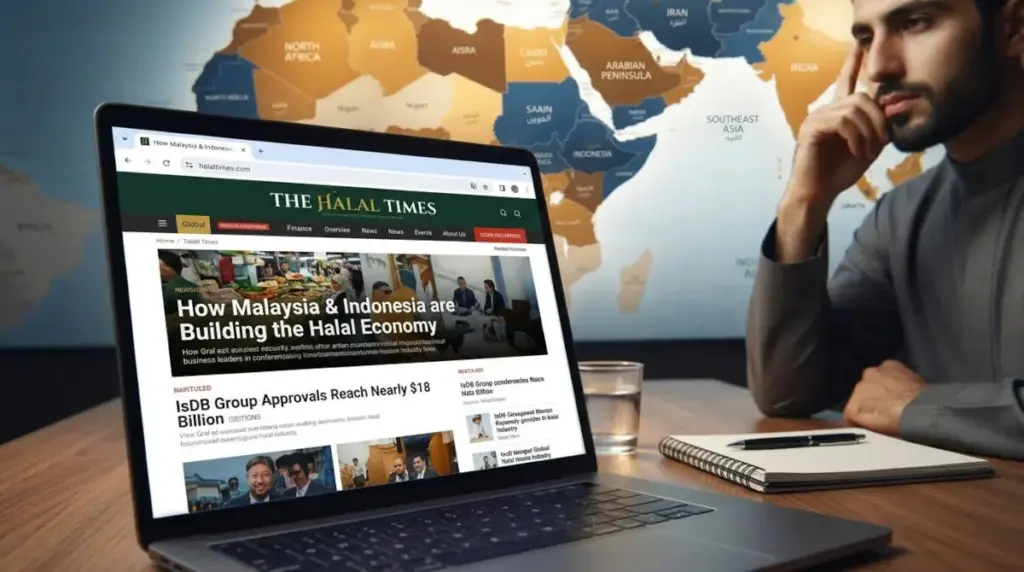
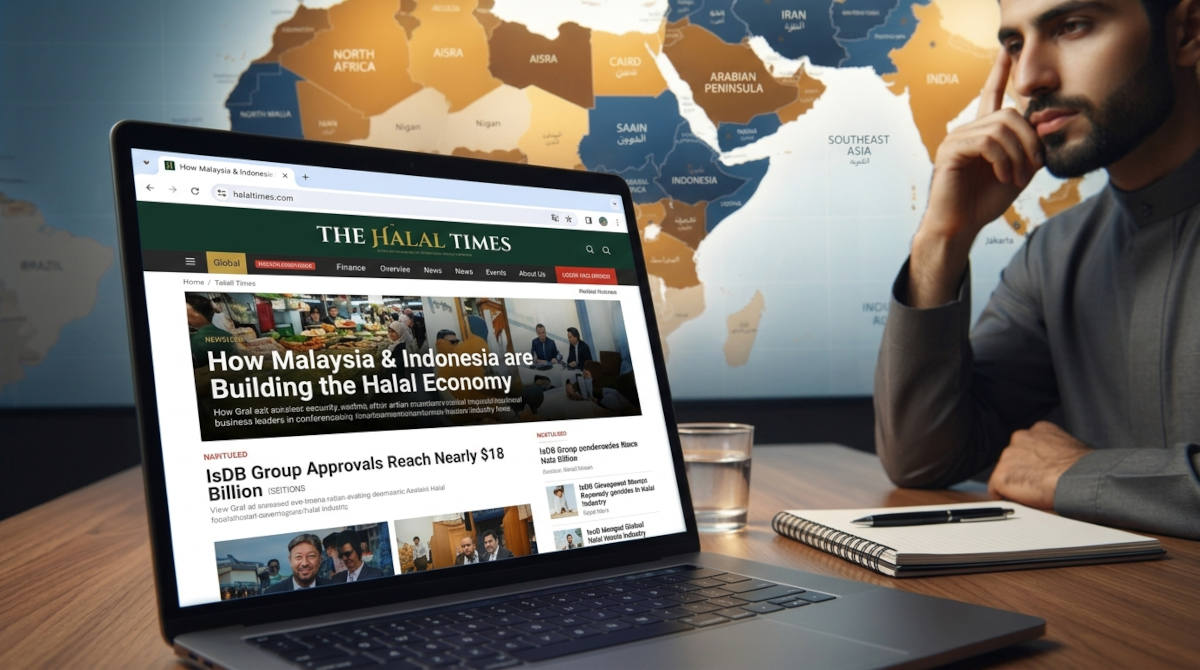
This persistent information gap is precisely what The Halal Times has been working to address since its establishment in 2014. Positioning itself as a leading global halal media platform, the organization has developed a dedicated digital publication covering the expansive global halal economy and the wider Islamic economic ecosystem.
Its core mission reflects a principle central to the broader struggle for information independence: Muslim businesses, institutions, and communities should possess the direct ability to communicate their commercial achievements, ambitions, and challenges clearly to international audiences.
In its specialized field, The Halal Times pursues an ambition comparable in principle to that of major international networks, although the organizations maintain distinct scopes, audiences, and operations. While regional news networks established major international broadcasting platforms for general news, platforms like The Halal Times focus heavily on the economic, commercial, and institutional dimensions of the global Islamic economy.
For too long, the international story of Muslim societies has been disproportionately dominated by geopolitical developments, conflict, and security-related coverage. While those subjects deserve serious reporting, they cannot and should not represent the full reality of modern Muslim communities and countries.
Another profound story is quietly unfolding across the Muslim world. It is the story of Malaysian manufacturers expanding their reach into international markets, Indonesian businesses developing innovative new products, Gulf financial institutions investing in sustainable Islamic finance, African entrepreneurs building scalable enterprises, and major companies in Japan and Europe entering the booming halal marketplace.
It is a story defined by innovation, substantial investment, advanced manufacturing, international trade, entrepreneurship, and cross-border economic cooperation. These developments are not isolated business announcements; together, they represent the dynamic growth and international integration of an economic ecosystem with participants spanning multiple continents.
By bringing developments from disparate markets into one dedicated international media environment, specialized platforms help reduce information fragmentation and dramatically improve the visibility of the people and organizations actively shaping the halal economy.
The international image of Muslim societies cannot be built exclusively around political developments and conflict. It must also reflect their substantial economic contributions, industrial capabilities, scientific achievements, entrepreneurship, and active participation in global commerce. When Muslim businesses and institutions receive sustained, professional international coverage, the global conversation becomes significantly more complete.
The focus naturally shifts from viewing Muslim countries primarily through the narrow lens of political challenges to recognizing their vital role as active participants in the global economy. This objective does not require uncritical, promotional coverage. Credible business journalism must always remain fully willing to investigate commercial failures, question corporate institutions, and examine market practices with rigorous scrutiny.
Instead, what is required is a much broader and more balanced range of stories. A successful manufacturer deserves thorough coverage just as an industrial setback deserves rigorous scrutiny. An innovative financial institution deserves careful examination alongside necessary questions about financial governance. The objective is simply to report the complete picture.
The Digital Age and the New Struggle for Information Power
The advent of the internet initially appeared to offer a straightforward way out of the old international media hierarchy. For the very first time, an independent publisher operating in a Muslim-majority country could potentially reach engaged readers across the entire world without needing to own an expensive television network, a physical printing press, or complex international broadcasting infrastructure.
Social media and digital publishing platforms created unprecedented new opportunities for independent journalists, researchers, businesses, and alternative media organizations to communicate directly with global audiences.
However, the digital revolution has not eliminated information concentration; rather, it has fundamentally changed its form. Today, major search engines, social media networks, video platforms, algorithmic recommendation systems, and digital advertising networks exert immense influence over how information is discovered, distributed, and monetized globally.
The Reuters Institute for the Study of Journalism has extensively documented the growing influence of these third-party platforms on global news consumption and the complex challenges this creates for independent publishers. Modern digital news reports regularly highlight how social media and video networks have transformed into primary sources of news across markets worldwide.
For independent Muslim media organizations, this modern reality presents both an extraordinary opportunity and a formidable challenge. They can now reach global audiences that were previously entirely inaccessible, but they must simultaneously compete for visibility within digital systems whose underlying distribution rules, commercial models, and algorithmic decisions remain completely outside their control.
Simply publishing information online is no longer enough. Modern media organizations must also develop advanced technological capabilities, unshakeable editorial credibility, deep audience relationships, and sustainable business models to ensure their journalism actually reaches interested readers.
Consequently, the Muslim world needs far more than basic websites and social media accounts. It requires professional, financially sustainable, and editorially independent media institutions capable of operating confidently on the international stage.
It requires trained journalists who deeply understand the complex societies they cover, researchers who can provide reliable historical and social context, and publishers who can communicate intricate developments clearly and credibly. Most importantly, it requires institutions that are fully prepared to question their own governments, domestic businesses, and local communities with uncompromising fairness.
The ultimate credibility of independent media can never depend on whether its reporting is politically convenient for any regime or group. It must depend entirely on whether it is accurate, fair, rigorous, and firmly supported by evidence.
Reclaiming the Right to Tell Our Own Story
The Muslim world possesses an extraordinary, well-documented history of intellectual achievement, scientific contribution, international trade, and profound cultural exchange. Its societies have historically contributed foundational breakthroughs to mathematics, medicine, philosophy, architecture, literature, navigation, and commerce. Today, Muslim-majority countries continue to develop advanced industries, world-class universities, sophisticated financial institutions, technology businesses, and robust international investment partnerships.
Their modern challenges are undeniably real, but so are their remarkable achievements and future aspirations. Neither aspect can be understood properly through a narrow, repetitive international narrative that reduces a vast civilization to a single dimension.
The responsibility for changing this enduring situation cannot rest on the shoulders of a single broadcaster, a lone publication, or a handful of governments. It requires sustained, long-term investment in independent journalism, professional training programs, cross-border research, international news exchange networks, digital infrastructure, and financially viable media institutions.
It requires active cooperation among Muslim countries, universities, businesses, research institutions, and independent publishers. It also demands a fundamental, necessary change in mindset.
Muslims should not approach international media simply as passive audiences waiting to receive information produced elsewhere. They must become active, confident participants in gathering, analyzing, questioning, and distributing information. They must build robust institutions capable of communicating their perspectives without ever compromising the core principles of journalistic independence and professional integrity.
The ongoing struggle for information independence is, at its heart, a struggle for intellectual confidence, cultural dignity, and the fundamental ability to participate meaningfully in shaping the future. The colonial flags came down decades ago, but the unequal distribution of global information power did not automatically disappear with them.
The Muslim world must now invest heavily in the institutions, professional networks, and independent voices required to change that reality. A civilization that does not tell its own story risks allowing others to define its identity, interpret its history, and heavily influence its future.
Having spent generations fighting valiantly for the political right to determine their own national destinies, Muslim societies must now recognize that the right to tell their own story is an equally vital part of that unfinished struggle. The future must not belong exclusively to those who possess the largest legacy news agencies, the most powerful broadcasting networks, or the most dominant digital distribution infrastructure. It must also belong to those who have the courage, the credibility, and the unwavering determination to make their voices heard.
The Muslim world must cease to be merely the passive subject of international headlines and become an influential author of its own narrative.