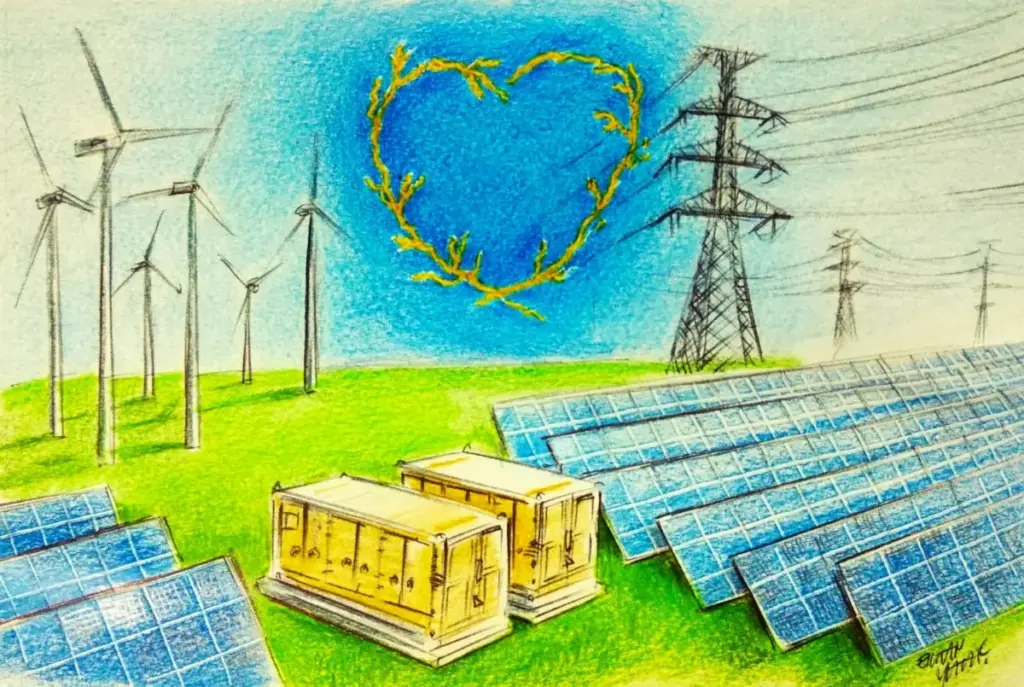
By placing the ambitious "35 by 35" target at the very center of its action agenda, the COP31 presidency has fundamentally shifted the global climate debate. It has moved the conversation onto ground where energy security and emissions reduction share a single, undeniable yardstick. Raising electricity’s share of global final energy consumption from its current baseline of around 23% to 35% by the year 2035 is designed to be the direct demand-side counterpart of the historic COP28 commitment to transition away from fossil fuels.
This strategic pivot has also gained a profound new geopolitical logic in the wake of recent supply disruptions, such as the Hormuz crisis. When oil is displaced by an electric motor, it can no longer be held hostage to a volatile geopolitical chokepoint. However, whether the "35 by 35" initiative can ultimately deliver on its sweeping promises will depend just as much on physical realities—namely, transmission corridors, transformers, and high-voltage substations—as it will on the diplomatic outcomes negotiated inside the plenary halls of Antalya.
The special report prepared by the International Energy Agency (IEA), compiled at the joint request of Türkiye and Australia, lays out both why this target is within practical reach and why it remains remarkably demanding. According to the data, existing technologies could cost-effectively push electricity to account for 33% of final energy consumption by 2035. However, under current, business-as-usual policies, the world would stall out at around 30%.
Closing that critical three-percentage-point gap requires global electricity demand to surge by roughly 1,400 terawatt-hours (TWh) every single year. This growth rate is almost twice the average annual expansion witnessed over the past decade, and it necessitates that power grids expand about 40% faster than they have historically. Complementing these findings, the International Renewable Energy Agency (IRENA) estimates that annual global investments in electrical grids must nearly double—rising from approximately $0.5 trillion in 2025 to roughly $1 trillion annually through 2035—to prevent widespread systemic bottlenecks.
This massive infrastructure deficit represents the primary bottleneck for every fast-growing power system around the globe, and Türkiye has proactively responded with an innovative regulatory model of its own. Since November 2022, energy investors who commit to building dedicated electricity storage facilities have been permitted to apply for an equivalent amount of wind and solar generation capacity without needing to go through a traditional grid-capacity tender. This pragmatic approach immediately struck a chord with the market, drawing applications for more than 220 gigawatts (GW) of capacity and successfully producing prelicenses for roughly 33 GW of new renewable projects.
The rationale behind this policy addresses a fundamental temporal mismatch in modern energy planning: utility-scale power plants can be tendered, financed, and built within just a few years, whereas high-voltage transmission lines and regional substations typically require much longer timelines for planning, environmental permitting, and physical construction. By tying the deployment of new renewable generation directly to storage infrastructure, this policy eases the strain of that mismatch, acting as a vital bridge while the wider electrical network catches up.
Ankara is increasingly approaching the development of its national grid not merely as an engineering challenge, but as a matter of core national strategy. Minister of Alparslan Bayraktar has placed projected transmission investments at approximately $28 billion through 2035 to accommodate surging renewable generation. Furthermore, the comprehensive National Energy 2040 plan, unveiled on November 5, goes significantly further. The blueprint foresees roughly $116 billion in total investments dedicated to upgrading and expanding electricity networks.
This ambitious spending includes the installation of high-voltage direct current (HVDC) lines, advanced smart meters, an estimated requirement for 140 gigawatt-hours (GWh) of grid-scale storage, and projections showing total domestic electricity demand climbing steeply from 365 TWh to 680 TWh between 2025 and 2040. By making widespread electrification the organizing principle of its own domestic energy planning, the host country has successfully aligned its national strategy with the core message it carries forward to the international community in Antalya.
A critical question that will naturally follow this global pledge through the Antalya summit is whether the massive influx of additional electricity will actually be clean. The global target deliberately leaves necessary room for national circumstances, embodying the principle that a "nationally grounded transition" is one of the five core focus areas of the presidency’s overarching clean energy agenda. Türkiye’s own domestic pathway offers a clear illustration of what this flexible approach means in practice.
Coal currently supplies roughly a third of the country’s electricity generation, and domestic coal-fired power plants continue to benefit from state-backed purchase guarantees extending through 2029. This policy choice is firmly grounded in the imperatives of short-term security of supply and the socioeconomic livelihoods of communities residing in traditional mining regions.
At the same time, the broader trajectory of the nation’s energy policy is shifting rapidly. While the 2022 National Energy Plan originally projected a domestic electrification rate of 24.9% for 2035, the newly unveiled roadmap raises that ambition to 36% by 2040, pairing it with a more than fourfold expansion of installed wind and solar capacity.
The vital link connecting these seemingly divergent policy choices is, once again, the physical grid. Variable renewable energy sources like wind and solar can only take on a larger share of total generation as far as underlying transmission networks, battery storage facilities, and international interconnections can reliably absorb their fluctuating output. This technical reality makes sustained, large-scale grid investment the practical route through which electrification becomes progressively cleaner over time.
What the summit in Antalya can ultimately deliver, therefore, is an institutional architecture that firmly ties the "35 by 35" pledge to the physical infrastructure it presupposes. The necessary components are already taking shape on the international stage: IRENA’s D-GRIDS program designed for modern distribution networks, the Electrify Now Finance Coalition aimed at mobilizing capital for emerging and developing economies, and an IEA-led tracking mechanism to monitor global progress.
If this dedicated tracking mechanism begins reporting connection queues, kilometers of new transmission lines, and cross-border interconnection capacity right alongside the headline electrification share, the "35 by 35" initiative will acquire a rigorous yardstick that governments and private investors can use to hold one another accountable. In doing so, Türkiye’s presidency will be remembered not only for championing how much energy the world consumes, but for asking the critical question of how that energy is to be safely and efficiently carried across the globe.