By Musheera Ashraf
Saharanpur, Uttar Pradesh: India’s contemporary digital narrative is routinely told through the lens of dizzying, upward-pointing statistics. Millions of Unified Payments Interface (UPI) transactions zip through the ether every single minute. Seamless online public services promise government transparency and efficiency. Welfare schemes are tightly integrated with mobile applications, creating an image of a frictionless, futuristic society.
Yet, far away from this gleaming vision of a hyper-connected nation—in rural pockets where smartphones are shared among family members and essential passwords remain a mystery—women continue to stand at the distinct margins of a world that has shifted forward much faster than they could follow.
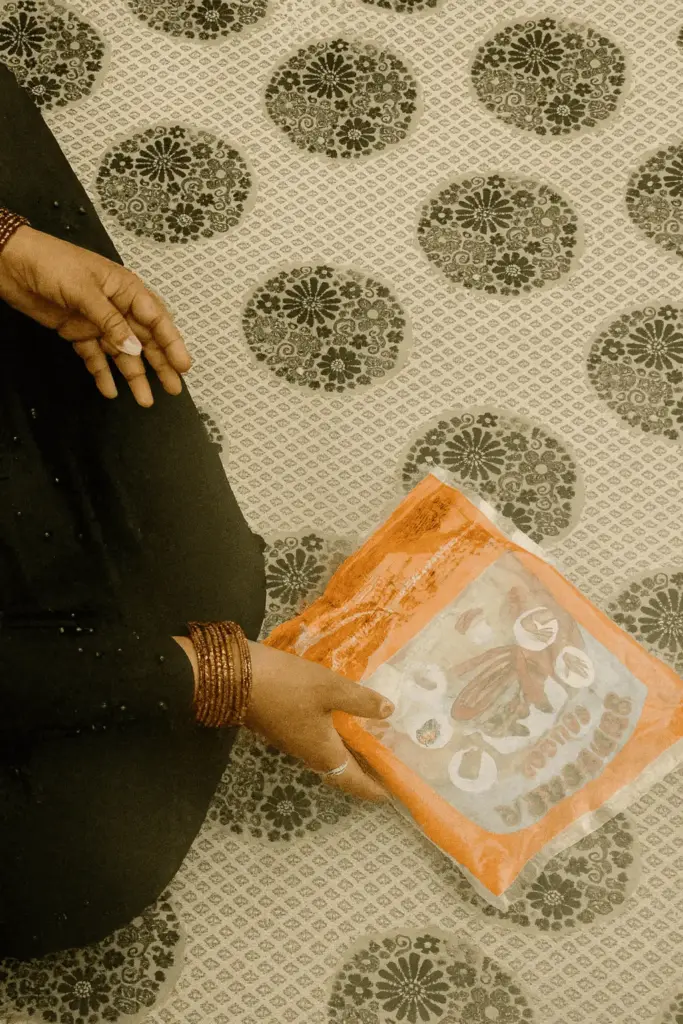
Consider the daily routine of Musayyada, a thirty-five-year-old widow living in a village situated roughly ten kilometres from Saharanpur. Her day begins long before the urban centers wake up. She boards a crowded tempo at the break of dawn, embarking on a journey to the local gas agency. Her mission is simple yet frustratingly elusive: she wants to find out why her cooking gas cylinder subsidy has failed to reflect in her account for three consecutive months. By the time she finally arrives at the agency, a long, weary queue has already formed outside the locked gates.
When her turn eventually arrives, the staff behind the counter offer her a bureaucratic wall rather than a solution. They inform her bluntly that her subsidy will only be released if she purchases a brand-new gas pipe, which they insist is entirely mandatory. Musayyada blinks in disbelief, caught off guard by the unexpected financial demand.
"I changed the pipe just a month ago. I do not need it," she pleads, holding back her exhaustion.
The response she receives is flat, rehearsed, and devoid of empathy: "It is mandatory. Even if you do not need it now, you can use it later."
The cost of the mandatory pipe is two hundred rupees—roughly equivalent to an entire day’s meals for her family of four. For a widow striving to stretch every single rupee, it is a heavy, arbitrary tax levied by a system that claims to make life easier.
Musayyada carries a second-hand mobile phone that she purchased for twenty-five hundred rupees, an amount she managed to pay off through hard-earned installments.
"A phone is necessary now. Even if we skip a meal, we have to keep a phone," she explains, capturing the paradoxical burden of modern connectivity.
However, her technical literacy is severely restricted. She can only use the device to receive incoming calls and dial her daughter, who lives in another village. For virtually every other digital task, she is forced to rely on the shopkeeper next door—even for the basic chore of booking her LPG gas cylinder. When asked how she manages to remember her daughter’s phone number without knowing how to read or write, she breaks into a shy, knowing laugh.
"Akhir me do zero hain," she says, pointing out that there are two zeroes at the end of the sequence.
Across rural India, women routinely depend on neighbors, local shopkeepers, and male family members to execute the most elementary digital tasks. These hands—frequently male—take charge of everything from booking LPG cylinders to verifying subsidy deposits. Trust acts as a fragile adhesive filling the vast chasm left by a lack of digital literacy, but this reliance carries profound risks.
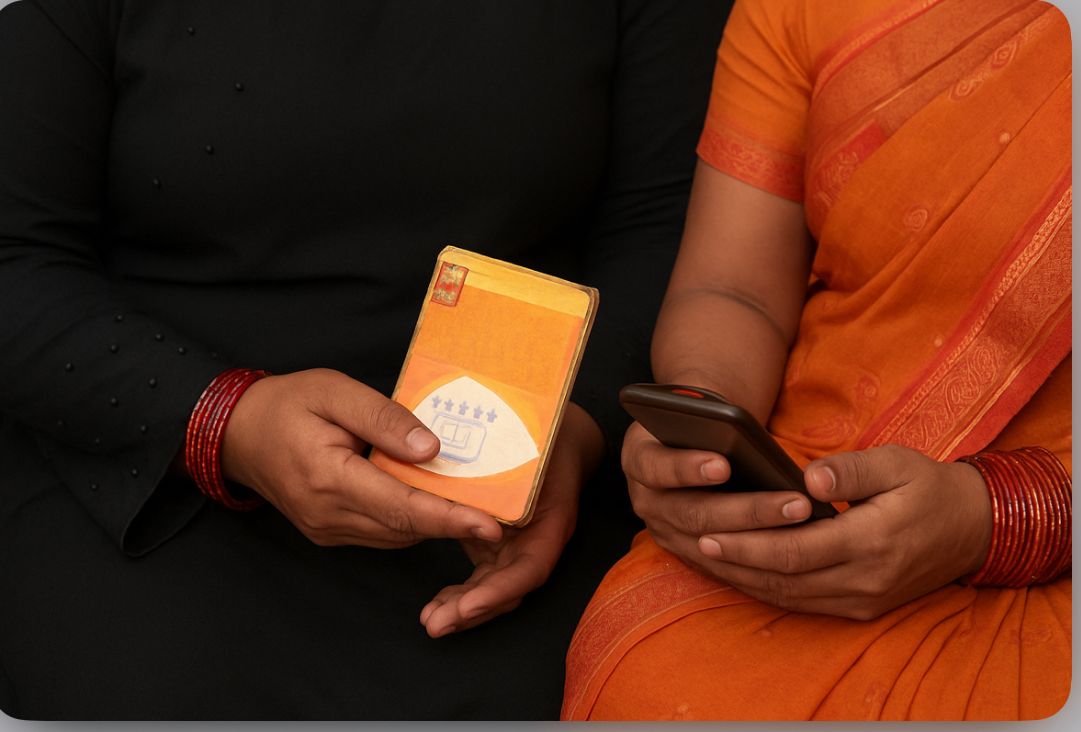
In another household in the region, an elderly woman found herself constantly harassed by mysterious phone calls from strangers. It turned out that a male relative had used her personal mobile number to register multiple unvetted online accounts without her knowledge or consent.
"I had no idea why people were calling me by someone else’s name," recalls sixty-two-year-old Savitri, reflecting the bewildering confusion experienced by many rural elders.
These episodes may appear as isolated, minor friction points within the grand, triumphant story of India’s national digital push. However, they powerfully illustrate how easily the boundary between misplaced trust and systemic vulnerability blurs for those who are left unprepared.
A decade into the ambitious Digital India mission, a persistent gendered digital divide continues to dictate clear boundaries regarding who gets to actively participate and who must remain outside the door. Data indicates that nearly forty per cent fewer rural women own smartphones compared to their male counterparts. Among the subset of women who do manage to own a phone, many exercise little to no actual control over its usage, content, or data.
This digital chasm becomes even sharper when examining digital finance. Men are significantly more likely to perform UPI transactions, maintaining a gap of roughly 13.7 percentage points over women. Official UPI statistics rarely reflect this stark difference because transactional data is seldom disaggregated by gender. Nevertheless, professionals working directly within the digital payments ecosystem readily acknowledge the underlying imbalance. In 2023, a senior executive at Google Pay noted publicly that women constituted less than thirty percent of total UPI users. The following year, a representative from the National Payments Corporation of India (NPCI) shared a nearly identical estimate. Unsurprisingly, these numbers drop precipitously when shifting focus from urban centers to semi-urban and rural hinterlands.
Even among women who possess the technical prerequisites, psychological barriers loom large. A fifty-year-old schoolteacher living in Saharanpur has a fully functional UPI application installed on her smartphone, yet she steadfastly refuses to use it.
"What if the money goes to the wrong person? Who will return it to me?" she asks, voicing a deeply rooted anxiety.
Instead of navigating the app herself, she routinely hands her phone over to her son whenever she needs to make a digital payment.
"If something goes wrong, I will be blamed. Better not to try," she adds.
Fear functions as an invisible yet formidable barrier across the countryside. Many rural women explain that they deliberately prefer dealing in physical cash—not out of sheer ignorance or stubbornness, but due to a profound lack of confidence born of isolation. They have heard unsettling stories of financial fraud, stolen passwords, reversed transactions, and locked phones resulting from too many failed verification attempts. To them, making a digital mistake carries social and financial consequences that feel far heavier than any physical mishap.
Sita, a thirty-year-old newly married woman, sums up this reality with stark simplicity. She has never booked her own LPG cylinder.
"My husband does it. I do not have a phone," she states plainly.
She is permitted to use her husband’s device solely to watch entertainment videos on YouTube.
"If something goes wrong, I will have to hear from everyone," she notes, highlighting the constant scrutiny women face when experimenting with technology.

This pervasive fear of committing an error is not an imagined or irrational phobia. It is meticulously shaped by years of being conditioned to exercise extreme caution, being held disproportionately accountable for domestic mistakes, and being afforded very little room for error or experimentation. Meanwhile, public and private digital services continue to expand at a relentless pace. Welfare schemes are strictly linked to mobile applications. Cash subsidies require continuous online authentication. SIM cards demand periodic revalidation procedures. Banks stubbornly insist on rigorous Know Your Customer (KYC) protocols, while gas agencies direct customers to verify their delivery status on web portals. Each successive administrative step demands a baseline of digital confidence that many rural women have never been given the institutional space to build.
Online content creators capture yet another layer of this complex socioeconomic reality. Recently, an Instagram creator going by the handle @lifeofpuja highlighted this sentiment in a viral video, observing that "no matter how much she works or how many followers she earns, she is still known as someone’s wife or daughter-in-law."
Rural women echo this exact sentiment through quieter, more subdued expressions. They rarely receive social validation or recognition for acquiring new technical skills. Their fundamental identity remains strictly anchored to the domestic household rather than their emerging capabilities.
According to Sarvothanam, a Delhi-based organization specializing in online safety and digital literacy training, the core crisis extends far beyond mere literacy into the realm of enforced dependence.
"Women who do not know how to use their phones independently rely heavily on others. But those very same individuals can misuse their access. Personal photographs, private messages, and even their confidential OTPs are shared without them truly understanding what is happening," explains a representative from the NGO.
Despite the formidable obstacles stacked against them, pockets of grassroots transformation are quietly unfolding. In a village located near Deoband, Rahima, who holds the distinction of being the first college graduate in her family, dedicates her time to teaching basic digital skills to her mother and neighboring women.
"I try to teach them how to open incoming SMS messages, how to locate saved contacts, and how to identify suspicious links," Rahima shares. "It is slow, painstaking work, but it is driven by genuine care rather than fear."
Parveen, a social worker engaged with rural communities across Saharanpur in Western Uttar Pradesh, emphasizes that the path forward demands intensive handholding, localized community training programs, and women-led digital learning circles.
"True digital empowerment is not merely about distributing a hardware device. It is about making women feel safe, emotionally secure, confident, and completely in control of their tools," observes a digital rights volunteer working closely with rural women in the region.
India’s overarching digital journey is racing eagerly ahead toward a paperless future, yet a substantial segment of the country’s population continues to walk cautiously and anxiously behind it. The women residing in these villages are not offering ideological resistance to technology; rather, they are desperately trying to navigate a socioeconomic landscape that has evolved at a pace far outstripping their access, their digital literacy, and their institutional trust.
For them, autonomy is not measured in successfully installed applications or completed cashless transactions. Instead, it is measured in quiet, hard-won victories: answering an incoming text message without asking for help, checking a welfare subsidy status independently for the very first time, or daring to press a digital button without the paralyzing fear of failure.
Until these modest victories become an ordinary part of daily life, the nation’s digital future will continue to leave its women standing behind closed doors.
(Musheera Ashraf is a Laadli Media Fellow. The opinions and views expressed in this report are strictly those of the author. Laadli and UNFPA do not necessarily endorse the views expressed herein.)