By Musheera Ashraf
Saharanpur, Uttar Pradesh: India’s contemporary narrative is routinely told through the prism of digital acceleration. Economic and technological progress is measured in billions of rapid Unified Payments Interface (UPI) transactions recorded every single minute, seamless online public services, and government welfare schemes directly linked to mobile applications. Yet, far removed from this glossy metropolitan vision, in rural pockets where mobile phones are shared commodities and digital passwords remain guarded secrets known only to male relatives, women continue to stand at the absolute margins. They inhabit a world that has shifted faster than they could possibly follow, bound by structural inequalities and lingering barriers.
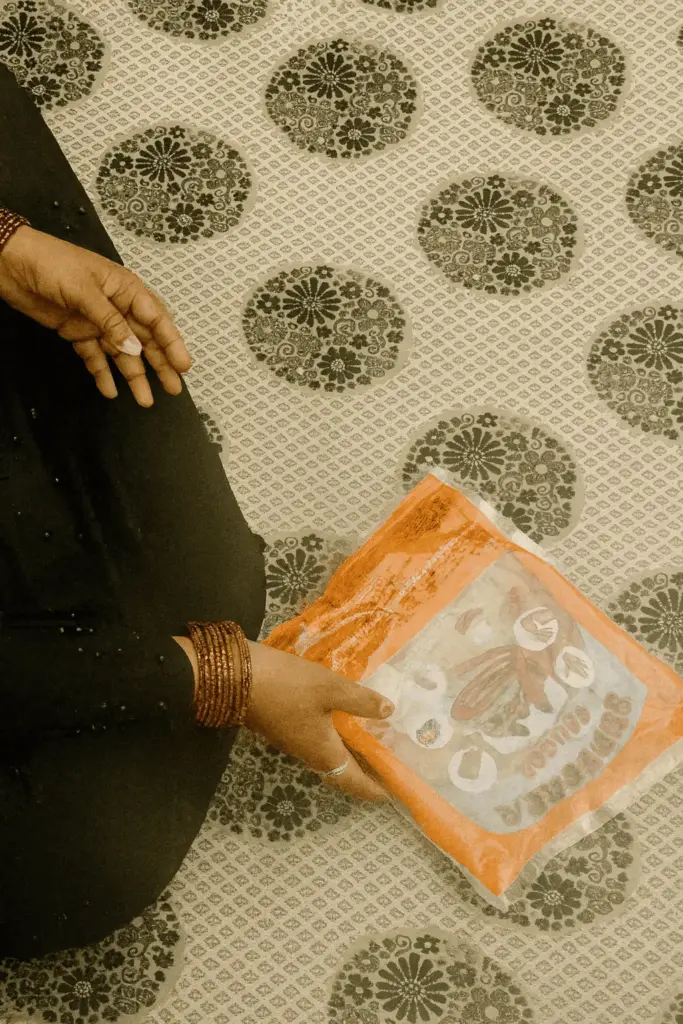
This disconnect is vividly apparent in villages situated just a few dozen kilometers from urban centers like Saharanpur in western Uttar Pradesh. Thirty-five-year-old Musayyada, a widow living in a village roughly ten kilometers from the city, begins her daily routine long before dawn breaks. On a typical morning, she boards a crowded tempo to visit her designated gas agency. Her mission is simple yet frustratingly elusive: she wants to find out why her cooking gas cylinder subsidy has failed to reflect in her account for three consecutive months. By the time she arrives at the agency, a weary queue has already formed outside the locked gates.
When her turn finally arrives, the agency staff inform her that her grievance will only be addressed if she purchases a new gas pipe, which they insist is mandatory. Musayyada blinks in sheer disbelief, her meager resources stretched thin. She protests, explaining that she had replaced her equipment just a month prior and has no actual need for another one. The response from the staff is flat, matter-of-fact, and seemingly rehearsed: it is mandatory, and even if she does not need it immediately, she can store it for later use.
The unwanted pipe costs her two hundred rupees—an amount roughly equivalent to a full day’s food budget for her family of four. To cover expenses and stay connected, she carries a second-hand smartphone purchased for twenty-five hundred rupees, a sum she paid off through difficult installments. Explaining the necessity of the device, she notes that a phone has become non-negotiable in modern life, noting that even if her household has to skip a meal, maintaining a mobile connection is treated as an unavoidable priority.
However, her technical literacy is severely restricted. She uses the device exclusively to receive incoming calls and to dial her married daughter living in another village. For every other digital task—whether checking status updates or navigating basic utilities—she is forced to rely on the shopkeeper next door, even for booking her LPG cylinders. When asked how she manages to remember her daughter’s phone number without being able to read or write, she laughs shyly and points out a simple mnemonic: the number ends with two zeroes.
Across rural India, women routinely depend on neighbors, local shopkeepers, and male family members to execute the most elementary digital tasks. These hands—predominantly male—handle everything from booking cooking fuel to verifying government welfare subsidies. While social trust acts as a necessary bridge over the chasm of digital illiteracy, it introduces profound vulnerabilities.
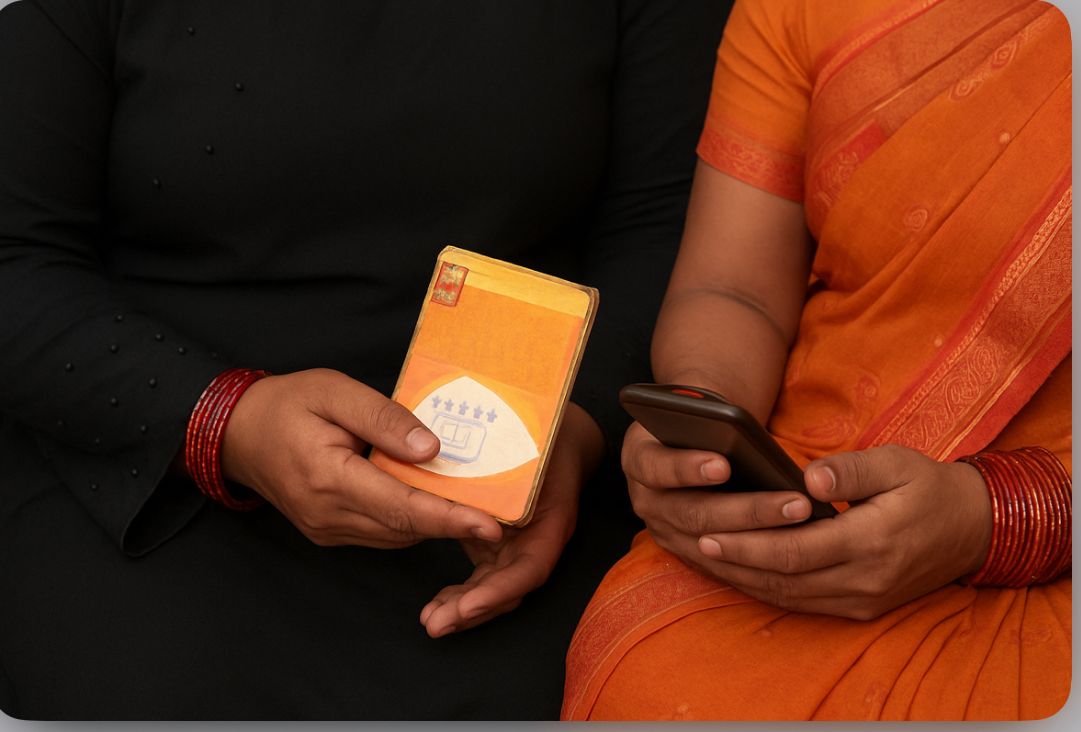
Similar risks shadow other households in the region. Sixty-two-year-old Savitri recalls a distressing period when she was continuously harassed by calls from strangers. It transpired that a relative had used her personal phone number to register multiple online accounts without her knowledge or consent. She admits she had no idea why strange individuals were calling her by unfamiliar names. Incidents of this nature may appear minor when viewed against the sweeping canvas of India’s national digital push, but they powerfully illustrate how easily the boundary between blind trust and dangerous exposure can blur.
Nearly a decade into the sweeping Digital India mission, a persistent gendered digital divide continues to dictate terms on who is permitted active participation and who must remain locked outside the door. Data indicates that nearly forty percent fewer rural women own smartphones compared to men. Among the subset of women who do manage to own devices, a significant proportion exercise little to no independent control over their usage or content.
This technological gap grows even wider within the realm of digital finance. Men hold a dominant lead in performing UPI transactions, creating a gender gap estimated at nearly fourteen percentage points. Official state and corporate UPI metrics routinely fail to capture this imbalance because raw transaction data is rarely disaggregated by gender. Nevertheless, insiders working directly within the payment ecosystem readily acknowledge the stark disparity. In 2023, a senior executive at Google Pay publicly noted that women accounted for less than thirty percent of active UPI users. A comparable estimate was reiterated a year later by a representative of the National Payments Corporation of India (NPCI). These already low figures drop precipitously when isolating semi-urban and rural demographics.
A fifty-year-old schoolteacher residing in Saharanpur serves as a case in point. Though she has a UPI application installed on her smartphone, she adamantly refuses to use it. She questions what would happen if money were mistakenly routed to the wrong person, asking who would step forward to recover and return her hard-earned funds. Instead, she routinely hands her phone over to her son whenever a digital payment must be made, preferring to avoid the risk entirely because she fears that any mistake would invite immediate blame.
Fear operates as an invisible yet formidable barrier across these communities. Many rural women state their preference for cash transactions not out of a lack of environmental awareness, but due to a profound absence of confidence. They frequently share cautionary tales circulating in their neighborhoods regarding financial fraud, stolen passwords, reversed transactions, and locked phones resulting from repeated failed login attempts. To them, making a digital mistake carries heavier real-world consequences than a physical accounting error.
Sita, a thirty-year-old newly married woman, summarizes the situation with blunt clarity. Having never booked an LPG cylinder herself, she notes that her husband manages those tasks because she does not possess her own phone. She occasionally borrows his device solely to watch entertainment videos on YouTube, noting that if something were to go wrong with the technology, she would inevitably face criticism from everyone around her.
This pervasive fear of committing an error is far from imaginary. It is carefully molded by years of social conditioning that instructs women to exercise extreme caution, places the burden of blame squarely on their shoulders when things go wrong, and provides them with minimal room for safe experimentation. Meanwhile, the digital architecture of the state continues to expand relentlessly. Government welfare schemes are increasingly tied to dedicated mobile apps, subsidy releases require periodic digital updates, SIM cards demand regular revalidation, banks insist on rigorous digital KYC compliance, and energy agencies direct consumers to verify their documentation online. Every single added layer demands a baseline of technical confidence that many rural women have never been permitted to cultivate.
Online content creators frequently capture parallel realities within digital spaces. In a widely circulated video, Instagram creator @lifeofpuja remarked that regardless of her professional output or the size of her follower count, she remains primarily identified as someone’s wife or daughter-in-law. Rural women echo this exact sentiment in quieter ways throughout their daily lives, rarely receiving institutional or familial recognition for mastering new digital skills, their identities remaining inextricably tied to household chores rather than technological competency.

Organizations working on the ground emphasize that the crisis extends far beyond simple literacy into structural dependency. According to representatives from Sarvothanam, a Delhi-based non-profit focusing on digital training and online safety, women who lack independent command over their devices are forced to rely heavily on third parties. These exact individuals can easily misuse their granted access, leading to situations where personal photographs, private messages, and secure One-Time Passwords (OTPs) are shared without the primary user understanding the implications.
Despite these layered obstacles, glimmers of grassroots transformation are slowly emerging. In a village located near Deoband, Rahima, who holds the distinction of being the first college graduate in her family, spends her time teaching basic digital navigation to her mother and neighboring women. She trains them to open incoming text messages, locate saved contacts, and identify suspicious digital links. While progress is slow, it is propelled by empathy rather than intimidation.
Parveen, a social worker active among rural communities in western Uttar Pradesh, argues that the path forward demands intensive handholding, continuous community-level workshops, and dedicated women-led digital learning circles. True digital empowerment, digital rights volunteers emphasize, transcends the mere distribution of hardware; it requires cultivating environments where women feel secure, confident, and genuinely in control of their tools.
India’s overarching digital journey continues to race forward at an unprecedented pace, yet a substantial segment of its population is forced to walk cautiously behind. The women inhabiting these villages are not offering ideological resistance to technology; rather, they are desperately trying to navigate an artificial ecosystem that has evolved far faster than their access, their institutional support, and their trust.
For them, autonomy is not quantified by the number of applications installed on a screen or the volume of digital transactions completed. Instead, it is measured in quiet, personal victories: answering a text message without assistance, successfully checking a subsidy balance for the first time, or daring to press a digital button without the paralyzing fear of failure. Until these modest milestones become ordinary everyday realities, the nation’s digital future will continue to leave its women behind.
(Musheera Ashraf is a Laadli Media Fellow. The opinions and views expressed are those of the author. Laadli and UNFPA do not necessarily endorse the views.)