On October 11, 2025, the V&A East Storehouse played host to a unique cultural convergence as singer Katerina García performed a repertoire of five Medieval and Early Modern songs beneath the magnificent wooden framework of the Torrijos Ceiling. The performance formed a centerpiece of Focus On: Torrijos Ceiling, a multidisciplinary event celebrating the artistry, craftsmanship, and historical context of the monumental structure. The day’s programming included practical workshops, pop-up talks, object encounters, and contemporary artistic responses that examined both the physical ceiling and the pivotal historical moment of its creation.
For García, the event offered the rare privilege of performing directly beneath one of the extraordinary wooden structures that once graced the halls of the Palace of Torrijos. Designed and crafted to impress the most select members of the Castilian aristocracy, the ceiling provided an intimate yet resonant acoustic canopy. To honor this legacy and test the acoustic properties of the ornate woodwork, García curated a repertoire of five Medieval and Early Modern songs. Each piece was selected to highlight the cultural intersections and cross-pollination that defined late-15th-century Iberia—a frontier society suspended between the twilight of the Middle Ages and the dawn of Modernity.
The Sources and Courtly Context
Music served as a cornerstone of entertainment and prestige at the courts of Castile and Aragón. As extensively documented by historians and musicologists, the Catholic Monarchs Isabel I of Castile and Ferdinand II of Aragón—whose joint reign spanned from 1476 to 1504—surrounded themselves with vibrant collectives of composers and poets, building on a rich peninsular tradition of royal patronage.
For centuries, courtly music and poetry in these regions were shaped by a confluence of Iberian artistic traditions alongside international currents, principally Catalan, Occitan, French, and Italian. Far from existing in isolation, these royal courts functioned as multicultural and multilingual hubs. Their artistic output reflected the ambitions of prestige-seeking dynasties bound by transnational marriage alliances and geopolitical strategies. The refined tastes of the monarchs naturally trickled down to the high aristocracy, shaping the household environments of figures such as Gutierre de Cárdenas and Teresa Enríquez, the lord and lady of the Palace of Torrijos.
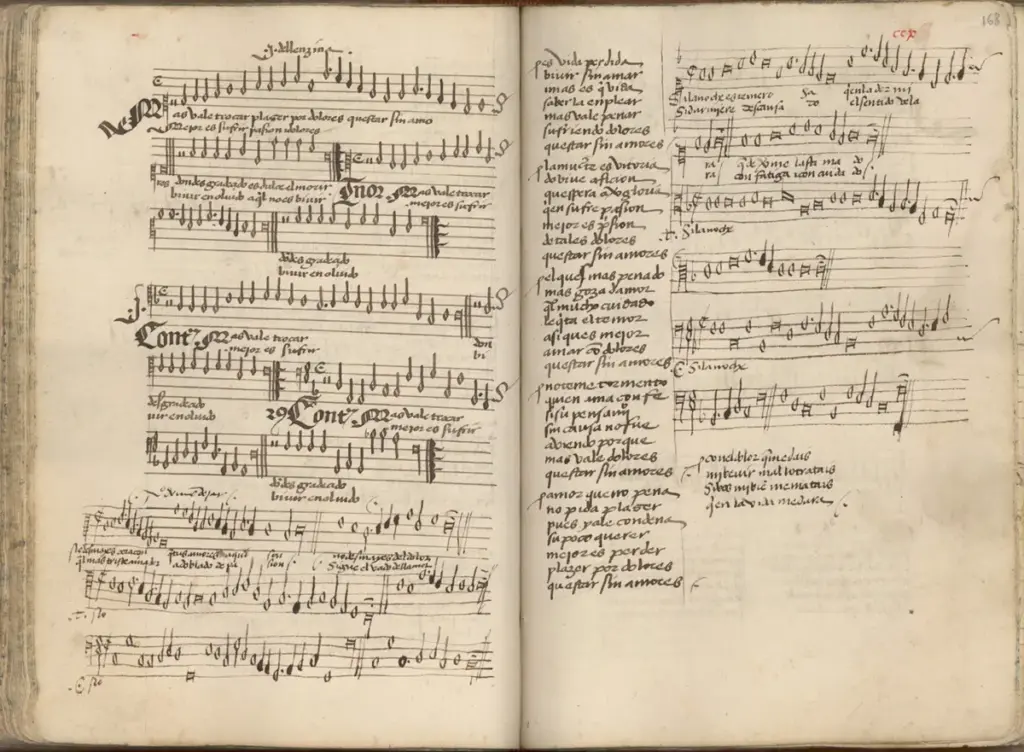
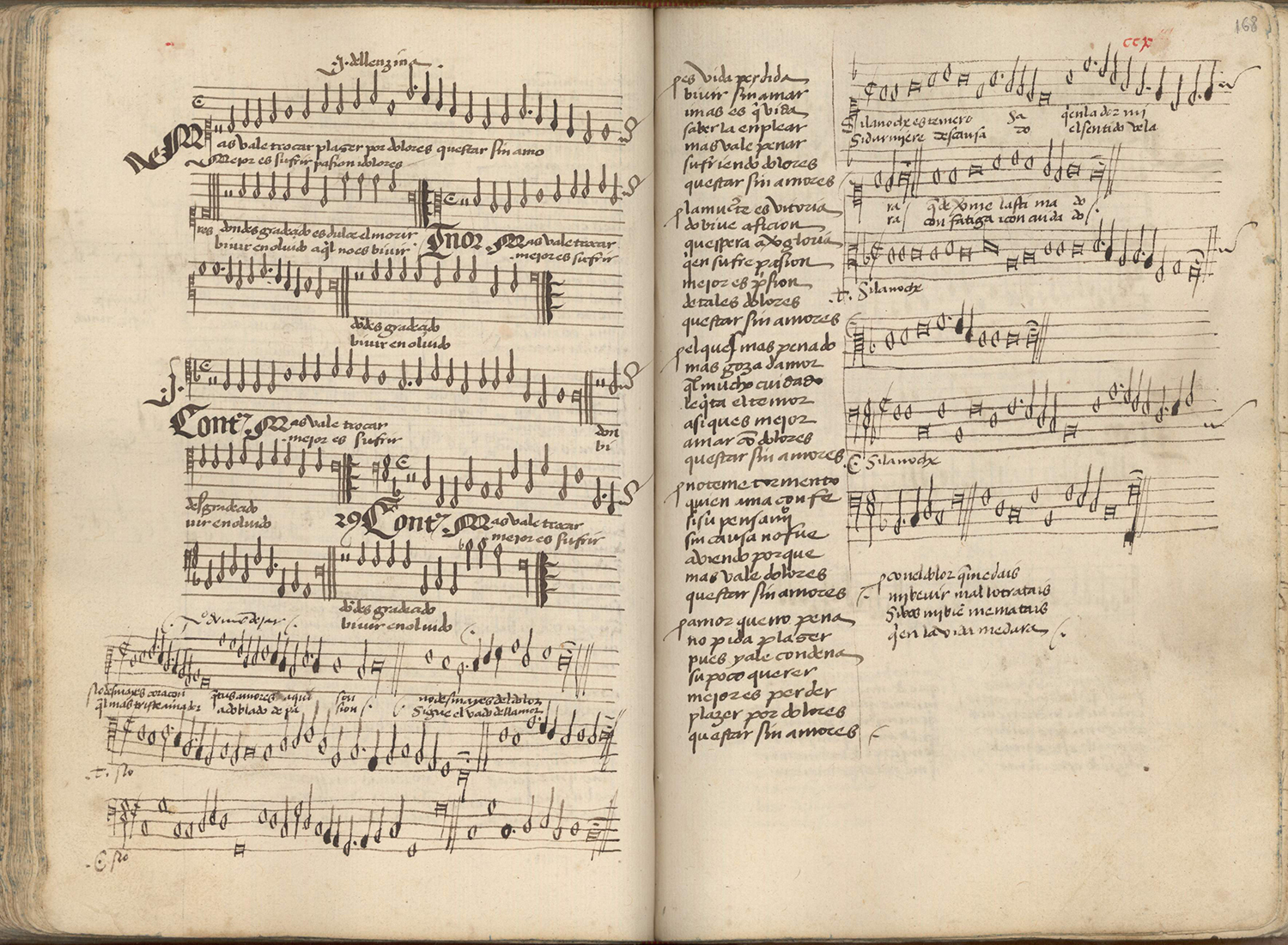
Among the most celebrated literary and musical figures of the royal court were Juan del Encina (1468–1529), a playwright, poet, and pioneer of Castilian letters and music; Francisco de Peñalosa (1470–1528), a master of sacred and profane polyphony; and court chapel master and singer Juan de Anchieta (1462–1523). Their works, alongside numerous anonymous compositions, are preserved in the Cancionero Musical de Palacio (Palace Songbook), the period’s most vital musical document.
Discovered in 1870 by musicologist Francisco Asenjo Barbieri in the library of the Royal Palace in Madrid, the manuscript—catalogued as MS II–1335 and fully digitized—has long fascinated scholars and performers alike. Compiled between the mid-1470s and the first two decades of the 16th century, the Cancionero offers profound insights into the musical tastes, influences, and practices of the era.

The collection contains 458 sacred and profane musical pieces, predominantly polyphonic settings for up to four voices, performed with or without instrumental accompaniment. While the vast majority of compositions are in Castilian, the corpus also features works in Italian, Catalan, Occitan, Latin, Portuguese, and two pieces in Basque. This linguistic and stylistic diversity points to a vibrant, international courtly environment that simultaneously harbored a deep appreciation for popular musical forms.
The most heavily represented genres in the Cancionero are the villancico (peasant song) and the romance (Hispanic ballad), both rooted in Castilian oral tradition. García drew extensively from these genres for her performance, using the romance as a bridge connecting courtly court culture with the broader Hispanic oral tradition that endured long past the Middle Ages.
While the first three pieces of García’s repertoire reflected courtly musical culture and the themes favored by royal power, the final two pieces shifted focus to the parallel Hispanic oral tradition. These latter works bore witness to the profound historical consequences of political decisions made by those in power—specifically, the 1492 decree signed by the Catholic Monarchs expelling the Sephardic Jews from Castile and Aragón in the immediate wake of the conquest of Granada. Within the Sephardic diaspora, the romances of the Hispanic tradition were preserved and passed down across generations as markers of cultural identity, while new songs (kantigas and komplas) emerged, blending inherited Iberian patterns with distinct diasporic elements.

For her performance, García delivered all five pieces as a solo voice. While the three Cancionero selections were originally notated as polyphonies, and the anonymous romance and kantiga were historically performed monophonically—sometimes accompanied by a choir—García replaced traditional instrumental or vocal accompaniment with a sustained chord produced on a shruti box. Although not historically authentic to the period, the instrument served to anchor and amplify her vocal performance in the vast space of the storehouse.
The Repertoire
The five-part performance moved deliberately across the boundaries of court and diaspora, sacred and secular, capturing the complex cultural landscape of late 15th-century Iberia.
The first selection, Juan del Encina’s Más vale trocar plazer por dolores (It is better to trade pleasure for torment), is a quintessential villancico from the Cancionero Musical de Palacio. Encina, the storehouse of early Castilian polyphony and the most prolific contributor to the songbook, crafted a strophic piece featuring a refrain that ponders a timeless dilemma: whether to lead a serene, loveless existence or surrender to the sweet, tempestuous passions of love and its inevitable torment.

The second piece, also by Encina, was Qu’es de ti, desconsolado? (What has become of you, bereaved one?), a political romance celebrating the capitulation of Granada on January 2, 1492. Encina portrays the Catholic Monarchs as instruments of Divine Providence, directly addressing the last Muslim king of Granada, Abu Abdallah Muhammad XI (known in Christian sources as Boabdil). The poet urges the fallen monarch to embrace the Christian faith to redeem his soul, utilizing anaphora and semantic parallelisms characteristic of Castilian popular poetry.
The third piece was the anonymous villancico Tres morillas m’enamoran en Jaén (Three Moorish maidens captivate me in Jaén), which remains remarkably popular five centuries after its composition. The renowned Granadan poet Federico García Lorca later adapted and harmonized its melody. Styled after the zajal—an Andalusi strophic poetic form composed in dialectal Arabic—the song tells of a singer captivated by three Moorish maidens, Axa, Fatima, and Marién, who travel to Jaén to harvest olives and apples. The poetry employs sensual agricultural metaphors and alliterative wordplay between morillas and m’enamoran.
The fourth selection shifted to the Sephardic tradition of North Africa with the Romance de Abenámar. Published in 1595 by Pérez de Hita, the ballad fictionalizes an encounter between the Nasrid sultan Yusuf IV ibn al-Mawl and King Juan II of Castile as they look out over the Alhambra. While the traditional Christian version casts personified Granada as a captive beauty defended fiercely by her Moorish lord, the Sephardic variant shifts focus toward the virtue of truth and a detailed description of the city’s beauty.

The final piece, Morena me yaman (They call me the Dark One), closed the performance with a Sephardic wedding song (kantiga) centered on themes of love and identity. Drawing inspiration from the Song of Solomon, this song likely shares roots with an early Modern Castilian romance recorded in 1626 by Gonzalo Correas. Its closing stanzas reference traditional elements of Sephardic wedding rituals, including ornate bridal attire and the ceremony of kiddushin, demonstrating the enduring intertextuality of Hispanic-Jewish culture.
By bridging courtly and popular musical traditions, García’s performance honored the original function of the Torrijos Ceiling as a lavish backdrop for festive gatherings and cultural exchange. Beneath the intricate carvings and latticework, the music filled the architectural space, briefly transporting both performer and audience across centuries to the vibrant, complex world of late-15th-century Iberia.