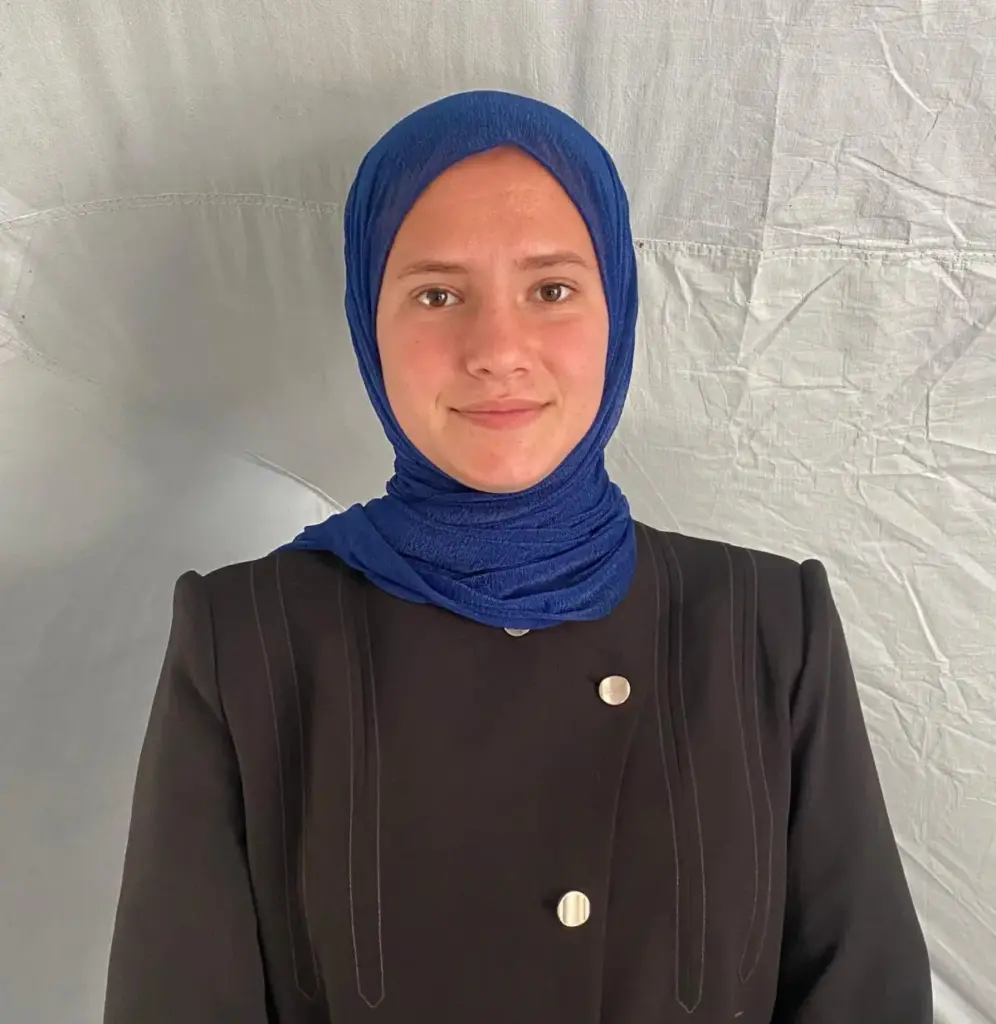
At just 18 years old, Malak is holding fast to the defining ambition of her youth: a steadfast dream to become a doctor. Today, that aspiration exists in sharp contrast to her immediate reality. She lives alongside her mother and her two brothers, Uday and Atef, inside a fragile tent in Gaza. Their lives were upended, and their permanent family home reduced to rubble, by the ongoing crisis that has reshaped the territory. Daily life is fraught with difficulty, defined by profound uncertainty and the relentless challenges of survival. Yet, amid the ruins of displacement, Malak remains fiercely determined to continue her education, reclaim her future, and ultimately heal others facing the same hardships she has endured.
Despite the widespread destruction and the severe disruption inflicted on the educational sector, Malak achieved an extraordinary academic milestone. She completed high school with an impressive score of 96%. With these remarkable results, she made the decisive choice to study medicine, taking a vital first step toward the career she has envisioned for years. For Malak, this pursuit is far more than a personal milestone; it is an act of resilience and a declaration that her future cannot be entirely dictated by circumstance.
However, translating that high school success into a functioning university education in a conflict zone is an immense hurdle. The educational landscape of Gaza has been severely fractured. Countless universities and educational facilities have suffered structural damage or total destruction, forcing much of the remaining academic infrastructure to shift online. For students in tents, simply accessing the digital classroom is a major obstacle. Reliable internet access is scarce and erratic, and Malak urgently requires a personal laptop to attend lectures, review course materials, and complete her academic assignments.
Beyond the technological barriers lie severe financial constraints. University tuition fees present another towering challenge that Malak’s family simply cannot surmount on their own. Without external support, the costs associated with pursuing a rigorous medical degree remain completely out of reach.
Studying While Living with Physical Pain
Malak’s daily academic and domestic struggles are compounded by a severe physical injury. She was shot during the crisis, and the bullet remains lodged in her abdomen. The physical toll is constant, requiring ongoing medical check-ups while she waits for major surgery. Under normal circumstances, such an injury would demand immediate and specialized medical intervention. However, with Gaza’s healthcare system collapsing under immense pressure, the necessary surgical procedures are currently unavailable to her locally.
Living with persistent pain and uncertainty would break the spirit of many, but Malak presses forward. She splits her time and energy between her demanding medical studies and supporting her family at home. In the cramped confines of their tent, she assists her mother with vital everyday tasks, including cooking, cleaning, and washing clothes. Her mother works tirelessly in a small neighborhood bakery to help sustain the household, but the modest income she earns is wholly insufficient to cover even the basic, day-to-day needs of a displaced family in the current economic climate.
Life After Losing Their Home
The contrast between the family’s past and present circumstances is stark. Before the crisis, Malak and her family lived in a sturdy, secure concrete house. Today, that home is gone, replaced by a worn tent that offers virtually no insulation against harsh weather conditions. As the seasons shift, the temporary shelter provides little protection from biting winter cold, stifling summer heat, or heavy, torrential rain, turning basic survival into a constant battle.
The material needs of the household are vast and urgent. The family requires fundamental items to restore a basic measure of dignity and safety, including a sturdier tent, waterproof coverings to guard against rain, mattresses, blankets, cooking equipment, household gas, a reliable water tank, adequate food supplies, and hygiene essentials. They also lack a reliable source of light to navigate the long hours inside the tent.
Malak herself has personal needs that remain unmet, including appropriate clothing and shoes for daily life, alongside the vital financial assistance required to cover her university fees and the acquisition of a laptop to sustain her medical education.
How Islamic Relief Supports Orphaned Children and Families
In these extraordinary circumstances, external intervention serves as a crucial lifeline. Malak’s family receives vital support from Islamic Relief, an organization that has stepped in to help ease the crushing burdens of rising costs and displacement, making everyday survival somewhat more manageable.
Islamic Relief has a long-standing commitment to vulnerable communities in the region, having supported orphaned children in Gaza since 1999 through its established Orphan Sponsorship Programme. The initiative is designed to assist children who have lost one or both parents, providing families with a regular monthly financial payment. This predictable support offers a degree of stability, allowing families the autonomy to direct funds toward the needs they deem most urgent—whether that means securing food, addressing healthcare needs, paying for education, or covering other essential household expenses.
In addition to monthly financial stipends, Islamic Relief endeavors to include sponsored families in broader seasonal campaigns. These encompass specialized distributions such as Ramadan and Qurbani food packages, Eid gifts for children, and winter assistance programs aimed at mitigating the worst effects of cold weather.
The scope of this program has expanded significantly in response to the current crisis. Islamic Relief is now actively supporting nearly 25,200 orphaned children across Gaza. Despite this extensive outreach, the scale of the need remains overwhelming, with over 5,100 orphaned children currently lingering on a waiting list, hoping for the vital lifeline of sponsorship.
A Chance to Keep Moving Forward
For Malak, the battle to continue her university education transcends the desire to earn a professional degree. Her ambition is deeply rooted in empathy and personal experience. She holds onto the hope that by ultimately becoming a doctor, she will be uniquely positioned to care for and heal other people who are experiencing the exact same pain, trauma, and hardship that she has lived through herself.
Despite the devastating loss of her home, the daily reality of living with a serious, untreated injury in a volatile environment, and the towering systemic barriers placed in her path, Malak refuses to relinquish her dream. Her journey underscores the profound resilience of Gaza’s youth, demonstrating that education and hope can persist even in the most unforgiving landscapes. With sustained assistance and targeted support, young people like Malak can continue learning, preserve their optimism, and forge a path toward a more secure and stable future.