The political evolution of the "New Atheist" polemicist Christopher Hitchens was once famously described as "the first ever metamorphosis from a butterfly back into a slug." In the years since that observation entered the cultural lexicon, contemporary media and commentary have supplied no shortage of comparable intellectual specimens. Among the most tenacious of these modern shape-shifters is America’s self-styled anti-cancel-culture icon, Matt Taibbi. Yet, much like the case of Hitchens, applying this metaphor may ultimately be too generous regarding the creature’s origins. Especially when examining Taibbi’s trajectory, it remains an open question whether there was ever a true butterfly to begin with, or if the ideological transformation was merely a reversion to a form that was always there beneath the surface.
This ongoing debate over ideological consistency and double standards returned to the spotlight following a recent publication on Taibbi’s personal blog. Titled "Art is More Important than Politics," the piece immediately invites comparison to classical and modern treatises on aesthetics. At first glance, a reader approaching a title of that magnitude might reasonably expect a rigorous discussion of French philosopher Jean-Paul Sartre and his famous 1948 essay, "What is Literature?" Alternatively, one might anticipate a half-decent review of German philosopher Immanuel Kant’s intricate account of "disinterestedness" in aesthetic judgment, exploring how human beings perceive and evaluate beauty independently of personal utility or political desire.
Taibbi’s article, however, proves to be far more modest in depth, despite being heavily larded with frequent references to great artists. Upon closer inspection, these references are frequently misconceived, superficial, or simply irrelevant to the broader cultural arguments he attempts to construct.
The Dogmas of Aesthetic Transcendence
At the core of Taibbi’s latest commentary lie two central theses: first, that art speaks to something fundamentally higher than politics; and second, that the eternal enemy of all good art is certainty. Yet, in laying down these bold declarations, Taibbi never even attempts to argue for either of these extremely contentious positions. He offers no philosophical framework, no historical grounding, and no logical bridge to connect these lofty assertions to the contemporary controversies he ostensibly set out to address.
Worse still, he fails to clarify the basic terms of his argument. To make any rational sense of his claims, a reader is forced to look backward and reconstruct what he is actually responding to. It is only within that specific, highly charged context that one could ever hope to establish what art and politics mean to him, or how he arrives at the astonishing conclusion that "even heavy metal is more important than causes." As fantastical and outrageous as this final claim may sound to anyone paying attention to the real-world impact of political movements, Taibbi remains stubbornly firm in its defense.
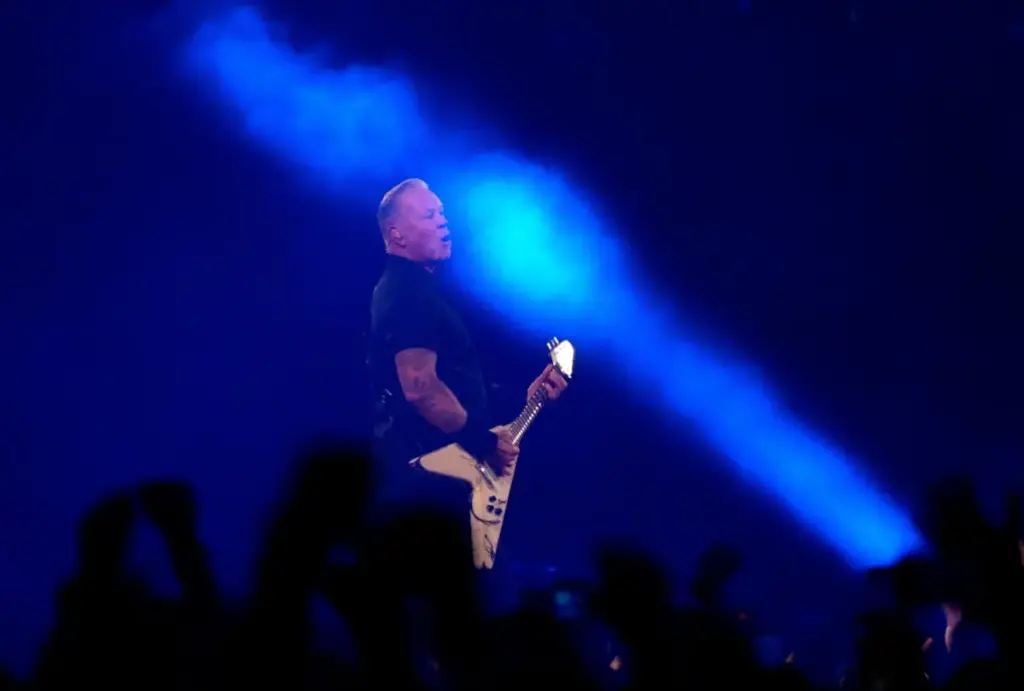
To understand what drove him to write the article in the first place, one must look at his perception of a recent cultural flashpoint. Taibbi was seemingly galvanized by what he viewed as a collective pile-on, claiming that "every activist on the planet lined up to denounce" the legendary heavy metal band Metallica. This uproar occurred after Metallica frontman James Hetfield told his audience at a recent concert that his band was not there, "like some other entertainers, to influence you with their b***." Instead, Hetfield proclaimed, Metallica was there to prescribe "love, energy, and heavy music."
Of course, a critical observer might note that Taibbi would never regard Hetfield’s rather patronizing intervention from the stage as an attempt to "cancel" or silence those who, in their own capacity as artists, dare to make what Taibbi personally deems to be "political" statements.
Double Standards in the Culture Wars
On the other hand, the exact same Matt Taibbi is remarkably comfortable framing external criticism of Hetfield in precisely those terms. When his former co-host, Katie Halper, publicly called Hetfield "a loser and a coward" for his remarks, Taibbi rushed immediately to the heavy metal star’s defense. He pushed back fiercely against what he framed as an unconscionable exercise in "cancel culture"—specifically, the act of pressuring artists to take a particular political stance. Taibbi drew his moral conviction from the supposed transcendence of art over politics. Yet, as political philosophers have long pointed out, even if art were indeed so transcendent, the artist as an individual human being would nevertheless remain entirely subject to ordinary moral judgment and accountability.
The fundamental flaw in Taibbi’s argument, however, is a glaring factual one: no one was actually pressuring Hetfield to take any particular political stance in the first place. In fact, virtually no one in the mainstream cultural conversation was thinking or talking about him until he decided, completely unprompted, to address the subject himself. In doing so, Hetfield implicitly targeted other artists—most notably American rapper Macklemore—who had recently chosen to use their platforms to speak up about the unfolding humanitarian catastrophe and genocide in Gaza.
The background to Hetfield’s unprompted commentary involves a high-profile cancellation that actually did occur. Macklemore had been abruptly dropped from British musician Ed Sheeran’s tour following intense pressure from stadium owner Robert Kraft, a billionaire businessman who has been heavily and publicly invested in the cause of Israel throughout his life. This high-profile case of professional blacklisting naturally sparked a massive controversy across the music industry and social media, with several of Sheeran’s remaining supporting acts withdrawing from the tour in protest. It was directly within this tense, highly politicized context that Hetfield chose to step up to the microphone and offer his disparaging, dismissive comments.
Art, Morality, and Real-World Silence
It appears, therefore, that the definition of the "political" for Taibbi conveniently extends far enough to encompass purely moral judgments directed against his preferred figures, while ignoring actual instances of systemic suppression. If that is genuinely the case, it becomes exceedingly difficult to see how art can realistically be claimed to be more important than politics.
Besides, one must ask: who is really demanding that artists create their work with rigid political considerations in mind anyway? If art is truly as universal as Taibbi insists it is, then surely it should be possible to completely detach the art from the individual artist, and the individual artist from the art. When detached entirely from his musical catalog, James Hetfield is simply a man possessing considerable cultural influence, and the public is perfectly entitled to ask him to use that influence for what they perceive to be the common good—or, at the very least, not to use it to belittle and undermine those who do so.
If Hetfield were truly as apolitical as his defenders claim, he would simply have refrained from making any comments about social causes from the stage. Apart from a couple of passing accusations of artistic nihilism, that likely would have been the end of the matter. Yet he deliberately chose to chime in, just as Taibbi subsequently chimed in to rescue him from public pushback.
The central irony of this episode lies in Taibbi’s public brand. The foundation of his entire career as an independent journalist in recent years has been an aggressive, unwavering stance against cancel culture and corporate censorship. Yet, Taibbi maintained a stubborn, absolute silence while Robert Kraft effectively canceled Macklemore for exercising his freedom of speech on a global humanitarian issue. The very moment Katie Halper and other commentators criticized Hetfield for essentially echoing and promoting Kraft’s message, however, Taibbi immediately decided to engage.
In his blog post, Taibbi mentioned the Kraft stadium scandal only in passing before adding the remarkable, and frankly shocking, assertion that Halper’s critical attitude toward Hetfield was "just as bad, if not worse." Characteristically, he offered no logical argument or evidence to support such a radical and disproportionate equivalence.
The Preservation of Art Versus Human Life
This dynamic finds a disturbing parallel in broader cultural debates happening internationally. Following recent tragedies in Europe, many distinguished public figures in France expressed deep, vocal sadness and national mourning when a number of historical buildings and monuments were damaged by fire. However, as numerous commentators have widely noted, those same public figures did not care nearly as much about innocent children being killed or burned in Gaza. The implicit underlying assumption in such selective outrage appears to be that preserving historic art and architecture is treated as an urgent civilizational task, while preserving human life is mistakenly categorized as merely a matter of messy, disposable politics.
The views and opinions expressed in this article are solely those of the author and do not necessarily reflect the editorial stance, values, or official position of Daily Sabah. The publication provides a platform for diverse perspectives as part of its ongoing commitment to open, rigorous, and informed public discussion.