The political evolution of the "New Atheist" polemicist Christopher Hitchens was once famously described as "the first ever metamorphosis from a butterfly back into a slug." In the years since that cutting appraisal, contemporary media and cultural commentary have supplied no shortage of comparable intellectual specimens. Among the most tenacious of these modern conversions is America’s self-appointed anti-cancel-culture icon, Matt Taibbi. Yet, much like the case of Hitchens, applying such a biological metaphor to Taibbi may ultimately prove far too generous regarding his origins. Especially in Taibbi’s case, looking closely at his track record leaves it entirely unclear whether there was ever a true butterfly to begin with, or if the metamorphosis was simply a transition from one form of partisan posturing to another.
The latest chapter in this ongoing intellectual trajectory arrived last week, when this veteran commentator published a blog post carrying the grand, sweeping "Art is More Important than Politics." At first glance, a reader encountering such a premise might reasonably expect a rigorous philosophical exploration of cultural theory. One might look for a discussion of French philosopher Jean-Paul Sartre and his famous existentialist essay "What is Literature?", or perhaps a thoughtful, half-decent review of German philosopher Immanuel Kant’s intricate account of "disinterestedness" in aesthetic judgment.
Taibbi’s article, however, proves to be far more modest in depth, despite being heavily larded with frequent references to great artists. Upon closer inspection, these artistic allusions turn out to be either fundamentally misconceived or simply irrelevant to the points he attempts to drive home.
Unsubstantiated Theses and Vague Definitions
At the core of Taibbi’s latest polemic lie two primary assertions: first, that "art speaks to something higher than politics," and second, that "the enemy of all good art is certainty." Yet, remarkably, he never even attempts to construct a coherent argument for either of these extremely contentious positions. Nor does he make any serious effort to explain exactly how these lofty declarations are relevant to the specific cultural controversy he purports to discuss.
Worse still, he fails to clarify the basic terms of his argument. To make any sense of his sprawling claims, a reader is forced to look backward and reconstruct what he is actually responding to. It is only within that specific, messy context that we can ever hope to establish what art and politics actually mean to him, and try to comprehend how he arrives at the astonishing conclusion that "even heavy metal is more important than causes." As fantastical and outright outrageous as this final claim may sound to casual observers, Taibbi remains remarkably firm and unyielding in its defense.
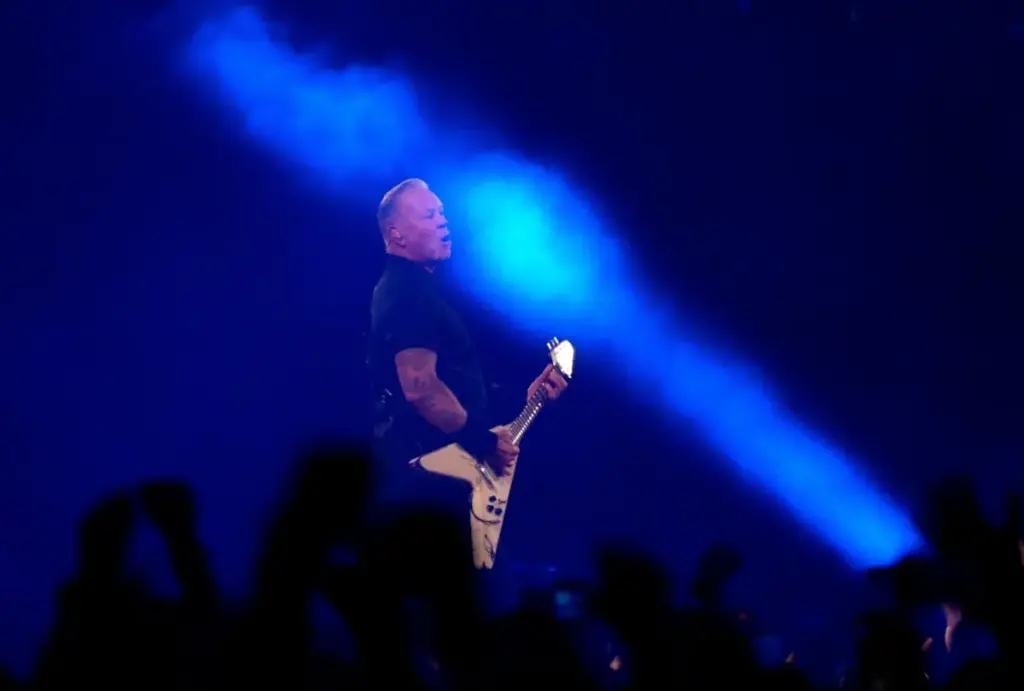
To understand what drove Taibbi to pen this piece, one has to examine the specific flashpoint that caught his attention: his perception that "every activist on the planet lined up to denounce" the legendary heavy metal band Metallica. This outrage wave followed a recent concert where Metallica frontman James Hetfield paused to address his audience, telling them bluntly that his band was not there, "like some other entertainers, to influence you with their b***." Instead, Hetfield proclaimed that Metallica was there to deliver a simple prescription of "love, energy, and heavy music."
Of course, observers noted the deep irony inherent in Taibbi’s framing. The commentator would never dream of regarding Hetfield’s rather patronizing stage banter as an attempt to "cancel" or silence those who, in their own capacity as artists, dare to make what he arbitrarily labels as "political" statements.
The Double Standard on "Cancel Culture"
Conversely, that same Matt Taibbi is entirely comfortable framing ordinary cultural criticism directed at Hetfield in precisely those ominous terms. When his former podcast co-host, Katie Halper, publicly called Hetfield "a loser and a coward" in response to his remarks, Taibbi rushed immediately to the heavy metal star’s defense. He forcefully pushed back against what he framed as an unconscionable exercise in "cancel culture"—specifically, the act of pressuring artists to adopt or discard a particular political stance.
Taibbi’s moral conviction on this front is purportedly drawn from the supposed transcendence of art over politics. Yet, even if one were to grant the debatable premise that art does indeed soar above politics, the artist as an individual human being would nevertheless remain entirely subject to ordinary moral judgment and public accountability.
The fundamental flaw in Taibbi’s indignant argument, however, is a glaring factual one: no one was actually pressuring Hetfield to take any particular political stance in the first place. In sober reality, no one was really thinking or talking about the Metallica frontman until he decided, completely unprompted, to address the subject from the stage. By doing so, he was implicitly targeting other cultural figures—most notably American rapper Macklemore—who had recently chosen to use their platforms to speak out about the ongoing human catastrophe and genocide in Gaza.
The backdrop to this entire controversy is well-documented. Macklemore had recently been abruptly dropped from British musician Ed Sheeran’s tour following intense pressure from stadium owner Robert Kraft, a billionaire businessman who has been heavily and publicly invested in the cause of Israel throughout his life. This high-profile case of professional blacklisting and alleged "cancellation" naturally sparked a fierce international controversy. The backlash grew when Sheeran’s remaining supporting acts began withdrawing from the tour in protest. It was precisely within this volatile, charged context that Hetfield chose to step up to the microphone and deliver his disparaging comments about artists mixing art with political causes.
Blurring the Lines Between Morality and Politics
It appears, therefore, that the definition of the "political" for Taibbi conveniently stretches far enough to encompass purely moral judgments whenever it suits his narrative. Yet, if basic human rights and opposition to mass violence are deemed merely "political" opinions, it becomes exceedingly difficult to sustain the argument that art is inherently more important than human lives or political justice.
Besides, one is left to wonder: who is actually demanding that artists create their work with explicit political considerations in mind anyway? If art possesses the universal, transcendent qualities that Taibbi ascribes to it, then surely it should be entirely possible to detach the art from the individual artist, and the individual artist from their personal statements. When detached from his musical catalog, James Hetfield is simply a wealthy man with considerable public influence. In a free society, everyone else is perfectly entitled to ask him to use that influence for what they perceive to be the common good—or, at the very least, to refrain from using his platform to belittle those who attempt to do so.
If Hetfield had genuinely wished to remain apolitical, the path forward was obvious: he could simply have refrained from making any commentary whatsoever on stage. Aside from perhaps a couple of minor accusations of political nihilism, that likely would have been the end of the matter.
Instead, he chose to chime in, paving the way for Taibbi to subsequently swoop in to his rescue. The central pillar of Taibbi’s entire brand as an independent journalist has been his relentless crusade against "cancel culture." Yet, he maintained a stubborn, conspicuous silence while Robert Kraft effectively "cancelled" Macklemore for speaking out on a humanitarian crisis. The moment Katie Halper and other critics dared to push back against Hetfield for essentially echoing Kraft’s defensive messaging, however, Taibbi immediately jumped into the fray.
In his blog post, Taibbi mentioned the massive Kraft censorship scandal only in passing, before dropping the astonishing assertion that Halper’s critical attitude toward Hetfield was "just as bad, if not worse." Characteristically, he offered zero substantive arguments to support these radical assertions.
A Troubling Cultural Parallel
This intellectual contortion bears a striking resemblance to other recent cultural debates. Observers have noted, for instance, how many distinguished public figures in France expressed profound, deep-seated sadness when historical architectural landmarks were damaged by fire, yet demonstrated a fraction of that emotional intensity regarding the countless children being killed and burned in Gaza. For such commentators, preserving historic art is treated as an urgent, transcendent moral imperative, whereas preserving innocent human life is dismissed as merely a messy matter of politics.
The views and opinions expressed in this article are solely those of the author. They do not necessarily reflect the editorial stance, values, or official position of Daily Sabah, which provides space for diverse perspectives as part of its ongoing commitment to fostering open and informed public discussion.