BERLIN — German authorities have arrested a Ukrainian national on suspicion of espionage on behalf of Russia, marking a dramatic new development in a rapidly deteriorating security environment characterized by rising concerns over sabotage, drone incursions, and hybrid warfare targeting NATO infrastructure.
Federal prosecutors confirmed in a statement on Thursday that the suspect, identified only as Vadym Y., was apprehended in the eastern state of Brandenburg, approximately 85 kilometers (53 miles) west of Berlin. According to investigators, the man had been in active communication with the Russian secret service through an intermediary since at least July 2025.
Prosecutors detailed that the alleged spy had gathered sensitive military intelligence regarding the production and manufacturing capabilities of armored vehicles, ammunition, and explosives. Furthermore, the suspect reportedly collected critical information concerning military personnel and defense installations situated at strategic locations designed to secure NATO’s eastern flank.
The arrest comes against the backdrop of an unprecedented tightening of security measures across Germany. Just a day prior to the prosecutor’s announcement, the country’s armed forces raised the threat level of Russian sabotage against German troops and military facilities to “significant”—the second-highest tier on the military’s internal threat scale. German news reports noted that this is the first time the armed forces have elevated the threat assessment to this specific level, reflecting a growing consensus within defense circles that the country faces an immediate and active danger.
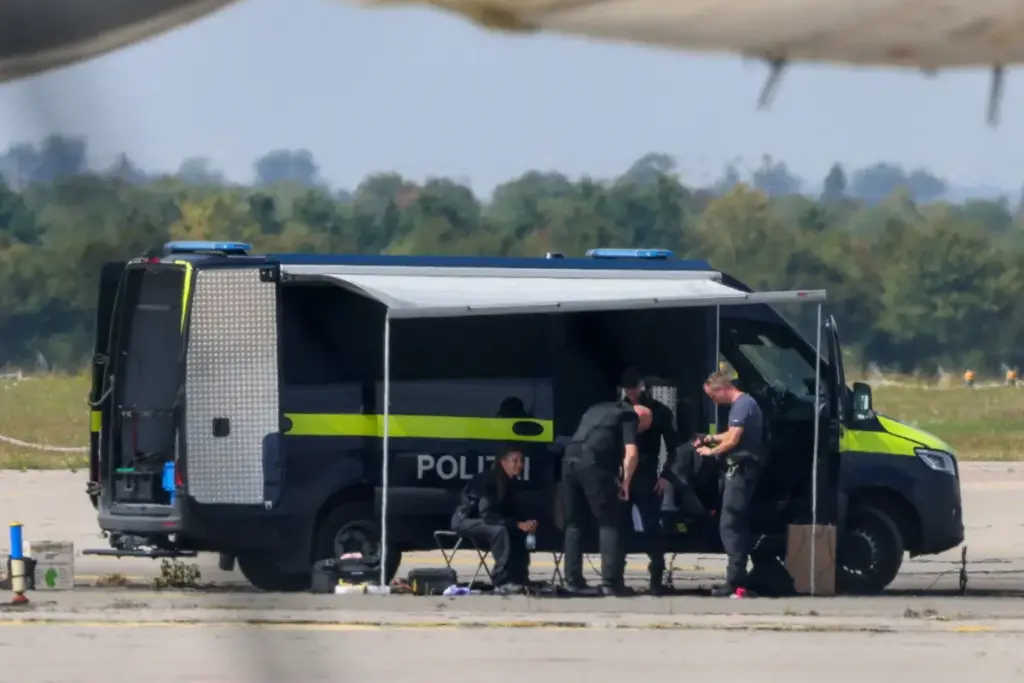
The military’s decision to heighten the threat level followed a series of alarming security breaches, most notably the mid-September discovery of a crashed drone carrying high explosives near the vital Wunstorf airbase in Lower Saxony, according to reports from German news outlets WDR and Sueddeutsche Zeitung. Investigators studying the wreckage noted that the unmanned aircraft bore striking similarities to another explosive-laden drone used in a failed attack targeting Leipzig/Halle airport back in August.
While authorities concluded that the August incident at Leipzig was aimed at civilian cargo aircraft, an internal military document reviewed by German media suggests a more targeted intent behind the Wunstorf incident. Investigators believe the drone found near the airbase was specifically directed at military aircraft.
This aerial intrusion is part of what security officials describe as a broader, disturbing pattern of suspected Russian reconnaissance and harassment operations across German territory. Recent months have seen suspicious drones flown repeatedly over a high-security missile defense site located in the state of Saxony-Anhalt. In another incident, authorities discovered a cleverly camouflaged camera passively filming a strategically vital railway station in Minden, situated in the industrial state of North Rhine-Westphalia.
These escalating incidents have not gone unnoticed at the highest levels of government and intelligence. Speaking at the EU-Western Balkans Summit while meeting with regional leaders in Montenegro, German Chancellor Friedrich Merz remarked that he was “not surprised” by the news of a suspected Russian spy operating within Germany’s borders, underscoring the pervasive nature of the ongoing espionage threat.
The Chancellor’s remarks align with stark warnings delivered by senior intelligence officials earlier in the month. Martin Jaeger, the head of Germany’s Federal Intelligence Service (BND), briefed lawmakers on the parliamentary intelligence oversight committee in the Bundestag, declaring that Russia’s undeclared “shadow war” against Germany and its Western allies is actively escalating. Jaeger warned that this hostile campaign has “taken on a new, more dangerous character,” explicitly cautioning that Germany is now at risk of being drawn into a direct and violent conflict with Moscow.
Despite mounting evidence, official findings by investigators, and repeated warnings from Western intelligence agencies, Moscow has consistently denied any involvement. The Russian government has maintained that it is neither orchestrating nor executing sabotage operations or hybrid attacks against European nations, dismissing the allegations leveled by Berlin and its allies as baseless.