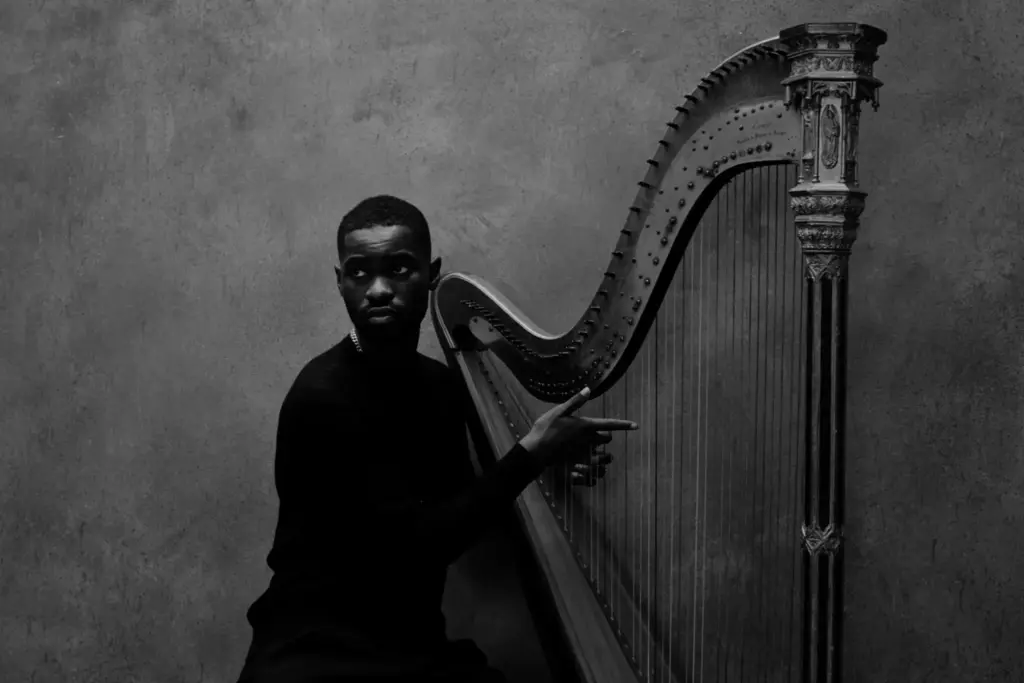
Last month, the V&A East Museum played host to an intimate and revealing evening with acclaimed filmmaker, director, and photographer Gabriel Moses. Taking part in the museum’s ongoing speaker series, A Life in the Work of Others—an initiative designed to invite artists to dissect the people, places, and experiences that have profoundly shaped their creative trajectories—Moses offered a masterclass in modern storytelling. Before a rapt audience of culture enthusiasts, aspiring creators, and fans, the south London-raised polymath peeled back the layers on his meteoric rise in the worlds of high fashion, sport, and music video direction.
Known for his striking visual style, rich cultural specificity, and uncompromising artistic integrity, Moses has quickly become one of the most vital directorial voices of his generation. During the talk, he mapped out the foundational influences behind his signature aesthetic. From his mother’s vibrant, unconventional approach to color and domestic flower arranging to the towering cultural footprints of elite athletes, foundational south London role models, and the late visionary designer Virgil Abloh, Moses provided a rare blueprint for authentic creative longevity.
The Domestic Roots of Art, Fashion, and Color
For Moses, the journey into the arts did not begin in a pristine gallery or a prestigious design academy, but rather inside the bustling, creative environment of his childhood home. The women in his life served as his earliest and most enduring artistic catalysts. Because the household television was located in his sister’s bedroom, Moses spent countless hours immersed in that space, surrounded by the visual ephemera of her fashion studies. Her walls were plastered with torn-out pages from high-fashion publications like Vogue and Dazed, subconsciously training his eye to appreciate editorial composition, texture, and avant-garde styling long before he ever picked up a professional camera.

Simultaneously, his mother nurtured a deep, intuitive appreciation for aesthetics, art, and photography. Moses credits her with instilling a lifelong sensibility regarding wardrobe and presentation, wryly noting that his childhood outfits were always meticulously curated. Beyond fashion, her primary creative outlet was flower arranging—an endeavor that required a fearless, highly sophisticated understanding of color theory. His mother possessed a natural inclination for making bold, unexpected decisions when pairing hues, a daring design philosophy that continues to inform Moses’s approach to color grading and frame composition today.
Archival documentation was also a cornerstone of his upbringing. Photography was not treated as a distant, intimidating medium in their home; rather, it was a living family history. Books and photo albums chronicling his grandparents’ and mother’s early lives in Nigeria, alongside candid snapshots of his siblings growing up, were always within arm’s reach. Growing up surrounded by these deeply personal visual records allowed Moses to organically fall in love with the medium of documentation, laying the psychological groundwork for his future career as a visual chronicler of contemporary culture.
Crucially, this environment was underpinned by unwavering maternal support. Having immigrated to the United Kingdom at the age of 18, his mother possessed a wide-lens perspective on the city of London, having witnessed individuals from all walks of life strive, struggle, and ultimately shine. Her philosophy on ambition was absolute and unconditional. Moses often reflects that if he had declared an ambition to become a postman, her immediate response would have been to encourage him to become the absolute best postman in the world.

That profound trust was tested early in his professional life. Following the release of his debut commercial film with Nike, Moses made the bold decision to drop out of university. For the subsequent five months, professional offers were slow to materialize, resulting in a quiet, uncertain period for the young creator. Yet, his mother understood his drive, recognizing that he possessed both the intellect and the competitive spirit required to succeed. Rather than panicking, she gave him the space to experiment, figure out his trajectory, and "cook." Reflecting on this formative period, Moses advises younger creators navigating unconventional career paths that proactive communication is paramount. Whether it requires drafting a formal presentation to explain a vision or sitting down for an honest conversation with loved ones, bridging the gap through open dialogue is essential for earning trust.
South London Mentorship and the Sporting Ethos
Growing up in south London provided Moses with a very specific, high-achieving cultural ecosystem. In a region that has historically punched well above its weight in producing elite sporting and entertainment talent, inspiration was not confined to television screens or glossy magazines; it was woven into the fabric of everyday neighborhood life. Local sightings of future Premier League stars, such as Rio Ferdinand and his brother at the local petrol station, served as tangible proof that individuals from similar backgrounds could reach the absolute pinnacle of their fields.
Even more influential was the presence of figures like Andy Ansah, a true south London legend who transitioned from a professional football career into the specialized world of commercial and film choreography. In Moses’s youth, Ansah was a local celebrity, having shared pitches with global icons like Ronaldinho and Ronaldo. Crucially, Ansah served as a vital bridge between the community and the professional creative industries. He regularly cast local youths as extras in his high-profile commercial projects, offering Moses his earliest, hands-on glimpses into professional production sets. By witnessing someone leverage a genuine passion for football to carve out an entirely unique creative lane, Moses began to understand the viability of non-traditional career paths.

Initially, however, Moses harbored the same aspirations as many of his peers: he wanted to be a professional footballer. The definitive pivot toward the visual arts occurred during his first year at university, catalyzed by deeply personal circumstances. When his mother fell ill, Moses experienced a profound existential reckoning. Driven by a desire to make her proud—knowing full well her pride was unconditional regardless—he forced himself to inventory his latent talents, asking himself what he might genuinely excel at.
Rejecting any notion of entitlement, Moses approached image-making with a pragmatic, unpretentious philosophy: he had no divine right to pick up a camera or direct a film, but he was willing to try his hand at it and see where capability intersected with passion. His early creative education was largely self-directed, fueled by childhood memories of watching iconic Nike commercials like the legendary Joga Bonito campaigns, which had left him electrified by their cinematic energy and rhythm.
Seizing the initiative, Moses reached out to footballer Fikayo Tomori—then playing for Chelsea and now at AC Milan—proposing a collaborative video project to document his personal journey and backstory. Tomori agreed, and alongside his friends, Moses spent six hours producing his very first independent short film. Uploading the finished project to YouTube delivered an unmatched psychological breakthrough. For an eighteen-year-old creator, the mere act of conceptualizing an idea, bringing it to life, and releasing it into the public domain was a monumental accomplishment, regardless of view counts. Though Moses is quick to acknowledge in hindsight that the film was technically flawed, the empowering feeling of agency it provided was transformative.

This DIY ethos quickly attracted institutional attention. Encouraged by the success of his independent work, Moses produced a subsequent storytelling piece focusing on Liverpool defender Joe Gomez, another south London native who recognized the young creator’s ambition and financially supported one of his early projects at age 18. Shortly after releasing that second video, sportswear giant Nike reached out, commissioning Moses to direct a series of commercials promoting their new Tiempo football boots.
Stepping onto a commercial set as an 18-year-old director required a degree of performative maturity. Moses consciously projected absolute confidence, advocating vigorously for his creative vision while interacting with seasoned industry professionals. Crucially, his youth proved to be an asset rather than a liability: as a member of the target demographic, he intuitively understood what his peers wanted to see, allowing him to direct with an authentic cultural compass.
Underpinning this rapid ascent was a mindset forged in the uncompromising world of competitive sports. Drawing a direct parallel between athletics and the creative sector, Moses noted that sports brook no dishonesty; poor performance precludes a player from reaching the Premier League. He entered the creative industries with that exact binary framework, operating under the foundational belief that consistently producing excellent work is the ultimate catalyst for professional momentum.
The Virgil Abloh Effect and Global Fashion
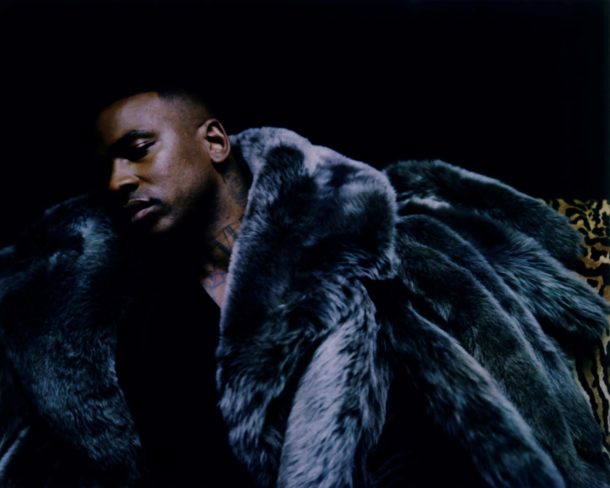
As Moses’s portfolio expanded, his unique aesthetic caught the attention of established industry figures. Through a pivotal introduction by photographer Fabien Montique, Moses found himself within the orbit of the late Virgil Abloh at the Off-White studio. While Moses admits he was not deeply versed in the traditional hierarchies of high fashion at the time, he was acutely aware of Abloh’s seismic cultural impact, particularly through his collaborative work on Nike’s landmark "The Ten" sneaker collection.
Rather than imposing rigid corporate structures, Abloh and his team simply provided Moses with the runway to exist and create. As a 19-year-old armed with a camera, Moses was thrust into elite environments, shooting backstage fitting photographs and documenting runway presentations featuring global icons like Bella Hadid. It was an immersive, high-stakes education where he was trusted to develop his craft organically, receiving no miraculous handouts, just the vital permission to occupy space.
Significantly, Moses’s introduction to the upper echelons of fashion did not come via traditional institutional pipelines like Central Saint Martins, but rather through witnessing another Black man successfully dominate the global design landscape. Abloh’s personal accessibility left an indelible impression on the young director. Renowned for his humility and open-door ethos, Abloh would routinely respond to messages from younger creatives on the same day, frequently punctuating his encouraging notes with a simple rocket emoji. For Moses, those micro-interactions served as profound psychological fuel, reinforcing the belief that artistic boundaries were entirely porous and that global success was achievable. Returning to London with validation from one of the most influential designers of the 21st century instilled an unshakeable self-belief, cementing the lesson that genuine humility and monumental achievement can coexist.

Championing Everyday Creativity and Setting the Tempo
Throughout his talk at the V&A East Museum, Moses returned repeatedly to his primary muse: everyday people and their spontaneous, grassroots creativity. Whether observing young creators generating viral sketches on mobile phones or witnessing grassroots cultural movements online, Moses finds endless inspiration in the ingenuity of ordinary individuals. This fascination serves as the thematic backbone of his commercial and artistic output. When commissioned by major global brands, Moses frequently subverts conventional casting formulas by incorporating everyday people directly into high-end advertising campaigns, challenging brands to step outside their comfort zones and embrace authentic representation.
This insistence on creative control manifested early in his professional relationships. When he first signed with an agency, Moses routinely pushed back against conventional industry directives, frequently trading commercial budgets for creative autonomy. He often negotiated reduced financial parameters in exchange for total artistic freedom, prioritizing visionary control over ubiquitous billboard placement.
Looking forward, Moses aims to normalize this uncompromising approach to artistic integrity, hoping to pave the way for a new wave of creators over the next decade and a half who pursue the medium purely on their own terms. The ultimate inspiration, he stressed, remains anchored in everyday people and preserving that raw, unpolished creative spirit.

Offering a final piece of practical wisdom to the aspiring creatives gathered in the audience, Moses emphasized the necessity of radical authenticity. True artistic ease, he explained, emerges when an artist’s influences are genuinely their own. When a creator embraces their authentic preferences, research becomes a natural extension of identity—guiding them effortlessly toward the right books, music, and visual references. Reflecting on his own developmental habits, Moses shared a daily discipline he maintained in his youth: writing down at least one conceptual idea every single day, not necessarily with an immediate plan for execution, but out of the firm conviction that an artist’s ideas are their truest currency.