Nestled within the vast and comprehensive printed materials relating to art and design held by the National Art Library are several rare, early textbooks that bridge the historical gap between scientific inquiry and artistic representation. While the library is globally renowned for its extensive holdings dedicated to the visual arts, its collection also safeguards pivotal scientific volumes whose breathtaking illustrations and pioneering methodologies have captured the attention of scholars, historians, and art enthusiasts alike. Among these extraordinary treasures are foundational works that changed humanity’s understanding of the physical world and the cosmos, demonstrating how art and science have long been inextricably linked through the printed page.
The Birth of Modern Anatomy: Andreas Vesalius and De humani corporis fabrica
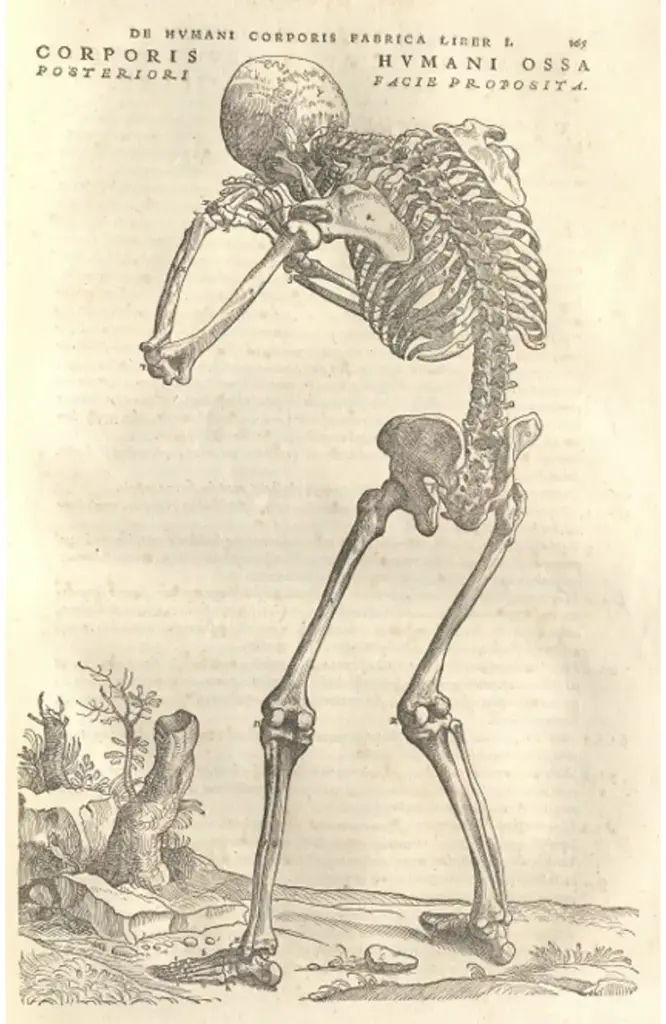
One of the crown jewels of this collection is Andreae Vesalii Bruxellensis, scholae medicorum Patauinae professoris De humani corporis fabrica libri septem, a monumental volume commonly abbreviated as De humani corporis fabrica libri septem, which translates to On the Fabric of the Human Body in Seven Books. Published in Basel by Joannes Oporinus in 1543, this masterwork is widely considered by historians of science and medicine to be the first true anatomical textbook.
Its author, Andreas Vesalius (1514–1564), served as a Professor of Medicine at the University of Padua in Italy during the height of the Italian Renaissance. Vesalius endeavoured to create a definitive, accurate guide to the complex structures inside the human body—an ambitious undertaking that had not been attempted on such a rigorous scale since the work of the ancient Greek physician Galen over 1,400 years prior. For centuries, systematic human dissection had been strictly banned or heavily restricted by most major religious and social authorities of the time, leaving medical knowledge largely stagnant and reliant on ancient, often flawed texts.
Working within the vibrant cultural and intellectual context of the Italian Renaissance, Vesalius sought to challenge traditional dogma through direct empirical observation and human dissection. To bring his groundbreaking anatomical discoveries to life on the page, he enlisted the exceptional talents of German artist Jan Steven van Calcar (1499–1546). Van Calcar created more than 250 breathtaking woodcut prints of the human body for the publication.

The woodcut technique involved carving detailed imagery onto blocks of wood, leaving the desired design raised. These wooden blocks were then carefully inked and pressed onto paper or fabric to produce the final, striking illustrations. This method allowed for an unprecedented level of precision and detail, ensuring that complex anatomical structures could be accurately depicted and widely reproduced for students and physicians. The remarkable artistic quality of these woodcut images, combined with the profound historical significance of the work as a milestone in early modern printing and scientific literature, is precisely why this rare volume was collected and preserved by the National Art Library.
Illuminating the Heavens: Margaret Bryan and Eighteenth-Century Astronomy
In addition to pioneering works in medicine, the National Art Library’s holdings encompass significant contributions to the physical sciences, including rare astronomy texts authored by trailblazing women educators of the past. Another remarkable scientific textbook preserved within the library is A compendious system of astronomy: in a course of familiar lectures, in which the principles of that science are clearly elucidated, so as to be intelligible to those who have not studied the mathematics; also trigonometrical and celestial problems, with a key to the ephemeris, and a vocabulary of the terms of science used in the lectures, which latter are explained agreeably to their application in them.
First published in London by H.L. Galabin in 1797, the National Art Library holds the valuable second edition, published in 1799. The author of this comprehensive work was Margaret Bryan (1759–1836), a prominent educator and the founder of a school for girls. The book itself is a carefully curated collection of the astronomy lectures she delivered to her students, covering complex subjects such as calculating the vast distances and intricate motions of the planets in a manner that made advanced scientific concepts accessible to young minds.
This historic volume offers fascinating insights into the history of astronomy through its terminology and historical context. Notably, the book refers to the planet Uranus as Georgium Sidus (George’s Star), a name that was commonly used in Britain for nearly seventy years following the planet’s discovery by William Herschel in 1781, in honor of King George III. Furthermore, the publication predates the eventual mathematical discovery of Neptune by almost fifty years, offering a snapshot of the solar system as understood at the close of the eighteenth century.

Building upon the success of her educational writings, Margaret Bryan later published two further scientific textbooks: Lectures in Natural Philosophy in 1806 and An Astronomical and Geographical Class Book for Schools in 1816.
This particular copy of her astronomy book forms part of the esteemed Clements Collection within the library. The collection is named after Henry Clements, a dedicated collector of armorial bindings—historical books whose covers feature the heraldic coats of arms of the noble and notable families who once owned them. Following his death, Clements’s remarkable collection was generously bequeathed to the National Art Library in 1948, securing its preservation for future generations of researchers and art lovers.
These rare anatomical and astronomical textbooks, along with many other treasures from the institution’s extensive holdings, can be requested and viewed by members of the public at the Special Collections section of the National Art Library, located at the Victoria and Albert Museum (V&A) in South Kensington, London. Researchers and interested visitors wishing to examine these historical volumes firsthand can do so by completing a free registration process and submitting their book requests in advance via the library’s online catalogue.