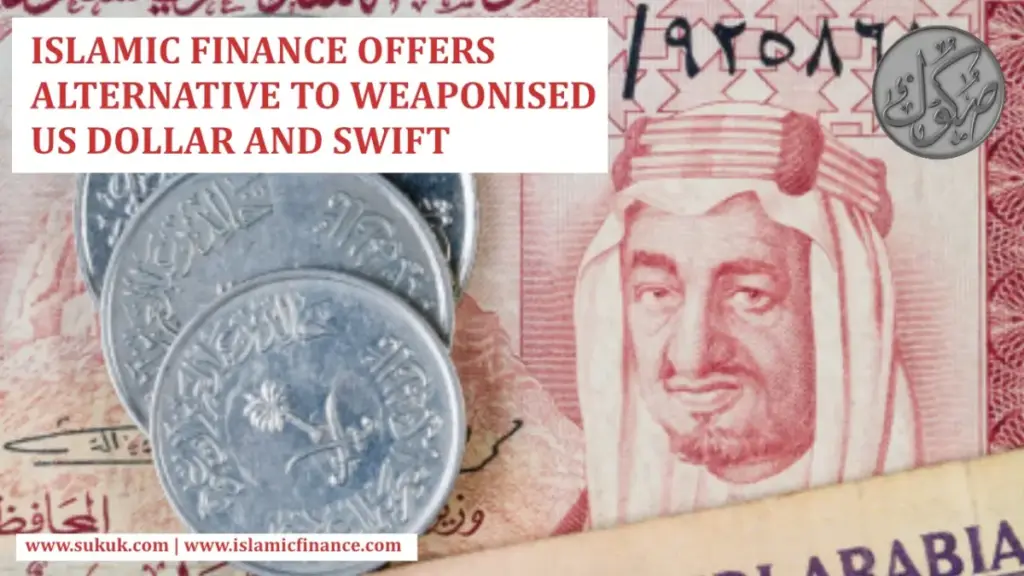
The growing trend of utilizing the United States dollar and the SWIFT international payment network as geopolitical tools has catalyzed a profound shift in global commerce. As trust in the greenback and traditional Western-dominated financial infrastructure wanes, nations across the globe are actively seeking resilient alternatives to safeguard their economies. This push away from the dollar-centric system is no longer confined to theoretical discussions among isolated nations; it has become a pressing agenda item for major emerging economies, driven by the practical necessities of international trade under the weight of sweeping economic sanctions.
Islamic Finance Instruments Can Replace US Dollar in Trade
The weaponization of financial systems has made clear the vulnerabilities inherent in relying on a single global currency and payment gateway. In response to these mounting pressures, Turkish President Recep Tayyip Erdogan has championed the integration of Islamic finance principles into modern international commerce, arguing that trade conducted in national currencies has transitioned from a preference to an urgent necessity.
During high-level discussions, President Erdogan emphasized the need to prioritize Islamic finance frameworks to navigate contemporary economic challenges. The Turkish leader has consistently called upon the international community to dismantle what he terms the "monopoly" of the dollar in global trade networks, a sentiment that has begun to resonate within traditional Western financial capitals. Even United States Treasury Secretary Steve Mnuchin previously acknowledged the shifting landscape, admitting that if policymakers are not careful, international actors will increasingly look toward alternative currencies and payment systems to conduct their sovereign business.
Iranian Banks Removed from SWIFT
The urgency behind these alternative financial architectures has been starkly demonstrated by the practical impact of unilateral economic measures. United States sanctions have resulted in the systematic removal of Iranian banks from the SWIFT international payment system, effectively crippling the nation’s capacity to engage in standard foreign trade and banking operations. Similar restrictive measures have cast a long shadow over European commerce, impacting major firms—including German enterprises—that were actively engaged in critical cross-border energy infrastructure projects such as the Russian-German pipeline.
Faced with the constant threat of exclusion from Western-managed financial channels, major global powers have begun forging independent pathways. Russia and China, both frequent targets of Western economic pressure, have successfully established their own sovereign bilateral payment mechanisms. These alternative systems allow Moscow and Beijing to trade directly with one another, completely bypassing the dollar and insulating their bilateral economic relationship from external geopolitical interference.
Increased Use of Gold and Local Currencies
Beyond bilateral arrangements, multilateral coalitions are actively restructuring their economic architectures to reduce dollar dependency. The Shanghai Cooperation Organization (SCO), an eight-nation regional bloc that includes economic heavyweights such as China, Pakistan, and Russia, collectively represents nearly a quarter of global Gross Domestic Product. Recognizing their combined economic weight, SCO member states have steadily augmented their foreign exchange reserves and gold holdings, which now amount to nearly four trillion US dollars.
This strategic accumulation of tangible assets culminated in a decisive policy shift during a finance ministers’ meeting in Moscow. Representatives from the SCO member nations formally agreed to transition their bilateral trade and investment portfolios away from Western currencies, opting instead to settle transactions using local national currencies. By trading in their own monies and bolstering sovereign balance sheets with precious metals, SCO members are systematically insulating their regional supply chains from external monetary shocks.
Use of Gold in Islamic Cultures
In tandem with the push for local currencies, precious metals have re-emerged as a cornerstone of alternative financial planning. Gold has long held a position as an attractive asset class and a trusted store of wealth, passed down through generations across various Asian cultures. In recent years, nations with prominent Islamic financial sectors, particularly Turkey and Malaysia, have placed themselves at the forefront of gold-based banking and currency development initiatives.
At the municipal and state levels, pioneering efforts have already demonstrated the viability of precious metal mediums of exchange. The Malaysian states of Kelantan and Perak introduced gold dinar and silver dirham coins to serve as supplementary means of payment and physical trade instruments. Meanwhile, in the corporate and banking sphere, Turkish Islamic financial institutions have integrated bullion deeply into the domestic economy. Kuveyt Türk, a prominent Turkish Islamic bank, launched its innovative gold banking program in 2007. By mid-2019, the institution had successfully collected over 26 tons of gold—valued at approximately 1.2 billion US dollars—from citizens and businesses, effectively turning idle private wealth into active economic liquidity.
Building upon these successful physical banking models, current financial initiatives are exploring the creation of Islamic finance gold-based cryptocurrencies. These digital instruments are designed to leverage blockchain technology backed by physical bullion, thereby streamlining and better facilitating secure cross-border trade without touching traditional Western clearinghouses.
Islamic Finance Gold Standard
The integration of precious metals into modern Islamic financial frameworks received a significant institutional boost with the formal establishment of industry standards. In 2016, the World Gold Council, working in close collaboration with the Accounting and Auditing Organisation for Islamic Financial Institutions (AAOIFI), formally approved a comprehensive sharia standard governing gold-based financial products.
The primary objective of this standardized framework was to expand the responsible use of physical bullion within the broader Islamic finance sector and to pave the way for the creation of innovative financial instruments. Specifically, the AAOIFI standard addressed complex transactional mechanics, including the appropriate use of gold as collateral and the exact regulatory requirements governing the exchange of gold in both immediate spot transactions and deferred delivery contracts. By establishing clear, universally recognized guidelines under Islamic jurisprudence, the standard has provided the necessary regulatory foundation for banks, governments, and institutional investors to incorporate gold safely and transparently into the evolving architecture of international trade.