By Special Correspondent
At the very heart of the Islamic worldview lies the primordial principle of justice, a foundational concept represented in the Qur’an primarily through three interconnected terms: `adl, qist, and mizan. While the first two terms are frequently treated as synonyms, classical linguistic and theological interpretations distinguish `adl as justice and qist as equity or fairness. Meanwhile, mizan serves as the vital scale or balance that determines both the administration and the overall condition of justice within human existence.
However, the term `adl carries a much deeper, more profound dimension: equilibrium, or the practice of putting things in their correct and proper places. Consequently, it stands as the direct opposite of zulm, a term typically translated into English as oppression or despotism, but which fundamentally denotes disequilibrium or the misplacement of things. Numerous verses throughout the Qur’an and various prophetic traditions emphasize the preeminent importance of upholding `adl while condemning the disruptive imbalance of zulm.
This conceptual framework extends far beyond interpersonal human relations, applying equally to how individuals handle inanimate objects, interact with other living beings, and approach the divine. For instance, according to Islamic theology, offering God the proper awe, respect, and gratitude that are rightfully His due—alongside strict adherence to His divine commands—is considered the ultimate manifestation of `adl. Conversely, failing to do so is regarded as a form of zulm.
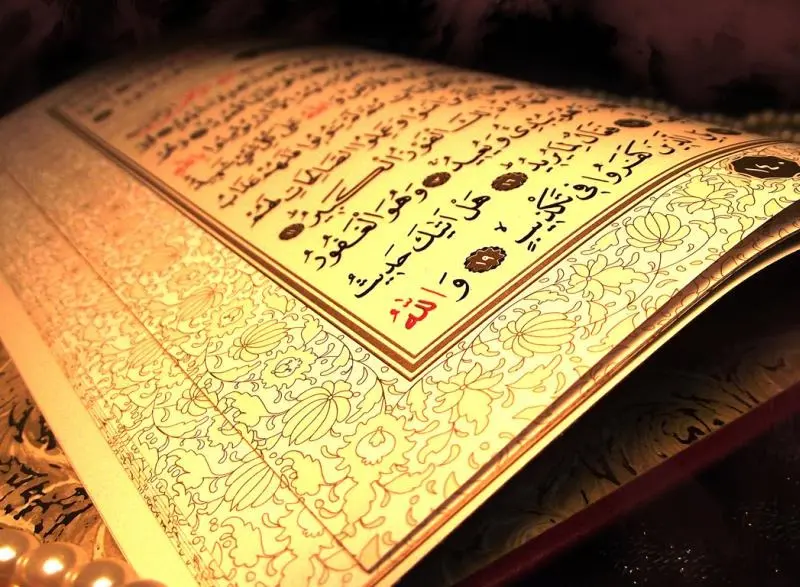
In a similar vein, engaging with and approaching the Qur’an for its correct, intended purposes is considered an act of adl, whereas misusing the sacred text or reducing it strictly to secondary, non-primary functions can amount to zulm. Examined through this critical lens, observers note how contemporary Muslims at times inadvertently trivialize the Qur’an precisely because they fail to engage with its comprehensive message and primary intent.
How Do Muslims Trivialize the Qur’an Through Imprecise Use?
While the physical desecration of the Qur’an is universally recognized as a grave sin, the conceptual trivialization of the holy book represents a subtler yet deeply serious offense. Muslims across the globe certainly do not disrespect their scripture in tangible or physical ways. Their obvious reverence for the sacred text and their extreme caution when handling it remain paradigmatic. In the vast majority of Muslim households and places of worship, copies of the Qur’an are carefully wrapped, elevated, and placed on raised surfaces to protect them from coming into contact with the floor or being treated carelessly.

Nevertheless, believers often manifest—perhaps entirely unaware—a form of conceptual irreverence toward the sacred book. This manifests primarily in two distinct ways: relegating the scripture to lesser, secondary purposes and fragmenting its text into isolated portions, practices that collectively contribute to the trivialization of the holy writ.
Why Should the Qur’an Primarily Be Used for Guidance?
The Qur’an explicitly defines its core mission in Surah Al-Baqarah (2:2), stating: This divine writ – let there be no doubt about it – is [meant to be] a guidance for all the God-conscious. Furthermore, recounting humanity’s descent from Paradise, Surah Al-Baqarah (2:38) proclaims: [For although] we did say, “Down with you all from this [state],” there shall, none the less, most certainly come unto you guidance from Me: and those who follow My guidance need have no fear, and neither shall they grieve.
These passages establish unequivocally that the Glorious Qur’an serves first and foremost as an instruction manual for human beings. Its primary, overarching function is the provision of providential guidance. In view of this foundational purpose, `adl dictates that people—particularly Muslims—must approach the scripture primarily as divine guidance. This means they are expected to read, deeply appreciate, and actively implement its moral, spiritual, and social teachings within their daily lives.
While the Qur’an certainly accommodates secondary, tertiary, and quaternary applications, utilizing it exclusively for these minor purposes while ignoring its primary function constitutes a clear misdemeanor. This principle mirrors how everyday objects and societal roles operate. For example, the primary function of a pen is to write, the primary tasks of a professor are to teach and conduct research, and a head of government is entrusted with running a country and formulating policy.
If a pen were used solely to scratch one’s skin or bore holes into a delicate surface, if a professor were restricted entirely to menial clerical assignments, and if a prime minister were limited strictly to ceremonial ribbon-cutting events while being entirely excluded from administration and policy-making, the end result would be zulm. Justice strictly requires that any object or individual be utilized chiefly for its intended primary purpose.
Sadly, many Muslims fail to apply this exact logical framework to the Holy Qur’an. They frequently read the Arabic text without comprehension, thereby failing to approach it as the primary source for comprehensive, life-shaping guidance. Driven by the popular belief that reciting a single letter of the Qur’an yields up to ten units of spiritual virtue, many recite it solely to acquire baraka—divine blessings and spiritual rewards—often doing so without understanding the meaning of the words passing their lips.

In daily life, individuals frequently invoke specific Qur’anic verses or hang calligraphic panels on their walls in the belief that these displays will shield their homes from evil spirits, accidents, and burglaries. Business owners routinely recite or incorporate verses into marketing campaigns in the hope of securing auspicious commercial ventures, divine blessings, and profitable margins. Similarly, students turn to verses of the Qur’an to enhance their memory and cognitive abilities ahead of examinations, while job applicants recite them to perform well in interviews.
In times of illness, many Muslims turn to the Qur’an as a remedial treatment, reading specific chapters such as Surah Yasin, reciting the verses, and blowing into water for the sick to drink, or blowing directly onto the patient’s body in the sincere belief that such ritualistic practices will effect a physical cure.
While none of these secondary uses are necessarily condemned outright, and many enjoy historical precedent among earlier generations of Muslims, they do not represent the primary reasons why God revealed the Qur’an. When these non-primary functions are elevated above the core mission of the text—and when the Qur’an is never approached for its primary purpose of guidance—the inevitable result is the undermining and trivialization of the holy book.
Why Is Fragmenting the Qur’an Problematic?
Another widespread and problematic approach involves the fragmentation of the Qur’anic text. Dividing the sacred volume into isolated fragments naturally leads to an exclusive, narrow emphasis on specific passages while fostering deep negligence toward, or outright ignorance of, the remainder of the book.
Muslims are religiously obligated to abide by all the rules, regulations, and moral imperatives contained within the entire Qur’an, alongside seeking legal and ethical guidance from authentic Hadith literature and emulating the words and deeds of the Prophet Muhammad. However, individuals who fail to read the complete Qur’an remain unequipped to comprehend or implement its teachings in their totality.
Unfortunately, many believers exhibit a selective approach, focusing heavily on verses concerning ritual worship or those renowned for their protective and healing properties. This selective focus is frequently mirrored in Friday sermons (khutbahs), where imams often emphasize familiar routines and specific verses while bypassing the deeper, foundational concepts of Islamic ethics and society.

One particularly concerning practice involves dividing the Qur’an into small, standalone booklets, driven by the belief that these specific segments carry specialized spiritual and material benefits. To accommodate this demand, commercial publishers routinely print distinct portions—most notably Surah Yasin—as separate pamphlets.
Consequently, large numbers of Muslims read only these brief excerpts and rarely turn their attention to the broader context of the Qur’an. These printed fragments are fixtures in mosques across the globe. Such widespread fragmentation severely impedes the transmission of the complete Qur’anic message, fostering a sense of spiritual complacency among those who consume only a minute fraction of the scripture while continuing to ignore its primary, comprehensive function.
How Can Muslims Restore the Qur’an to Its Rightful Place?
These prevailing practices raise a critical question for contemporary religious scholarship. Islamic scholars universally agree that comprehensive reform within modern Muslim societies is long overdue; yet, meaningful reform remains impossible if Muslims fail to restore the Qur’an to its rightful place—or in theological terms, fail to practice `adl toward it—within their personal and collective lives.
Believers must approach the sacred text primarily as a manual for guidance, driven by a deliberate intention to understand and enact its teachings. The non-primary functions of the scripture cannot be permitted to eclipse its primary purpose.
Even numerous non-Muslim scholars have long acknowledged the literary brilliance and profound depth of the Qur’an, viewing it as a work incomparable to any other in human history. For Muslims, it remains an invaluable spiritual gem whose true value demands proper appreciation and active implementation. Regrettably, this is not the daily reality for the vast majority of Muslims today.
Given the current trajectory, the question remains whether contemporary Muslim societies can secure a hopeful future without rectifying their engagement with their foundational text. The answer largely depends on a return to the correct, holistic use and application of the Qur’an in its entirety. The sooner communities reform their approach to the sacred scripture, the more attainable meaningful societal progress becomes.