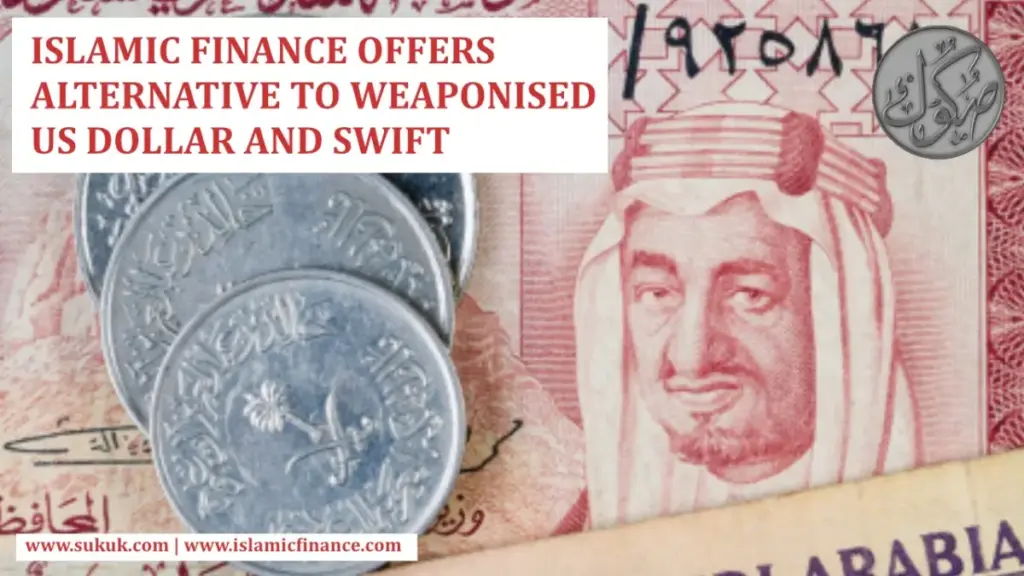
The growing trend of utilizing the United States dollar and the SWIFT international payment architecture as instruments of geopolitical leverage has catalyzed a profound shift in global commerce. As trust in the greenback and Western-dominated financial messaging systems wanes among targeted and wary nations alike, international leaders are increasingly looking toward alternative payment mechanisms, local currencies, and traditional assets to safeguard their economic sovereignty.
This structural push away from traditional Western financial hegemony has brought alternative financial paradigms, particularly Islamic finance and regional multilateral trade pacts, to the forefront of international monetary discussions. Policymakers across Asia and the Middle East are actively designing strategies to bypass conventional Western clearinghouses, seeking greater insulation from unilateral sanctions and monetary policies dictated by Washington.
Islamic Finance Instruments Can Replace US Dollar in Trade
At the heart of this evolving movement is the weaponization of the US dollar and the Society for Worldwide Interbank Financial Telecommunication (SWIFT) system. By cutting off adversarial or non-compliant nations from the primary global conduit for financial transactions, Washington has demonstrated the vulnerability of economies reliant on a single dominant currency. In response, international pushback has gained considerable momentum as nations seek to diversify their risk and establish resilient, independent trading corridors.
Turkish President Recep Tayyip Erdogan has been one of the most vocal proponents of this strategic pivot, advocating strongly for the adoption of Islamic finance principles and alternative settlement methods to protect emerging economies. Highlighting the urgency of the matter, President Erdogan has emphasized that trading in national currencies must be prioritized on the international agenda.
The Turkish leader has repeatedly called on global trade partners to dismantle the long-standing monopoly of the dollar in international commerce. These concerns have not gone unnoticed in Western capitals. Even high-ranking US officials have acknowledged the potential long-term risks of overusing financial sanctions. Former US Treasury Secretary Steve Mnuchin publicly acknowledged the delicate nature of the situation, warning that if policymakers are not careful, international actors will actively look for ways to use other currencies and alternative systems to conduct their business.
Iranian Banks Removed from SWIFT
The practical impetus for these alternative systems is largely rooted in the severe economic fallout experienced by nations subjected to sweeping US financial restrictions. Among the most drastic measures has been the systematic removal of Iranian banks from the SWIFT payment network. This exclusion has severely crippled Iran’s ability to conduct routine foreign trade, blocking its access to international markets and compelling Tehran and its trading partners to forge entirely new, non-dollar-based financial conduits.
The impact of such financial isolation is not confined to the Middle East. Similar secondary sanctions and regulatory pressures have directly impacted European enterprises as well, including German firms actively working on the Russian-German energy pipeline projects. These disruptions have served as a wake-up call for major economies that find their commercial interests compromised by extraterritorial US financial regulations.
In direct response to these vulnerabilities, major global players have begun taking matters into their own hands. Most notably, Russia and China have established their own bilateral financial messaging and payment systems. By creating these dedicated channels, Moscow and Beijing have enabled direct trade between their respective enterprises, effectively insulating their commerce from the reach of the US dollar and Western financial oversight.
Increased Use of Gold and Local Currencies
The movement away from the dollar extends well beyond bilateral arrangements, taking root in major regional organizations representing a significant portion of the global economy. The Shanghai Cooperation Organization (SCO), an eight-nation security and economic bloc that includes China, Pakistan, and Russia, represents nearly a quarter of global Gross Domestic Product.
Over recent years, member states of the SCO have systematically increased their collective foreign exchange reserves and bullion holdings, which now amount to nearly four trillion US dollars. This massive accumulation of wealth provides these nations with a formidable buffer against external financial shocks. Capitalizing on this economic weight, finance ministers from the SCO member states gathered in Moscow to reach a decisive agreement: to conduct bilateral trade and investment entirely in local currencies, effectively sidelining the greenback in their intra-bloc commerce.
This deliberate strategy reflects a broader, systemic desire among emerging economies to de-dollarize their foreign trade portfolios. By relying on national currencies and reducing their exposure to US debt and monetary policy fluctuations, SCO members aim to create a more stable and predictable regional trading environment that is immune to unilateral geopolitical pressures.
Use of Gold in Islamic Cultures
Parallel to the de-dollarization efforts led by regional blocs, traditional assets such as gold have experienced a powerful resurgence, particularly within Asian and Islamic cultures where bullion has long served as a trusted store of wealth passed down through generations. Countries like Turkey and Malaysia have positioned themselves at the forefront of this movement, pioneering innovative approaches to Islamic financial gold banking and the development of gold-backed currencies.
At the sub-national level, practical steps have already been taken to implement these concepts. The Malaysian states of Kelantan and Perak introduced the gold dinar and silver dirham coins as recognized means of payment and mediums for trade, reviving historical Islamic monetary traditions in a modern context.
Meanwhile, the Turkish Islamic bank Kuveyt Türk—a subsidiary of Kuwait Turkish Bank—embarked on a pioneering path in 2007 by launching specialized gold banking services. The initiative proved remarkably successful, allowing the institution to collect over twenty-six tons of gold, valued at approximately $1.2 billion as of July 2019. By integrating this vast reservoir of physical gold directly into the formal Turkish economy, the bank demonstrated the viability of mobilizing dormant private wealth. Current initiatives in this sector focus on leveraging modern technology, including the development of an Islamic finance gold-based cryptocurrency designed to facilitate seamless and secure cross-border trade without relying on conventional Western banking infrastructure.
Islamic Finance Gold Standard
The integration of physical gold into modern Islamic finance received a major institutional boost in 2016, when the World Gold Council and the Accounting and Auditing Organisation for Islamic Financial Institutions (AAOIFI) jointly approved a comprehensive Sharia standard for gold-based products.
The primary objective of this standardized framework was to significantly increase the utilization of physical bullion within the Islamic finance sector and to clear the regulatory path for the creation of innovative financial instruments. By establishing clear religious and financial guidelines, the standard successfully addressed complex issues surrounding the use of gold as collateral, as well as the specific legal parameters governing the exchange of gold in both spot and deferred transactions. This regulatory clarity has provided Islamic financial institutions with the foundation needed to expand their gold-backed product offerings, paving the way for a more resilient and asset-backed alternative to fiat-based international payment systems.