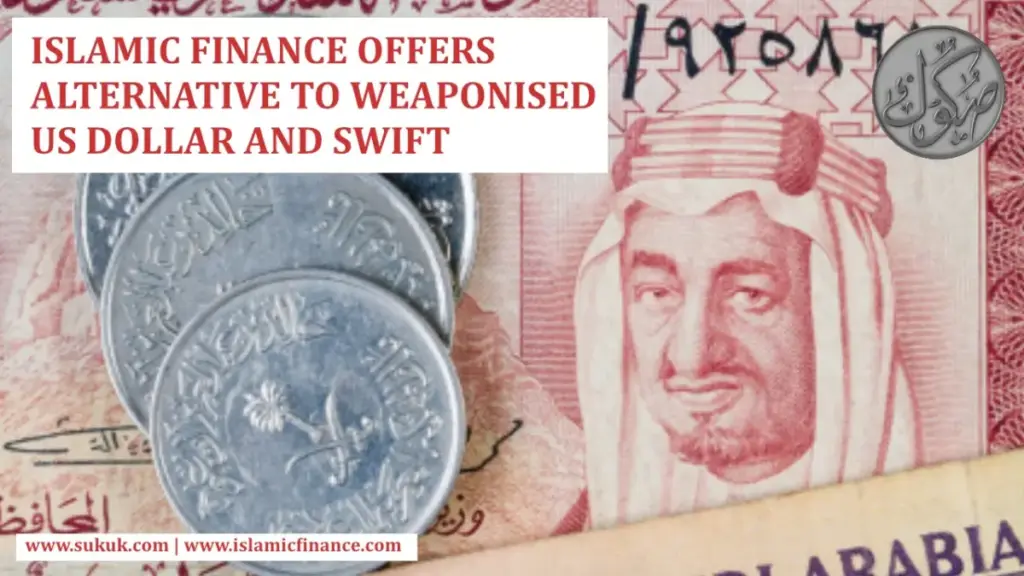
The growing trend of utilizing the United States dollar and the SWIFT international payment architecture as geopolitical tools has catalyzed a profound shift in global commerce. As trust in the greenback and traditional Western-dominated financial infrastructure wanes, nations worldwide are increasingly searching for alternative payment systems and currencies to safeguard their economic sovereignty. This push to de-dollarize international trade has brought alternative frameworks—most notably Islamic finance instruments, local currency settlements, and gold-backed monetary solutions—to the forefront of global economic discussions.
The weaponization of financial systems has created acute vulnerabilities for countries subjected to unilateral economic measures. In response, prominent international leaders have begun actively championing structural alternatives. Turkish President Recep Tayyip Erdogan has strongly advocated for the broader adoption of Islamic finance principles and the expansion of trade settled in national currencies. Highlighting the urgency of this transition, President Erdogan noted that the issue of Islamic finance must be placed at the forefront of the international agenda, echoing his previous calls for nations to dismantle the absolute monopoly held by the US dollar in global commerce.
The anxieties surrounding the dominance of the US financial system are not confined solely to nations facing severe economic restrictions. Even architects of the traditional financial order have expressed caution regarding the long-term consequences of aggressive monetary policies. Former US Treasury Secretary Steve Mnuchin publicly acknowledged the inherent risks of this approach, conceding that if policymakers are not careful, international actors will increasingly explore alternative currencies and payment networks to circumvent potential exposure to American sanctions.
Iranian Banks Removed from SWIFT
The practical impetus for establishing alternative financial channels has been driven largely by sweeping US sanctions that have effectively cut off Iranian banks from the Society for Worldwide Interbank Financial Telecommunication (SWIFT) network. This exclusion has severely crippled Iran’s capacity to conduct normal foreign trade, disrupting vital imports and exports and isolating the nation from mainstream global banking channels.
The reach of these financial restrictions has extended far beyond the Middle East, creating diplomatic and economic friction with traditional Western allies. Similar secondary sanctions and regulatory threats have directly impacted European enterprises, notably disrupting firms involved in the construction and operation of the major Russian-German energy pipeline.
Faced with the constant threat of exclusion from Western-dominated payment architecture, major global powers have begun forging independent financial pathways. Russia and China, both frequent targets of economic penalties, have successfully established their own bilateral payment systems designed to facilitate direct trade between their respective economies while completely bypassing the US dollar and traditional Western clearinghouses.
Increased Use of Gold and Local Currencies
The movement away from the US dollar is also gaining significant momentum through multilateral economic blocs representing a substantial share of global economic output. The eight-nation Shanghai Cooperation Organization (SCO), which includes key regional powers such as China, Pakistan, and Russia, accounts for nearly a quarter of the world’s total Gross Domestic Product.
Member states of the Shanghai Cooperation Organization have systematically increased their collective gold holdings and foreign exchange reserves, which now total nearly four trillion US dollars. This massive accumulation of alternative reserve assets provides the financial foundation necessary to support independent trade networks. Capitalizing on this economic weight, finance ministers from the SCO member states gathered in Moscow to formally adopt a strategic decision to conduct future bilateral trade and investment activities entirely in local currencies, thereby insulating their regional economies from external monetary shocks.
Use of Gold in Islamic Cultures
In tandem with the push for local currency settlements, precious metals—particularly gold—are experiencing a resurgence as an attractive asset class and a reliable store of wealth. This reliance on bullion is deeply rooted in traditional financial practices passed down through generations across various Asian cultures. Among these, Turkey and Malaysia have emerged as pioneers in the development of Islamic financial gold banking and innovative gold-based monetary instruments.
Within Malaysia, the regional state governments of Kelantan and Perak have taken concrete steps by introducing physical gold dinar and silver dirham coins to serve as recognized mediums of exchange for local commerce and trade. Meanwhile, in Turkey, the prominent Islamic financial institution Kuveyt Türk launched pioneering gold banking services in 2007. By collecting physical gold from the public and integrating it back into the formal Turkish economy, the bank successfully amassed over 26 tons of gold, valued at approximately 1.2 billion US dollars as of July 2019. Building upon this successful integration of physical bullion, current modernization initiatives within the sector include the development of an Islamic finance gold-based cryptocurrency designed to seamlessly facilitate cross-border trade transactions.
Islamic Finance Gold Standard
The institutional framework supporting the integration of precious metals into modern Islamic finance received a major boost with the establishment of standardized regulatory guidelines. In 2016, the World Gold Council, working in close collaboration with the Accounting and Auditing Organisation for Islamic Financial Institutions (AAOIFI), officially approved comprehensive sharia standards for gold-based financial products.
The primary objective of these standardized guidelines was to expand the responsible utilization of physical bullion within Islamic finance and to encourage the creation of innovative financial instruments that comply with religious jurisprudence. The newly established standard successfully addressed complex financial mechanisms, including the appropriate use of collateral, as well as the specific legal parameters required for the exchange of gold in both spot and deferred transactions, providing a clear and trusted framework for the expansion of gold-backed trade in the global economy.