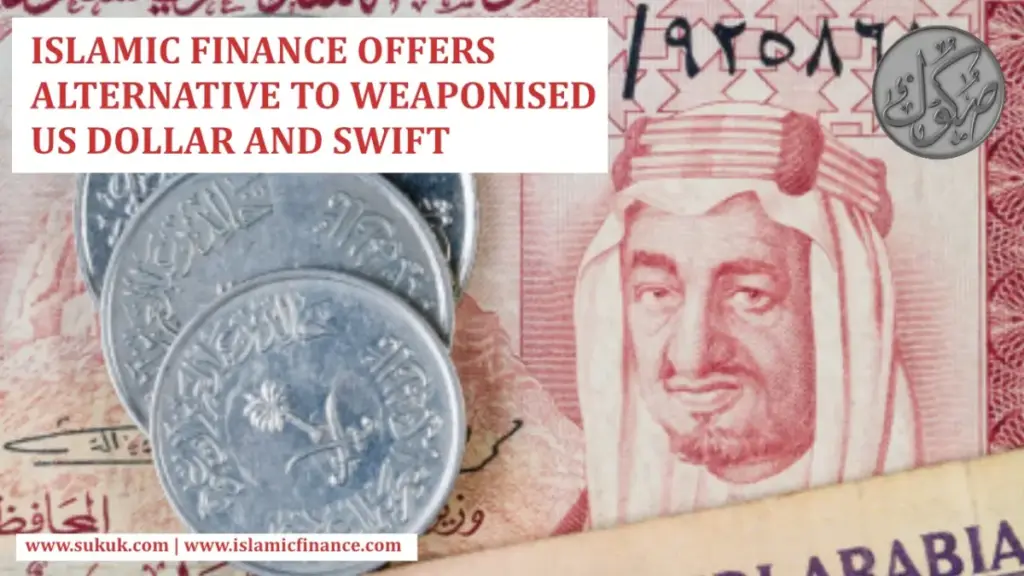
The weaponization of the United States dollar and the international payment architecture centered around the Society for Worldwide Interbank Financial Telecommunication (SWIFT) has triggered a profound shift in global commerce. As trust in the greenback and traditional Western-dominated payment systems steadily erodes, governments across emerging markets and developing economies are actively seeking viable alternatives to insulate their national interests and maintain uninterrupted cross-border trade.
This growing disillusionment has brought alternative financial models, particularly Islamic finance and local currency settlements, to the forefront of international economic diplomacy. Among the most vocal proponents of this structural shift is Turkish President Recep Tayyip Erdogan, who has forcefully argued that conducting trade in national currencies has gained unprecedented urgency in the current geopolitical climate.
Addressing international economic forums, the Turkish leader emphasized that nations must prioritize alternative financial architectures. Erdogan has previously called on the global community to dismantle what he termed the absolute monopoly of the dollar in international commerce, pointing out that over-reliance on a single national currency exposes developing economies to unilateral foreign policy decisions and external shocks.
The concerns raised by international leaders have not gone unnoticed in Western capitals. Acknowledging the risks associated with the aggressive application of economic sanctions, US Treasury Secretary Steve Mnuchin candidly admitted that policymakers must tread carefully, warning that if the United States is not cautious, global partners will inevitably look at using alternative currencies and independent payment channels to conduct their business.
Iranian Banks Removed from SWIFT
The catalyst for many of these defensive maneuvers lies in the aggressive deployment of US economic sanctions, which have increasingly utilized access to the global financial grid as a coercive tool. Most notably, sweeping US sanctions resulted in the removal of Iranian banks from the SWIFT international payment system. This unprecedented measure effectively crippled Iran’s operational capacity to conduct foreign trade, disrupting vital commercial relationships and highlighting the inherent vulnerability of nations dependent on Western-managed financial infrastructure.
The impact of these sanctions extends far beyond the Middle East, occasionally frictioning diplomatic and economic relations between the United States and its traditional European allies. Similar secondary sanctions have directly impacted European enterprises, notably disrupting the commercial activities of German firms working on the construction of the Russian-German energy pipeline. These extraterritorial economic pressures have reinforced the determination of major economic powers to engineer independent financial systems immune to Washington’s oversight.
In response to these systemic vulnerabilities, major global players have begun constructing parallel financial architectures. Russia and China, both frequent targets of Western trade restrictions, have successfully established their own bilateral payment mechanisms. These direct payment channels allow Moscow and Beijing to trade directly with one another, completely circumventing the dollar and shielding their mutual transactions from foreign interference.
Increased Use of Gold and Local Currencies
The momentum away from the US dollar is also reshaping major multilateral institutions. The Shanghai Cooperation Organization (SCO), an eight-nation security and economic bloc that includes major regional powers such as China, Pakistan, and Russia, currently represents almost a quarter of global gross domestic product. Recognizing their collective economic weight, SCO member states have systematically increased their gold and foreign exchange reserves, which now amount to nearly $4 trillion USD.
This accumulation of tangible assets has translated into concrete policy decisions regarding international trade. At a high-level finance ministers meeting held in Moscow, the SCO formally decided to transition away from third-party currencies by conducting bilateral trade and investment directly in local currencies. By cutting out the dollar as an intermediary, these nations are lowering transaction costs while insulating their commercial exchanges from currency fluctuations and external political pressures.
The collective pivot by SCO members underscores a broader, systemic reassessment of reserve asset management and trade settlement practices across the Global South. As national authorities seek to safeguard their financial sovereignty, the reliance on Western banking systems is steadily giving way to regional, decentralized economic arrangements designed to withstand geopolitical volatility.
Use of Gold in Islamic Cultures
Parallel to the de-dollarization efforts led by regional economic blocs, traditional assets deeply rooted in cultural and religious traditions are experiencing a significant resurgence. Gold has long remained an attractive asset class and a reliable store of wealth, traditionally passed down through generations across Asian and Middle Eastern cultures. In recent years, specific nations have sought to harness this cultural affinity by integrating bullion into modern state-level financial systems.
Turkey and Malaysia have positioned themselves at the forefront of Islamic financial gold banking and the development of gold-backed currencies. In Malaysia, the state governments of Kelantan and Perak introduced gold dinar and silver dirham coins as alternative means of payment and mediums for trade, seeking to re-establish a tangible monetary anchor for commercial transactions.
Similarly, the Turkish banking sector has embraced gold as a vital component of domestic liquidity and economic stability. Kuveyt Türk, an Islamic bank operating in Turkey, pioneered commercial gold banking initiatives beginning in 2007. By allowing citizens to deposit physical gold into the formal banking system, the institution successfully mobilized vast quantities of idle private wealth. By July 2019, the bank had collected over 26 tons of gold, valued at approximately $1.2 billion, seamlessly integrating these physical reserves into the broader Turkish economy.
Building upon these successful physical banking models, current financial initiatives are exploring modern technological applications. Financial technologists and institutions are actively developing Islamic finance gold-based cryptocurrencies, leveraging blockchain technology to better facilitate secure, transparent, and efficient cross-border trade without relying on conventional fiat settlement systems.
Islamic Finance Gold Standard
The integration of precious metals into modern Islamic financial markets received a significant institutional boost in 2016. In a landmark development, the World Gold Council and the Accounting and Auditing Organisation for Islamic Financial Institutions (AAOIFI) jointly approved a comprehensive sharia standard for gold-based products.
The primary objective of this standardized framework was to safely increase the utilization of bullion within Islamic finance and pave the way for the creation of innovative financial instruments that comply with religious jurisprudence while meeting contemporary commercial demands. The newly established standard carefully addressed complex financial mechanisms, including the proper use of gold as collateral and the exact regulatory parameters governing the exchange of gold in both spot and deferred transactions.
By establishing clear, internationally recognized guidelines for gold-backed financial products, the collaboration between the World Gold Council and AAOIFI has provided the necessary regulatory certainty for institutions looking to expand their bullion-based portfolios. As trust in traditional Western-dominated payment systems continues to wane, these standardized Islamic finance instruments and gold-backed initiatives offer a robust, credible alternative for nations seeking to diversify their trade mechanisms and secure their economic future.