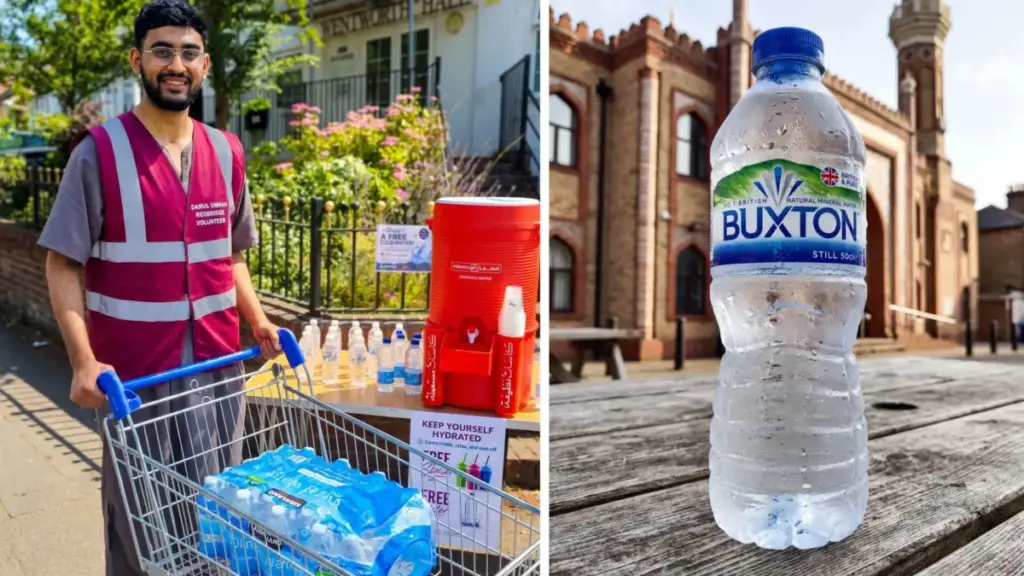
As temperatures climbed significantly across the United Kingdom this week, bringing a wave of intense and stifling weather, a familiar and heartwarming sight began appearing on pavements outside mosques up and down the country.

Tables neatly lined with rows of ice-cold bottles of water were set up right outside places of worship, inviting anyone passing by to take a drink completely free of charge. There were no conditions, no forms to fill out, and no questions asked—just a simple, direct message of kindness and care for anyone struggling to cope with the physical effects of the sweltering heat.

The initiative was replicated by numerous Islamic centres and community organisations, reflecting a widespread effort to support the public

during one of the hottest weeks of the year. Among them was the Muslim Cultural & Welfare Association of Sutton (MCWAS), which set up hydration stations for local residents. Similar scenes unfolded at the historic East London Mosque, Madrassah Ta’aleemul Qur’an, the Islamic Da’wah Academy, At-Taqwa Academy in Ilford, and the Zidna Foundation in Streatham, where management and volunteers ensured that cool refreshments were readily accessible to the public.

While many mosques chose to place water stations directly outside their front entrances, others decided to take their outreach a step further by meeting the community directly where they were.

At the Darul Ummah Redbridge Mosque in Gants Hill, East London, dedicated volunteers braved the scorching midday sun and headed out onto the surrounding streets. Carrying crates of chilled refreshments, they actively handed out free bottles of water to pedestrians, local shop workers, and busy commuters who were navigating the blazing heatwave.

Across the country, mosques found various practical ways to serve their neighbourhoods during the extreme weather conditions. Beyond providing hydration on the streets, several institutions opened their air-conditioned prayer halls and community spaces to the public, offering a safe, cool environment where people could step inside, rest, and escape the peak temperatures of the afternoon.

These grassroots efforts may appear simple on the surface, but they embody a timeless and foundational Islamic teaching centered on looking after others and serving humanity without expecting anything in return. The community response draws direct inspiration from the traditions of the Prophet Muhammad, who famously taught that the best of people are those who are most beneficial to others.

For the leadership and congregants of these mosques, responding to the heatwave was not viewed as an extraordinary or isolated undertaking, but rather as a natural extension of their year-round community engagement. Throughout the calendar year, mosques across Britain routinely operate food banks, provide vital support for the homeless, host community blood donation sessions, and organise various welfare initiatives. When the extreme weather arrived, it simply presented an immediate local need, and the institutions responded accordingly.

At a time when daily news headlines frequently focus on global conflict, social division, and polarisation, these quiet acts of local generosity paint a very different picture of modern British society. They highlight a narrative of neighbours looking after neighbours, driven by faith and a shared commitment to public welfare.

The initiative saw mosques opening not only their physical doors to the public, but also demonstrating institutional generosity of spirit. Volunteers who spent hours monitoring the water tables and walking the pavements under the blazing sun did so with the intention of easing the daily burdens of everyday citizens, regardless of their background or beliefs.

Such community-led responses illustrate a subtle and compassionate form of outreach. Without preaching or lecturing, these acts demonstrate the core values of faith through practical service. As volunteers packed coolers and welcomed weary travellers with a cold drink and a smile, they offered a reminder that sometimes the most powerful form of expression is a quiet gesture of human solidarity in a time of need.