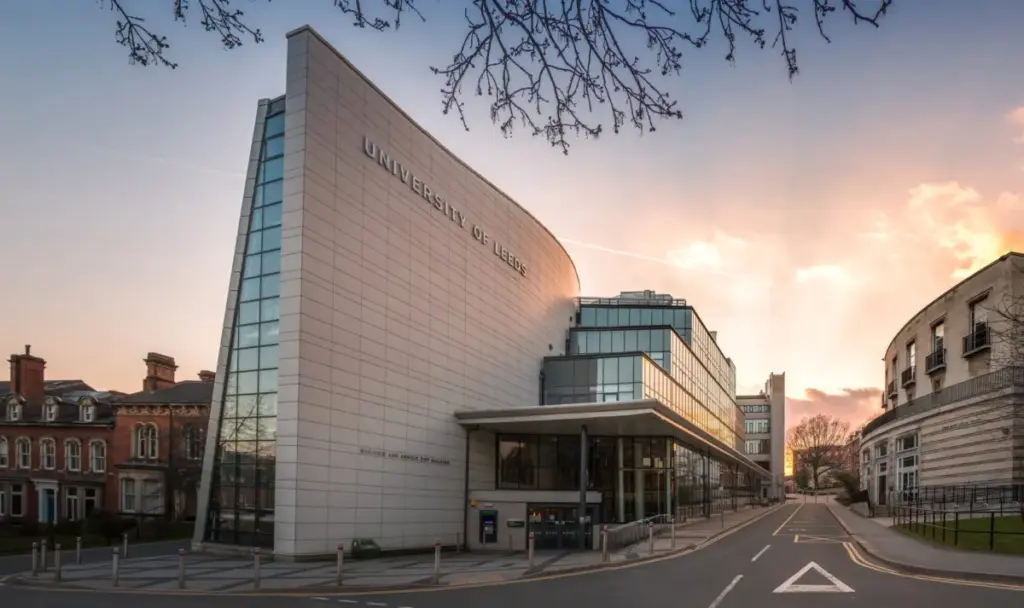
LEEDS — A long-serving Muslim chaplain at the University of Leeds has stepped down from her position, citing an untenable campus climate following a fierce dispute between students and the university administration over the return of a Jewish chaplain who served in the Israeli military’s war in Gaza.
Farhat Yaqoob, who has served the university community since 2014, announced her immediate resignation after Rabbi Zecharia Deutsch resumed his duties on campus. Rabbi Deutsch’s return sparked an intense wave of student activism, protests, and a broader debate regarding institutional duty of care, free speech, and the personal safety of students and staff amidst the ongoing humanitarian crisis in Gaza.
In an official statement released via the Leeds University Union Islamic Society’s Instagram page, Yaqoob explained that her foundational principles and personal values no longer aligned with the trajectory of the institution.
"It is with a very heavy heart that I am writing this message to you all. But I need to share the news that I will be standing down in my role as the Muslim Chaplain," Yaqoob wrote in her public departure message.

Reflecting on her tenure and the principles guiding her work, she added: "My faith makes me a better human being and a better chaplain, and I should never apologise for that. I have witnessed that social justice is an integral part of everyone’s duty of care… Based on the current climate, especially since the international events around early October 2023, I have struggled to find those fundamental values lived out here on campus in the way that I feel works in harmony with me. It is becoming extremely challenging for me to stay on as chaplain."
The Islamic Society expressed deep sorrow at the news of her departure, paying tribute to her nearly decade-long service to the student body. In their social media statement, the society lauded her contributions: "She has worked tirelessly in her time to bring unity to campus, through mentoring students and being a light to us all in some of our darkest times. She has been and will always be someone who strengthens and supports our community and has been a person of safety in some of the most unsafe times, for that we will forever be grateful."
The Return of Rabbi Deutsch and Escalating Tensions
The resignation follows months of mounting friction at the University of Leeds regarding Rabbi Zecharia Deutsch. Rabbi Deutsch, a rabbinical emissary who has served as the Jewish chaplain for universities across the Yorkshire region since 2021, temporarily left his post in the United Kingdom to travel to Israel and serve in the Israel Defense Forces (IDF) following the outbreak of hostilities in Gaza on October 7, 2023.
When Rabbi Deutsch returned to his campus chaplaincy role in January, his resumption of duties triggered immediate expressions of outrage, anger, and fear among significant portions of the student body, particularly pro-Palestine and Muslim student organizations.

During his active service in the IDF, photographs and video footage of Rabbi Deutsch clad in military uniform circulated widely across social media platforms. In one prominent video clip published online, he addressed the ideological nature of the conflict, stating: "There is so much confusion going on and it’s so clear that there is evil and there is good. And what Israel is trying to do is destroy the evil, which is the most moral thing possible."
As protests against his return intensified across the Leeds campus, reports emerged indicating that Rabbi Deutsch and his wife, Nava, had received direct threats, leading them to temporarily go into hiding. The polarization surrounding his presence underscored the deep ideological divisions taking root on British university campuses in the wake of the Middle East conflict.
The broader geopolitical backdrop has seen unprecedented devastation. Since the escalation of hostilities on October 7, military operations by the IDF in the Gaza Strip have resulted in the deaths of over 30,500 Palestinians, including more than 13,400 children and nearly 8,900 women, with tens of thousands more reported injured. These actions have drawn severe international scrutiny, culminating in landmark legal proceedings at the International Court of Justice, where South Africa has accused Israel of committing genocide.
Student Activism, Sit-Ins, and Institutional Scrutiny
The return of Rabbi Deutsch has galvanized a sustained student-led protest movement at the University of Leeds. Activists have organized numerous demonstrations, rallies, and public forums demanding immediate administrative action. Most notably, dozens of students staged an occupation sit-in inside a section of the historic Parkinson Building, marking a dramatic escalation after weeks of smaller-scale protests.

Students participating in the demonstrations have voiced acute distress over what they perceive as a failure of institutional protection. Speaking directly to independent media outlets, students asserted that the university campus has increasingly transformed into an unsafe and hostile space for Muslim attendees, while complaining that their collective grievances have been mischaracterized by mainstream public discourse.
Parallel to the direct action on campus, public pressure has mounted online. A petition hosted on Change.org demanding the formal dismissal of Rabbi Deutsch from the University of Leeds successfully surpassed 12,000 signatures.
National advocacy organizations have also intervened in the dispute. The Muslim Association of Britain publicly challenged the university administration on social media platform X, writing: "Why have you allowed Zechariah Deutsch to return to the university as a chaplain after serving in the IDF? You have a duty of care towards your students to ensure their safety at all times. How can your students feel safe with a war criminal complicit in genocide roaming your campus?"
University Response
In response to the compounding controversies—encompassing the student protests, the petition, the security concerns surrounding the chaplaincy, and the sudden resignation of a senior spiritual leader—the University of Leeds issued a comprehensive statement addressing its legal obligations and community concerns.

A university spokesperson emphasized the institution’s commitment to balancing free expression with campus safety: "As a diverse community of more than 39,000 students from 137 countries, we work hard to uphold freedom of speech for all and to ensure that the different experiences and perspectives of all in our community can be heard. The University has a legal duty to support free speech and peaceful expressions of views within the law, and has facilitated numerous authorised vigils and protests. We absolutely condemn all antisemitism, Islamophobia, harassment and abuse and would always take action against it."
Acknowledging the heavy emotional toll the ongoing situation has inflicted on the campus population, the spokesperson continued: "Our recent statement in response to antisemitic incidents in no way diminishes the experience of our Muslim staff and students. Islamophobia and antisemitism are equally abhorrent and have no place at the University of Leeds. We know that many of our Muslim staff and students are finding this to be an incredibly difficult time with many experiencing significant anguish and upset. We are meeting regularly to continue to listen, discuss and identify how we can continue to provide further support and address their ongoing concerns."
Addressing the departure of Farhat Yaqoob directly, the university expressed formal regret over her decision to step down: "We are saddened that Sister Farhat will be standing down from her role with us, and wish to thank her sincerely for her significant support for our Muslim students and staff as well as our wider community at Leeds over the past nine years of her service. The University will continue to ensure they receive the invaluable spiritual and pastoral support provided by the Muslim chaplaincy."
Finally, clarifying the employment status of Rabbi Deutsch, the university noted that he is not directly on the university’s payroll: "Rabbi Deutsch is employed by the UJC to support Jewish students in Leeds and at other universities in the Yorkshire region. The University remains in close contact with the UJC to discuss how it supports his work, and ensure we are sensitive to the diverse perspectives of our community."