The landscape of global finance has experienced a significant paradigm shift over the past several decades, moving away from purely transactional models toward frameworks that emphasize ethics, transparency, and social responsibility. Among these, Islamic finance has emerged as a prominent and rapidly expanding sector, capturing the attention of mainstream economists, institutional investors, and policymakers worldwide. Far from being a niche market restricted by religious boundaries, Islamic finance is increasingly recognized as a universal economic system designed to benefit all of mankind, regardless of an individual’s personal faith or background.
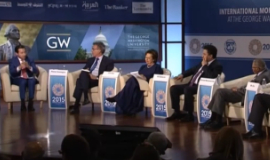
This inclusive perspective was notably highlighted by former Turkish Deputy Prime Minister Ali Babacan during a high-profile International Monetary Fund (IMF) panel discussion in May 2015. Addressing international financial leaders, economists, and policymakers, Babacan emphasized the inherent universality of Islamic finance, arguing that its core principles offer a viable, stable, and equitable economic alternative for people of all walks of life, whether they identify as Muslim or not. His remarks underscored a growing realization within the global economic community that the fundamental tenets of Islamic finance—rooted in risk-sharing, asset-backing, and the avoidance of excessive speculation—address many of the structural vulnerabilities exposed by conventional financial crises.
At its core, Islamic finance operates on a set of moral and ethical guidelines derived from Islamic law, or Sharia, but its practical applications closely mirror contemporary movements toward sustainable, socially responsible, and ethical investing. Concepts such as "getting rich slowly" through disciplined, halal investments resonate deeply with modern investors who are disillusioned by the high-risk, volatile nature of speculative trading. In a halal investment framework, wealth growth is achieved through tangible economic activity rather than monetary manipulation. Transactions must be tied to real economic assets, ensuring that financial growth goes hand-in-hand with physical productivity, trade, and societal benefit.

One of the defining characteristics that makes Islamic finance universally appealing is its strict prohibition of riba, or the charging and paying of interest. In conventional financial systems, interest-bearing debt often shifts the entirety of financial risk onto the borrower, creating systemic instabilities that can culminate in widespread economic downturns. Conversely, Islamic finance champions a model of shared risk and reward. Investors and financial institutions act as partners rather than traditional creditors and debtors, fostering a more collaborative and cautious approach to capital allocation. This emphasis on partnership aligns with modern ethical investing standards that seek to eliminate exploitation and ensure fairness in every transaction.
Furthermore, Islamic finance explicitly forbids investments in sectors that are considered harmful to individuals or society, such as gambling, alcohol, pornography, weapons manufacturing, and conventional financial institutions heavily reliant on interest-based lending. By filtering out these prohibited industries, Islamic investment portfolios naturally concentrate on sectors that promote human welfare, environmental sustainability, and community development. This negative screening process bears a striking resemblance to contemporary Environmental, Social, and Governance (ESG) investing criteria, which have become a cornerstone of modern portfolio management for institutional investors globally. Consequently, non-Muslim investors looking for ethical ways to preserve and grow their capital have increasingly turned to Islamic financial products as a reliable vehicle for sustainable wealth generation.
The universal relevance of these principles has transformed Islamic finance from a regional banking practice into a truly global industry. Financial centers in Europe, Asia, and the Middle East now routinely issue Islamic bonds, known as sukuk, to fund large-scale infrastructure projects, public utilities, and corporate expansions. These instruments appeal to a diverse investor base because they represent fractional ownership in tangible assets rather than a mere debt obligation, providing a level of security and transparency that is highly valued in uncertain economic climates. As international markets continue to navigate complex financial landscapes, the core message delivered by leaders like Ali Babacan at the IMF remains profoundly relevant: that ethical finance is not exclusive, but rather a universal blueprint for building resilient, equitable, and prosperous economies for the global community.