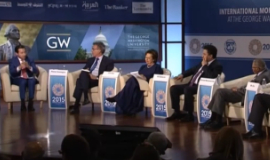
The statement, delivered during a high-profile panel at the International Monetary Fund gathering, highlighted a growing perspective within global economic circles that the principles governing Islamic finance extend far beyond religious boundaries. Babacan underscored that the foundational tenets of this financial system—which prioritize ethical investments, risk-sharing, and the avoidance of excessive speculation—offer a viable and secure framework for anyone seeking sustainable wealth growth, regardless of their personal religious background.
Islamic finance, often associated with concepts such as ethical investments and slow, steady wealth accumulation encapsulated by the ethos of getting rich slowly through Halal practices, has increasingly captured the attention of international economists, policymakers, and mainstream investors. Unlike conventional financial models that frequently rely heavily on interest and complex debt instruments, the Islamic finance framework is anchored in real economic activity. Every financial transaction must be tied to a tangible asset, and the generation of wealth must occur through legitimate trade, partnership, or investment in socially responsible ventures. This intrinsic connection to the real economy ensures a level of stability and transparency that appeals to a broad demographic of investors searching for alternatives to volatile conventional markets.
During his remarks at the IMF discussion, Babacan pointed out that the universal appeal of these financial instruments lies in their inherent fairness and risk-mitigation properties. Because Islamic finance prohibits the collection and payment of interest, known as Riba, as well as investments in sectors deemed harmful to society—such as alcohol, gambling, tobacco, and weaponry—it naturally aligns with contemporary movements toward environmental, social, and governance investing. Consequently, individuals and institutions outside the traditional Islamic demographic are increasingly viewing Halal financial products as a sound, principled strategy for long-term portfolio diversification and wealth preservation.

The dialogue surrounding Islamic finance at international forums like the IMF reflects a broader evolution in how global financial systems address economic stability and ethical responsibility. As markets continue to navigate the complexities of modern economic cycles, the emphasis on asset-backed financing and equitable risk distribution continues to draw interest from diverse global participants. Babacan’s intervention at the May 2015 gathering served to reinforce the message that the core values of Islamic finance—transparency, ethical accountability, and human-centric economic growth—are universally applicable and capable of serving the wider global community in its pursuit of sustainable financial well-being.