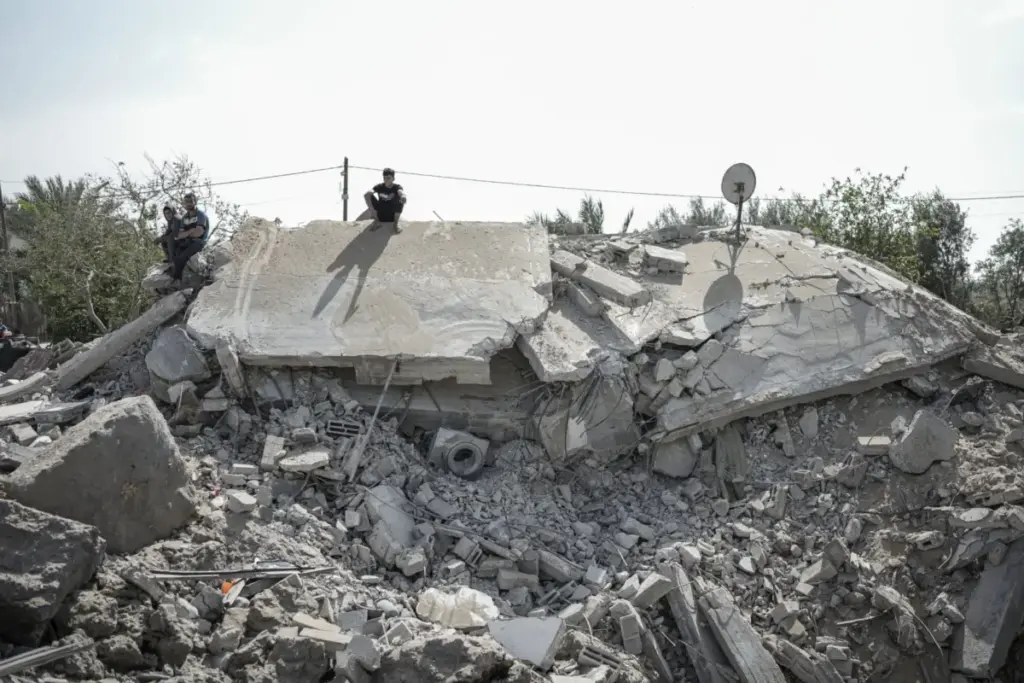
One year after a ceasefire was formally announced in Gaza, local communities and humanitarian workers say the daily reality on the ground bears little resemblance to peace. Continuous bombing, extreme overcrowding, severe shortages of food and medical supplies, and a pervasive sense of fear continue to dominate life for the more than two million residents trapped inside the narrow enclave.
In candid interviews, two aid workers with Islamic Relief, whose names have been anonymized to protect their safety, described the severe psychological toll and operational challenges of operating in a conflict zone where active military operations have never truly stopped.
Reflecting on the situation one year after the initial ceasefire announcement, an aid worker identified as Layla noted that the term itself feels entirely disconnected from reality.
"The current situation here in Gaza, with bombing and airstrikes still ongoing, cannot be called a ceasefire. There is no ceasefire in reality," Layla said. She explained that ongoing attacks frequently target displacement camps and crowded civilian areas, leaving residents in a perpetual state of terror.
"We cannot say that we are 100% safe. We cannot go into the streets by car or on foot. We are scared to even leave our homes, and of the noise of the drones above us. Even our homes themselves are unsafe. It’s hard to think you could be next. These are the hardships we’re facing; displacement, fear. The killing is non-stop and we cannot live our lives normally."
For Sameer, another Islamic Relief worker in Gaza, the announcement of a ceasefire initially offered a glimmer of hope and relief that he and his loved ones had survived the intense hostilities of the preceding years. However, that fragile optimism was quickly shattered.
"When we heard the news about the ceasefire, it brought us some relief that we were still alive after what had happened over the 2 years before. But afterwards we saw that it was not a ceasefire from the Israeli side," Sameer said.
Recounting recent violence, Sameer pointed to an attack that occurred near his location, striking a heavily populated tent encampment where women and children were sheltering. Because the vast majority of Gaza’s permanent housing stock has been heavily damaged or reduced to rubble over three years of conflict, most families have little choice but to live in precarious conditions.
"Most people are living in crowded tents and damaged buildings. I don’t know if you saw on the news, but a few weeks ago a damaged building collapsed on the sleeping children and families sheltering inside," Sameer said. He added that finding a structurally sound building to live in has become nearly impossible. Beyond the lack of safe shelter, residents face acute shortages of basic necessities, including reliable sources of electricity and safe drinking water.
The psychological burden of these conditions infiltrates every aspect of daily existence. Sameer described how routine activities, such as walking with his children, are constantly overshadowed by anxiety.
"When I go out walking with my children, any time a car comes up beside us, I fear that there will be an attack. Even when we’re at home, there is fear in every moment. Even leaving to go to work… it’s difficult to explain that feeling because it’s become something in our minds, in our lives, in every move we make," he said.
Layla echoed these fears, noting the constant dread of personal loss amid the relentless violence. "I am afraid that I will lose one of my colleagues, that I will lose my life, or lose my family. But this is the situation here."
While international reports occasionally note that some commercial goods are entering the Gaza Strip, aid workers emphasize that the volume is a fraction of what is required. Images on social media showing functioning restaurants or coffee shops can create a misleading impression of recovery, according to Layla. She noted that while ordinary people desperately want to live, heal, and rebuild, those fragile signs of normalcy are frequently upended by sudden violence.
"People want to live, want to recover, but even when we are trying to recover, I always think there will be something that will disappoint us, something that will interrupt any progress we make," she said.
Compounding the crisis is severe spatial constriction. According to United Nations Office for the Coordination of Humanitarian Affairs (OCHA) data referenced by aid workers, Palestinians have been displaced from nearly 70 percent of the Gaza Strip, forcing more than two million people to crowd into roughly 30 percent of the territory.
"Since the ceasefire came into place, we can still hear bombing, and Palestinians have been expelled from almost 70% of the Strip, which means we are living in a very overcrowded area. It’s just over 30% of the Strip for more than 2 million people. It’s… I don’t know," Layla said.
"So, the feeling here is still the same as before the ceasefire. We cannot live in just 30% of the Strip, just waiting for them to move forward and occupy other parts of Gaza. A ceasefire with us in 30% of the Strip and still being attacked and denied aid is not actually a ceasefire. They are just pretending that they are maintaining minimum humanitarian standards."
The humanitarian crisis extends deeply into healthcare and nutrition. Aid workers report that people are still facing starvation and severe shortages of vital medical supplies. Patients suffering from chronic conditions, such as diabetes, frequently find that essential medications are unavailable due to strict import and border restrictions.
Sameer explained that humanitarian organizations face immense obstacles when attempting to bring aid into Gaza. While a limited selection of commercial goods is permitted to cross, many essential items remain blocked. Combined with a widespread cash shortage and a near-total lack of formal employment opportunities, skyrocketing prices leave basic goods entirely unaffordable for most families.
To adapt to these severe restrictions, Islamic Relief has increasingly relied on food voucher programs. These vouchers allow families the dignity of choosing what they need from local shops while simultaneously providing crucial support to surviving local businesses. Sameer noted that these programs have been particularly vital for marginalized groups, such as individuals with disabilities, who he says have been largely overlooked.
In addition to food distribution, Islamic Relief currently supports more than 25,000 orphaned children and their guardians across the enclave. Despite the extreme dangers—which require staff to constantly monitor evacuation orders, airstrikes, and drone activity before attempting to travel—humanitarian workers continue their outreach to families living in desperate tent encampments.
As the conflict stretches past its third year, Layla expressed concern that international attention is fading. She noted that Gaza has largely slipped from the forefront of global news coverage and social media feeds, overshadowed by other international crises or reduced to brief, isolated headlines about individual casualties before the world moves on.
Yet, despite the mental exhaustion, physical hardships, and constant risks, aid workers emphasize that stopping is not an option.
"As humanitarian workers, we cannot just sit by and watch people suffering. We see them suffering and know we can help them, so we take the risk. In Gaza, just living is a big risk! We cannot see the struggles that people are facing and do nothing. It’s not in our nature or in the people of Gaza’s nature," Layla said.
Acknowledging her own circumstances—living in a partially damaged home that still retains walls and a roof, sparing her from the harsh conditions faced by those sleeping exposed in camps and streets—she finds the drive to continue.
"The humanitarian work must go on. We cannot just stop. Even if our intervention cannot help all 2 million people in Gaza, we can still make a difference in people’s lives, and this is the motivation for humanitarian workers," she said. "This is what moves us, this is what encourages us to just keep going, to just bear the hardships we are facing — the mental hardship, the physical, the stress, the exhausting circumstances — and just keep going."