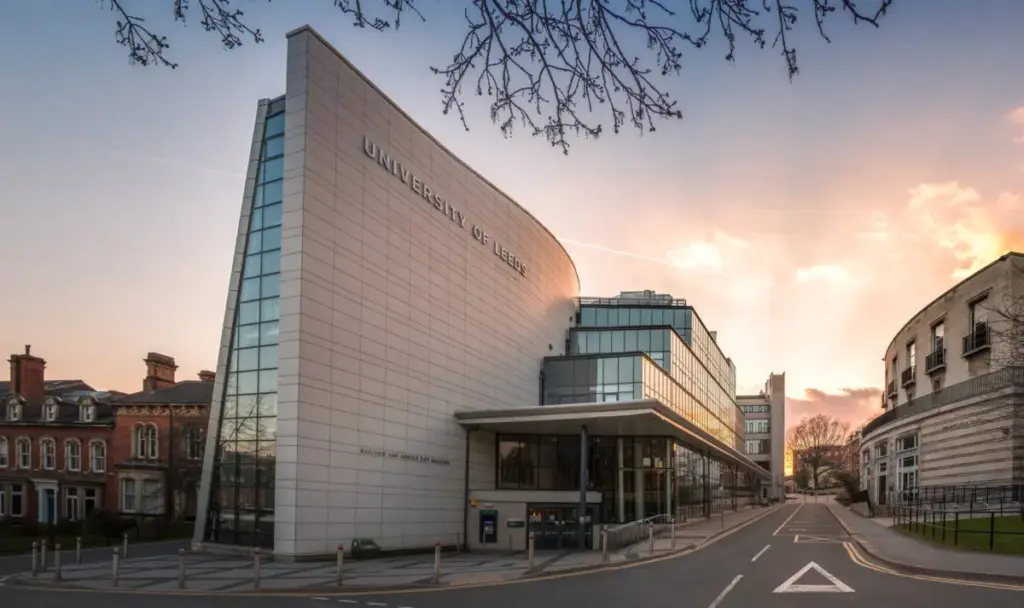
LEEDS, UK — A long-standing Muslim chaplain at the University of Leeds has stepped down from her position, citing a deepening institutional disconnect over core values as the campus reels from escalating tensions. The resignation follows a fierce controversy involving pro-Palestine student protests and the return of a Jewish chaplain who recently served with the Israel Defense Forces (IDF) during the ongoing war on Gaza.
Farhat Yaqoob, who has served as a Muslim chaplain at the university since 2014, announced her departure in an emotional statement shared via the Leeds University Union Islamic Society’s Instagram page. Her exit comes at a time of profound friction across British higher education institutions as students and staff grapple with the far-reaching domestic ramifications of the conflict in the Middle East.
In her public farewell message, Yaqoob explained that her personal principles and faith no longer aligned with the trajectory of the university administration during the current political and social climate.
"It is with a very heavy heart that I am writing this message to you all. But I need to share the news that I will be standing down in my role as the Muslim Chaplain," Yaqoob wrote in her statement.

"My faith makes me a better human being and a better chaplain, and I should never apologise for that. I have witnessed that social justice is an integral part of everyone’s duty of care… Based on the current climate, especially since the international events around early October 2023, I have struggled to find those fundamental values lived out here on campus in the way that I feel works in harmony with me. It is becoming extremely challenging for me to stay on as chaplain."
The announcement drew an immediate reaction of profound sorrow and gratitude from the university’s student body. The Islamic Society paid tribute to Yaqoob’s nearly decade-long tenure, praising her tireless efforts to foster unity, provide mentorship, and offer spiritual refuge during difficult periods.
In a statement released online, the Islamic Society noted: "She has worked tirelessly in her time to bring unity to campus, through mentoring students and being a light to us all in some of our darkest times. She has been and will always be someone who strengthens and supports our community and has been a person of safety in some of the most unsafe times, for that we will forever be grateful."
The catalyst for the current wave of campus protests and Yaqoob’s subsequent resignation is the return of Rabbi Zecharia Deutsch. Rabbi Deutsch, a rabbinical emissary who has served as a Jewish chaplain across several British universities in the Yorkshire region since 2021, took a leave of absence to travel to Israel and serve in the IDF following the outbreak of hostilities in Gaza in October 2023.
Since resuming his chaplaincy duties on the Leeds campus in January, Rabbi Deutsch’s presence has sparked profound outrage, fear, and division among large segments of the student population. During his deployment, various videos and photographs circulated widely across social media platforms showing him clad in an Israeli military uniform. In one widely shared video clip from the Middle East Eye, Rabbi Deutsch can be heard stating: "There is so much confusion going on and it’s so clear that there is evil and there is good. And what Israel is trying to do is destroy the evil, which is the most moral thing possible."

The resumption of his duties prompted swift blowback. As student-led demonstrations and public demonstrations intensified, reports emerged indicating that Rabbi Deutsch and his wife, Nava, had been forced into hiding due to receiving direct threats regarding his military service.
The backdrop to the campus unrest involves the devastating human toll of the conflict in Gaza. Since October 7, military operations conducted by the IDF have resulted in the deaths of approximately 30,534 Palestinians in Gaza, a figure that includes roughly 13,430 children and at least 8,900 women, alongside an additional 71,920 reported injuries. The scale of the devastation has drawn widespread international condemnation and accusations of war crimes and genocide. Notably, South Africa instituted formal legal proceedings against Israel at the International Court of Justice (ICJ) over these allegations.
In response to Rabbi Deutsch’s return, pro-Palestine student activists at the University of Leeds escalated their mobilization. Dozens of students initiated a sit-in protest, occupying a section of the prominent Parkinson Building on campus. The occupation marked the culmination of weeks of demonstrations demanding that the university administration take immediate disciplinary action.
Student participants speaking directly with independent media outlet 5Pillars voiced deep concerns regarding their safety and representation. They asserted that the university environment had increasingly transformed into an unsafe space for Muslim students, while complaining that their collective grievances were frequently misconstrued or marginalized within mainstream public discourse.
Parallel to the physical demonstrations, digital mobilization efforts have gathered significant momentum. A Change.org petition demanding the formal dismissal of Rabbi Deutsch from the University of Leeds rapidly surpassed 12,000 signatures.

External advocacy organizations have also weighed heavily into the dispute. The Muslim Association of Britain (MAB) publicly challenged university leadership over the decision to allow the chaplain to resume his role. In a strongly worded public statement posted on the social media platform X, the association questioned the institution’s commitment to student welfare: "Why have you allowed Zechariah Deutsch to return to the university as a chaplain after serving in the IDF? You have a duty of care towards your students to ensure their safety at all times. How can your students feel safe with a war criminal complicit in genocide roaming your campus?"
Amid the compounding pressures of student sit-ins, public petitions, the departure of the Muslim chaplain, and heightened security concerns, the University of Leeds has defended its position, emphasizing its legal obligations regarding free speech and its stated commitment to safeguarding all members of its campus community.
A university spokesperson issued a detailed response addressing the multifaceted controversy: "As a diverse community of more than 39,000 students from 137 countries, we work hard to uphold freedom of speech for all and to ensure that the different experiences and perspectives of all in our community can be heard. The University has a legal duty to support free speech and peaceful expressions of views within the law, and has facilitated numerous authorised vigils and protests. We absolutely condemn all antisemitism, Islamophobia, harassment and abuse and would always take action against it."
Addressing the emotional toll experienced by staff and students, the spokesperson added: "Our recent statement in response to antisemitic incidents in no way diminishes the experience of our Muslim staff and students. Islamophobia and antisemitism are equally abhorrent and have no place at the University of Leeds. We know that many of our Muslim staff and students are finding this to be an incredibly difficult time with many experiencing significant anguish and upset. We are meeting regularly to continue to listen, discuss and identify how we can continue to provide further support and address their ongoing concerns."
Turning to the departure of Farhat Yaqoob, the university expressed formal regret over her decision while acknowledging her extensive tenure. "We are saddened that Sister Farhat will be standing down from her role with us, and wish to thank her sincerely for her significant support for our Muslim students and staff as well as our wider community at Leeds over the past nine years of her service. The University will continue to ensure they receive the invaluable spiritual and pastoral support provided by the Muslim chaplaincy," the spokesperson stated.

Finally, addressing the status of Rabbi Deutsch, the institution clarified his employment structure and ongoing communication channels: "Rabbi Deutsch is employed by the UJC to support Jewish students in Leeds and at other universities in the Yorkshire region. The University remains in close contact with the UJC to discuss how it supports his work, and ensure we are sensitive to the diverse perspectives of our community."
As protests persist and discussions between university administrators and student groups continue, the situation at Leeds remains a focal point for broader national debates concerning geopolitical conflicts, campus free speech, and institutional duty of care toward religious minority communities in the United Kingdom.