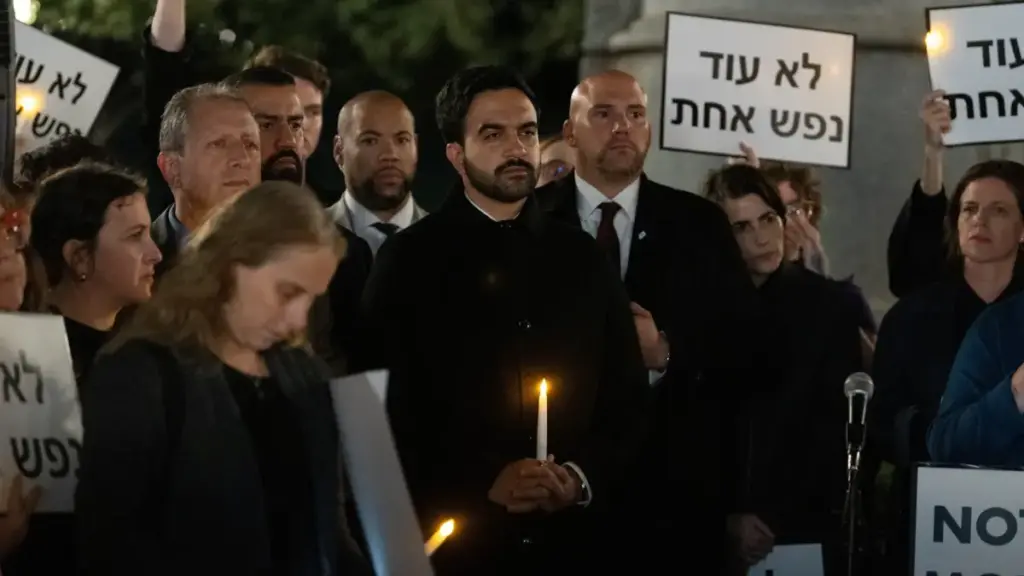
As the mayor arrived at the event, he was met by angry crowds who openly heckled him, shouting hostile accusations and labeling him a "traitor." The hostile reception underscored the deep polarization and raw emotions that continue to define the discourse surrounding the ongoing Middle East conflict and its reverberations within local New York politics.
The backlash against Mayor Mamdani extended far beyond the immediate shouting matches at the vigil site. Pro-Israel organizations and community leaders heavily criticized the mayor not only for his physical presence at the event hosted by Israelis for Peace, but also for an official statement he released earlier the same day. Critics argued that the timing, tone, and content of his public remarks failed to appropriately address the gravity of the anniversary and the sentiments of many constituents within New York’s diverse communities.
The incident highlights the immense pressure faced by municipal leaders when navigating deeply sensitive international conflicts that carry immense local significance. New York City, home to large communities deeply affected by events in the Middle East, frequently serves as a microcosm for broader geopolitical tensions. Mayor Mamdani’s decision to engage with the Israelis for Peace vigil—an organization whose platform and approach to the anniversary drew mixed reactions from different factions within the broader community—proved to be a lightning rod for political friction.
The events of October 7, which serve as a profound day of mourning and trauma for many individuals and groups, continue to evoke visceral reactions years later. For Mayor Mamdani, walking into this charged environment meant stepping directly into a political minefield. While supporters of his attendance might view participation in multi-community peace vigils as a necessary act of civic leadership and dialogue, critics and hostile crowds saw his presence as inappropriate, given what they perceived as deficiencies in his broader policy stances and his official anniversary statement.
As the political fallout from the vigil continues to unfold across the city, local commentators and political observers are weighing the long-term implications of the mayor’s handling of the situation. The fierce condemnation from pro-Israel groups and the vocal demonstrations on the streets point to a fractured local landscape where public figures face intense scrutiny over every word and action related to the crisis. The administration now faces the challenge of addressing these deep-seated community divisions while managing the day-to-day governance of a city that remains perpetually alert to the global issues touching the lives of its residents.